LEH: Dispelling the apprehensions of locals over the ‘draft Industrial Land Allotment Policy-2023’, the Union Territory Administration on Wednesday asserted that the land in Ladakh region has always belonged to the local hill councils in Leh and Kargil, and will continue to do so.
Further, the service sector—or the soft industry—has been kept exclusively reserved for the locals of Ladakh, while the preference would be given to locals in the non-service sector or hard industry, which the administration said, it will continue to discourage in view of the fragile climate of Ladakh.
The administration recently put the draft “Ladakh Industrial Land Allotment Policy, 2023 and the draft “Procedural Guidelines for the Ladakh Sustainable Industrial Policy 2022-27″ in public domain seeking comments from the stakeholders, following which the region witnessed divided public opinion, against alleged ‘sidelining of the hill councils in the allotment of land’.
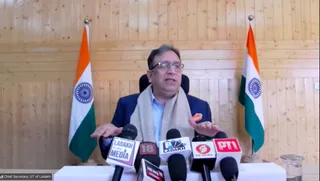
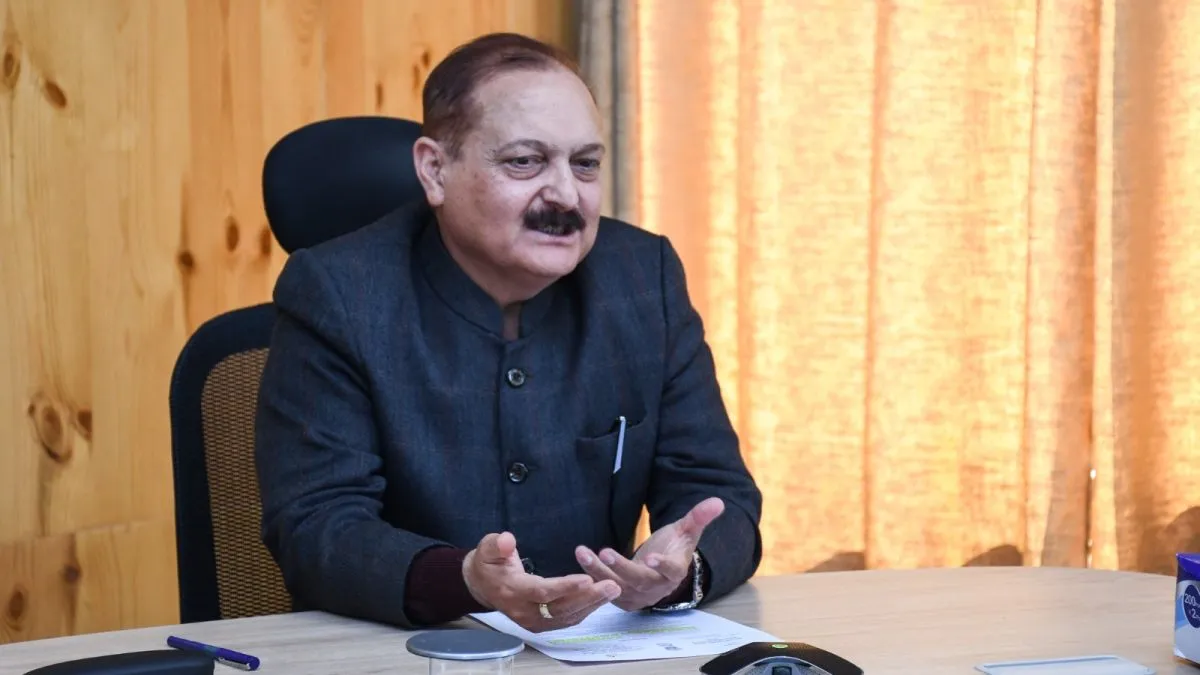
This prompted Advisor Dr Pawan Kotwal to address a press brief on Wednesday, where he clarified that the safeguards for Ladakh in all aspects are in place, and are not disturbed in any way by the Ladakh Industrial Land Allotment Policy, 2023.
“Land always has belonged to the local councils (LAHDCs) in Leh and Kargil for its efficient use and management, and will remain so,” said the Advisor.
Elaborating further, the Advisor said that there are two types of lands–developed land inside the industrial estates, and wasteland outsides the industrial estates.
“The wasteland has been transferred to the local councils and it is for them to decide on the its management. As far the land inside the industrial estates is concerned, that will be allotted by the local Industries Department, but we have ensure adequate safeguards in that respect,” he said.
“We have kept the land to be utilised for service sector such as hotels, homestays, transport and tourist guide services etc, exclusively for locals of Ladakh only.
“The service sector is the backbone of Ladakh’s economy, and we could sense that any investments in the service sector would be seen as sort of encroachment, and would be a competition to locals, who don’t have as much money and resources as outsiders. Hence, we have kept it reserved for locals only,” asserted the Advisor.
“As far as the hard industry—manufacturing sector—is concerned, we don’t see any investment coming in from outside,” he added.
The Advisor detailed: Manufacturing sector is difficult and not economically viable in Ladakh. One there are long distances and lack of local skills. Two, manufacturing sector is not suitable as it creates pollution.
“Ladakh cannot be the place to witness pollution of any sort. We are aiming at Carbon Neutral Development in Ladakh and manufacturing of any sort will do harm to its fragile climate. Hence, we are discouraging any investment in manufacturing sector,” he said.
The Advisor said that even if there comes any investment in manufacturing sector from outside, the preference will still be given to locals.
“While we don’t see a lot of manufacturing investment coming in, but if someone wants to set up a small unit, preference will be given to local. We have taken care of this aspect,” he said.
Answering a question, the Advisor said that the possibility of joint ventures would be wonderful combination but it would depend upon the locals if they would want that.
“We have put the draft policies in public domain and are open to suggestions and recommendations to improve them, as they are for benefits of Ladakh and its people,” he concluded.