

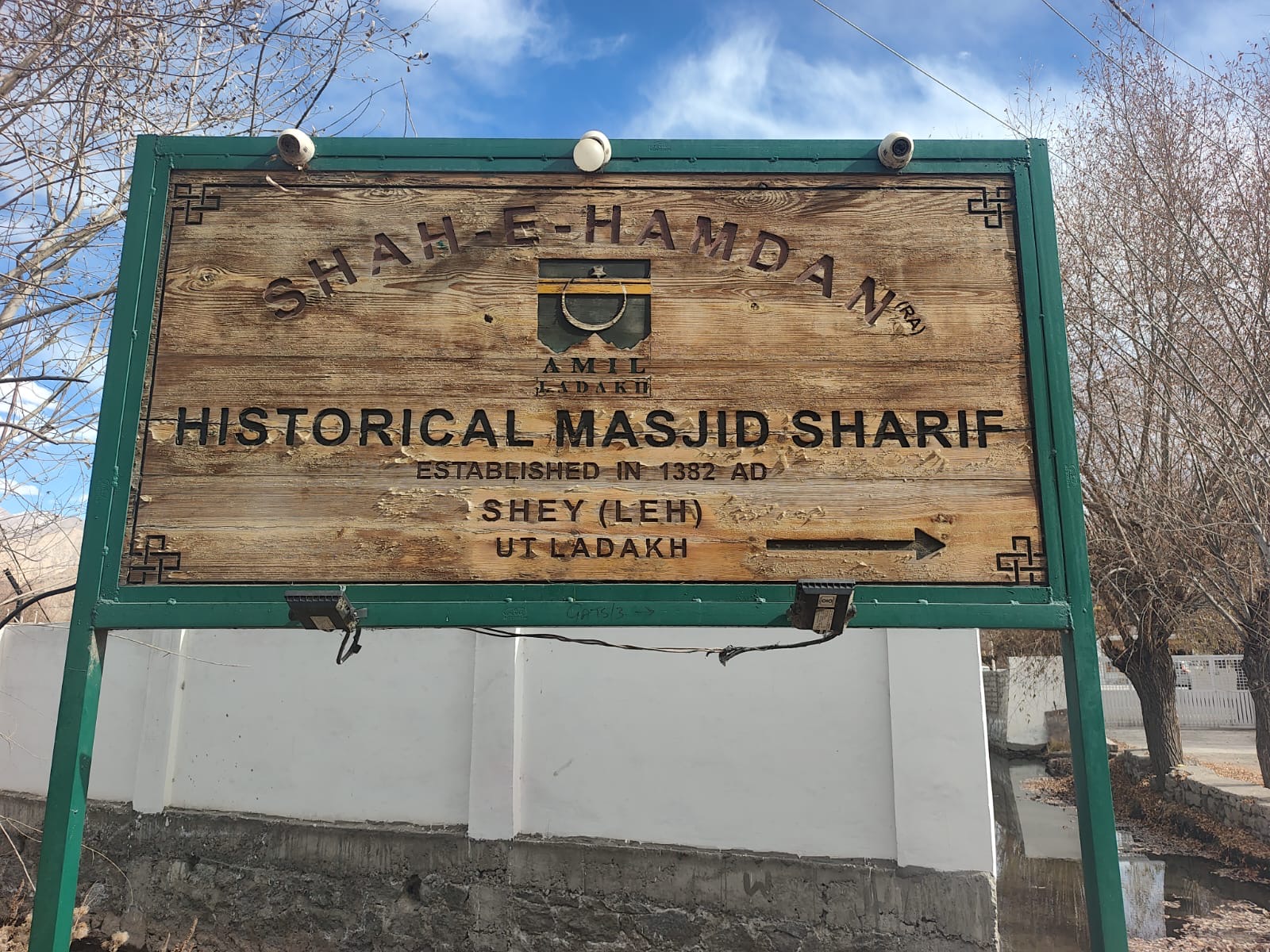
Shey, Leh: In a development that brings together the preservation of Ladakh’s centuries-old religious heritage and the needs of contemporary visitors, Anjuman Moin-ul-Islam has inaugurated four newly constructed huts within the premises of the historic Shah-e-Hamdan Masjid Sharif at Shey.
The inauguration marks another step in the organisation’s efforts to improve the infrastructure and surroundings of one of Ladakh’s historic Islamic religious sites, which has served as a centre of faith and community life for generations.
The ceremony was formally conducted by Advocate Mohammad Shafi Lasu, president of Anjuman Moin-ul-Islam, in the presence of members of the organisation and the local community.
The newly constructed huts are intended to improve facilities for visitors and devotees, while making the mosque premises more organised and welcoming. The initiative forms part of the organisation’s ongoing efforts towards infrastructure development, extension and beautification of the historic site.
Speaking on the occasion, Lasu thanked the members of the organisation for their dedication, cooperation and collective contributions towards the completion of the project.
He emphasised the importance of preserving historic religious sites while ensuring that their infrastructure and facilities continue to meet the needs of the community.
Established in 1382 AD, Shah-e-Hamdan Masjid Sharif stands as a significant part of Ladakh’s religious and cultural heritage. Its historical association with the region’s Islamic tradition gives it a distinctive place in the cultural landscape of Shey and the wider Union Territory.
The mosque’s legacy reflects the centuries-old presence of Islam in Ladakh and the enduring role of religious institutions in shaping the region’s social and cultural life.
The latest development seeks to enhance the visitor experience without losing sight of the site’s historic significance. The organisation’s initiative also highlights the role of community participation in maintaining and improving religious and cultural heritage sites.
Anjuman Moin-ul-Islam reiterated its commitment to continuing developmental and community-oriented initiatives, with a focus on improving facilities while preserving the historical and spiritual character of the mosque.
The inauguration of the four huts thus represents not merely an infrastructure addition, but a continuation of the community’s efforts to sustain a historic place of worship that remains an important part of Ladakh’s shared cultural heritage.
