

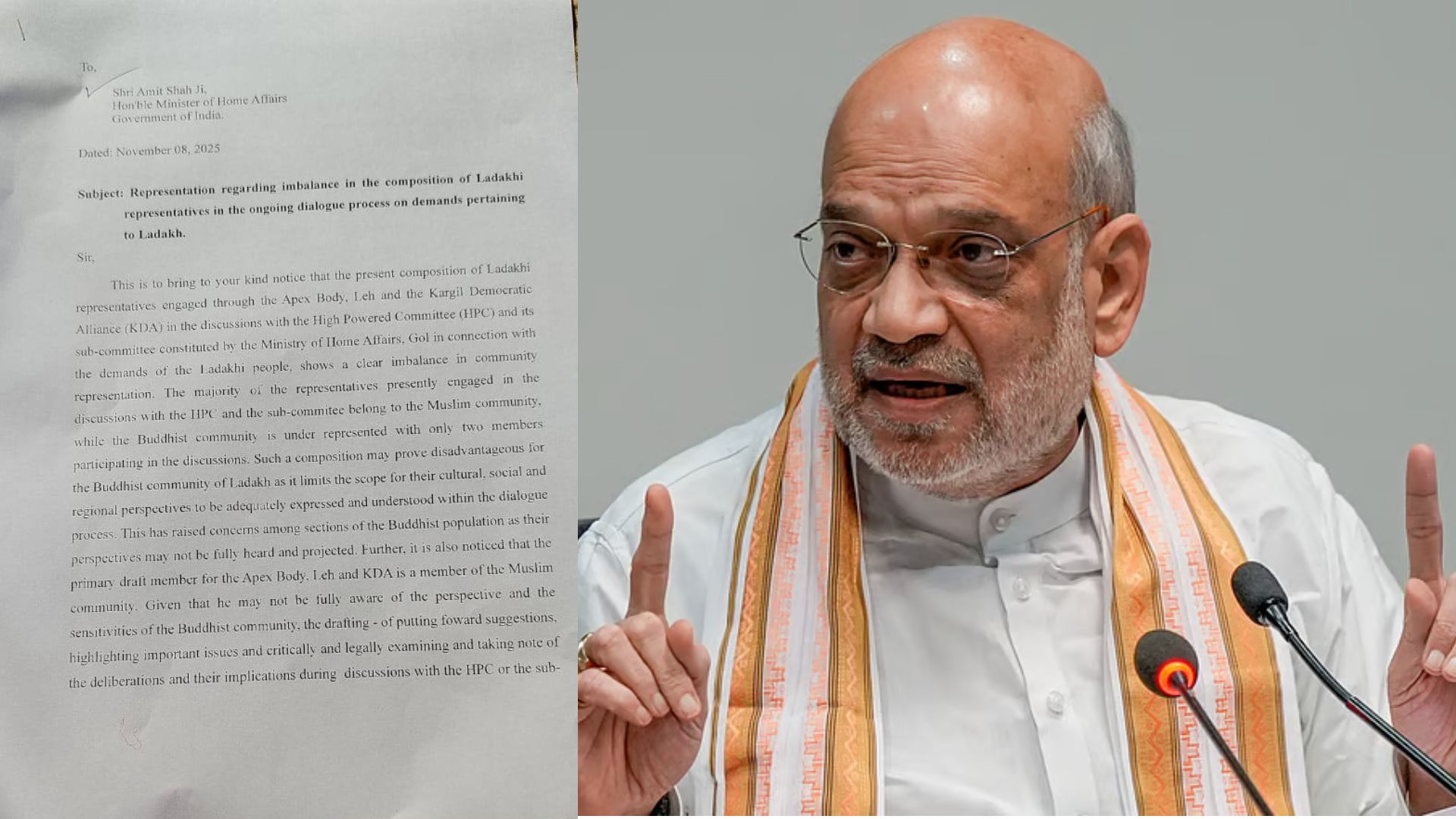
Leh: Former President of the Ladakh Buddhist Association (LBA), Dr. Tondup Tsewang Chhospa, has written to Union Home Minister Amit Shah, expressing concern over what he termed as an “imbalance in the composition of Ladakhi representatives” participating in the ongoing dialogue with the Ministry of Home Affairs (MHA) on the region’s key demands.
In his letter, Dr. Chhospa pointed out that the majority of representatives from the Apex Body, Leh, and the Kargil Democratic Alliance (KDA)—currently engaged with the High Powered Committee (HPC) and its sub-committee—belong to the Muslim community, while the Buddhist community is under-represented. He warned that such an imbalance “may limit the scope for cultural, social, and regional perspectives of the Buddhist community to be adequately expressed and understood” in the dialogue process.
Dr. Chhospa also noted that the primary draft member representing both bodies belongs to the Muslim community and “may not be fully aware of the sensitivities of the Buddhist community,” potentially resulting in their concerns not being fully reflected in the discussions. He urged for equal representation from both Buddhist and Muslim communities to ensure a balanced and inclusive outcome.
The former LBA president further mentioned that certain sections among Buddhists are apprehensive about the demand for statehood, fearing it could deepen regional and communal divides between Leh and Kargil rather than strengthen unity.
As per the letter, Dr. Chhospa wrote that the present composition of Ladakhi representatives engaged through the Apex Body, Leh, and the Kargil Democratic Alliance (KDA) in discussions with the High Powered Committee (HPC) and its sub-committee “shows a clear imbalance in community representation.”
“The majority of the representatives presently engaged in the discussions with the HPC and the sub-committee belong to the Muslim community, while the Buddhist community is under-represented with only two members participating in the discussions,” the letter reads.
“Such a composition may prove disadvantageous for the Buddhist community of Ladakh as it limits the scope for their cultural, social, and regional perspectives to be adequately expressed and understood within the dialogue process. This has raised concerns among sections of the Buddhist population as their perspectives may not be fully heard and projected.”
“Further, it is also noticed that the primary draft member for the Apex Body, Leh, and KDA is a member of the Muslim community. Given that he may not be fully aware of the perspective and sensitivities of the Buddhist community, the drafting—of putting forward suggestions, highlighting important issues, and critically and legally examining deliberations and their implications—might unintentionally fail to fully reflect the concerns of the Buddhist community,” the letter adds.
“Considering that Ladakh’s identity is deeply rooted in both Buddhist and Muslim traditions, it is important that the viewpoints from both communities are reflected equally in the discussions.”
The letter concludes by urging for equal representation from both communities to ensure a balanced and mutually acceptable outcome. It also records concerns among sections of the Buddhist community who believe that statehood may not guarantee fair political representation between Leh and Kargil, and could potentially “deepen divisions on regional and communal lines instead of fostering long-term unity.”
