

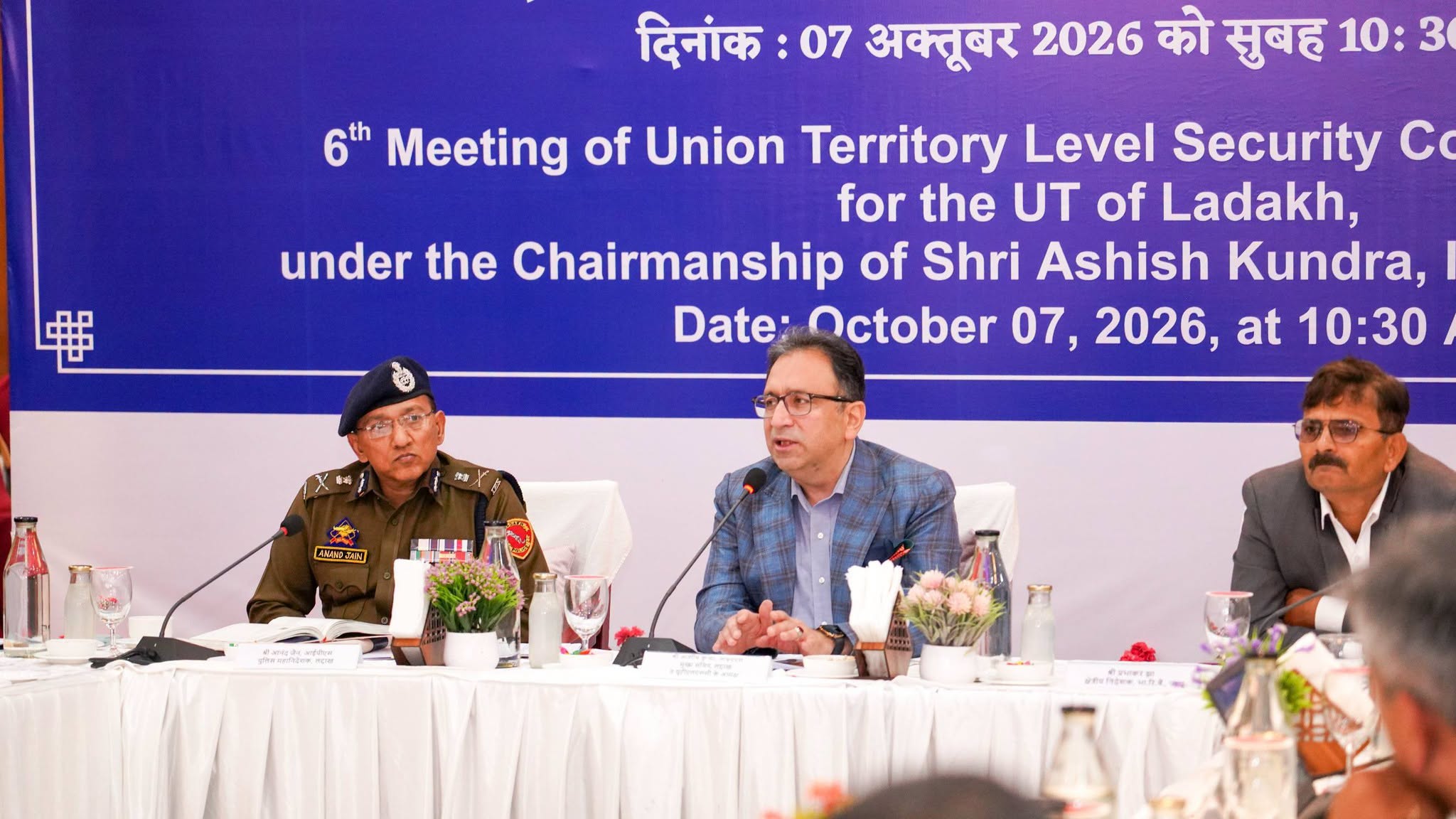
Leh: Ladakh is set to strengthen its financial security architecture, with the administration reviewing both the growing threat of digital fraud and vulnerabilities linked to bank branches, ATMs, Currency Chests and cash movement across the Union Territory.
The issues came under detailed review at two separate meetings chaired by Chief Secretary Ashish Kundra at Hotel Zen, Leh—the 5th Union Territory Level Coordination Committee (UTLCC) meeting and the 6th Union Territory Level Security Committee (UTLSC) meeting.
At the UTLCC meeting, held under the aegis of Prabhakar Jha, Regional Director, Reserve Bank of India (RBI), UTs of Jammu & Kashmir and Ladakh, officials flagged the need for stronger financial literacy and coordinated action against emerging digital risks, particularly as internet use and digital payments expand across Ladakh.
The committee discussed the reported increase in UPI-related frauds, fraudulent digital lending applications and cyber mule syndicates. The Chief Secretary called for practical and measurable awareness campaigns, with particular focus on students, vulnerable groups and people increasingly exposed to digital financial services.
A proposed 10-hour hybrid financial literacy course for students of Classes XI and XII and college students also came under discussion. The committee reviewed the Action Taken Report of its July 15 meeting, progress of the UTLCC sub-committee and proposed awareness initiatives involving SEBI and the Social Welfare Department.
Kundra called for awareness material in local languages, including Ladakhi, along with short videos explaining UPI frauds, safe digital payments, preventive measures and reporting mechanisms. He also stressed wider publicity of official helpline numbers and greater public awareness about genuine financial applications and verified portals.
DGP Ladakh Anand Jain briefed the committee on emerging cybercrime concerns and stressed timely reporting of fraud cases and closer coordination between banks and law-enforcement agencies.
The administration simultaneously reviewed the physical security of Ladakh’s banking infrastructure at the UTLSC meeting, focusing on Currency Chests, bank branches, ATMs and the transportation of cash and other valuables.
The committee examined guarding arrangements, fire-risk mitigation, CCTV and other security equipment, e-surveillance systems and security arrangements at vulnerable banking locations. Protocols for cash transportation between Currency Chests, branches and ATMs were also reviewed, with emphasis on clear coordination between police and banking personnel.
The Chief Secretary called for regular mock drills and preparedness exercises to test the response of banks, police and other agencies. He also directed that RBI’s existing security guidelines and protocols be shared with concerned agencies to ensure uniform implementation.
The committee stressed the need for designated nodal officers from the police and banking sectors to facilitate faster communication during security incidents and other contingencies. Security arrangements during the winter monthswere also reviewed, particularly in view of weather and connectivity challenges that could affect ATM operations and cash movement in remote areas.
Capacity-building through joint workshops and training for bank and police personnel was proposed, covering emergency response, cash transportation, surveillance systems and established banking security procedures.
The meeting also examined the threat posed by Fake Indian Currency Notes (FICNs). Officials stressed the need for regular training of bank personnel to identify, detect and report counterfeit currency, besides strict adherence to prescribed SOPs.
