

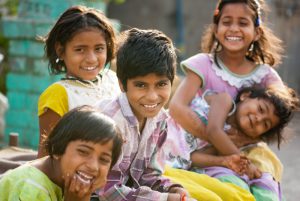
It’s no child’s play to secure a healthy & happy childhood for each and every child in India.The Ministry of Women and Child Development has thus rightly gone into a proactive mode to ensure that all stakeholders in “Mission Vatsalya’ scheme understand the gravity of the situation and adopt recent guidelines issued, so that the mission remains not on paper but successfully achieved.
The WCD Ministry stated the Mission “seeks to promote family-based non-institutional care of children in difficult circumstances based on the principle of institutionalisation of children as a measure of last resort”.While the scheme will be implemented as a centrally-sponsored scheme, the Ministry is firm that the States will also have to comply with any “guidelines/instructions issued by the Government of India regarding branding of this Scheme.’’ Moreso, as the fund-sharing pattern is to be 60:40 ratio. However, for the 8States in the Northeast, as well as Uttarakhand, Himachal Pradesh and UT of Jammu and Kashmir, the Centre and State/UT’s share will be 90:10.
Theguidelines issued early this month are specific and detail the process by which funds will be disbursed to States under various heads by defining institutionalised arrangements and are to be approved through the Mission Vatsalya Project Approval Board (PAB), to be chaired by WCD Secretary. The district magistrates will be responsible for ensuring execution of the Mission at their level. The restructuring of the existing helpline for children ‘1098 –Childline’ that has been in the works for long in the WCD Ministry appears imminent now. It will be integrated with the Emergency Response Support System 112 (ERSS 112) helpline of MHA.
This has come at a time when there have been reports of child deaths in various parts of the country as our health system lacks proper infrastructure, specially in rural and semi-urban areas. As per rough estimates the BIMARU States (Bihar, Madhya Pradesh, Rajasthan and Uttar Pradesh) accounted for 55 percent of all deaths in the country in 2011. Not just China but many Third World countries outperformed India in curbing child deaths. Studies have revealed that most children visiting hospitals are malnourished. Obviously, this affects the child and diseases catch them quickly due to lack of resistance power.
Children from the poorest communities are three times more likely to die before they reach the age of 5 than those from high income groups, according to a report of Save the Children. In the new global report titled A Fair Chance at Life, the organisation said reductions in child mortality in India and elsewhere in the world appeared to focus on children from better-off communities leaving children from the most disadvantaged backgrounds behind.
Is it the fault of parents that they are poor and illiterate or that their localities are not cleaned by municipalities or local bodies? To a degree, their own socio-economic status could be. But even a libertarian like Milton Friedman argued for ‘paternalistic concern for children’ by the government on the grounds that holding parents responsible for children “rests on expediency rather than principle”.
Of around 22-24 million children born in India every year, approximately 1.80 million children die before their fifth birthday in India. “What these aggregate figures do not reveal are the huge inequities in mortality rates across the country, within States and between them, as well as between children in urban and rural areas,” according to Save the Children. The under 5 mortality rate in Kerala is 14 deaths per 1000 live births. This stands at a sharp contrast to Madhya Pradesh at 92 per 1000 or 91 per 1000 for Uttar Pradesh.
“Every child has the right to survive and the Indian Government has an obligation to protect them. Save the Children’s research shows that prioritising marginalised and excluded communities, specially in States lagging behind is one of the surest ways that India can reduce the numbers of children dying from easily preventable causes. The National Rural Health Mission, for example, should have a clear focus on social inclusion of dalits and adivasis in terms of access to health care.
Although statistics on violence against children in civil strife areas or emergencies are not available, serious concerns have been raised by the SRSG for Children and Armed Conflict (SRSG-CAAC) and others about the impact of armed conflict and emergencies in India, specially in the context of Jammu and Kashmir and the Naxalite insurgency areas especially in states like Chhattisgarh, Jharkhand and Odisha. This has been reported through the Security Council Resolution 1612 Security Council Mechanism for Monitoring and Reporting Grave violations against Children.
It also needs to be said COVID-19 exacerbated an additional other existing pandemics — malnutrition, poverty, violence, and mental health issues, affecting children. Given the high levels of poverty in the country, the socio-economic impacts of the pandemic are still quite discernible and have many vulnerable families on the brink of poverty and squalor.
Extended periods of lockdown have also added to the heightened vulnerabilities to gender-based violence and violence against children for those already at risk, many being
trapped with their abusers and not able to access help or services. Mental health and violent discipline are emerging as concerns due to children’s routines being disrupted and other economic and stress factors for families. Due to extreme economic distress, families have been pushed to negative coping mechanisms, leading to an increase of child labour, trafficking, pushed on to the streets or railway stations.
The role of NGOs is also of great importance as they work at grass-root level to provide access to health services to the most marginalised mothers and new-borns. When people donate to charity for children, great impact is made on the ground. The good schemes in place need to be matched by effective implementation. And there is enough experience in India proving that low-cost interventions can make the difference between life and death for a child.
Social and economic injustices have played their own set of roles. People are poor and uneducated because of both sorts of injustices. There is need to arrange a better deal for children, specially their health and nutritional angles. Obviously, a national policy for children needs to be evolved with responsibilities delegated to all districts of the States, specially in areas of health and education.
However, what is needed at the national level is allocation of more funds for facilitating the conditions of children in the backward and tribal districts of the country. The present initiatives may be a good beginning but more and dedicated efforts are needed by all stakeholders, which include politicians, government officials, voluntary organisations and civil society. The efforts of both the Centre and the States are required to improve the conditions of children in distress with special focus on education and health.
The States have been asked to prepare their financial proposals and plans for year 2022-2023.
Importantly, under the Mission, all the Ministries, departments and States shall be pursued to adequately invest for children under their schemes and maintain a child sensitive disposition while designing the programmes.It’s critical to have such an orientation while building public facilities or providing common services. Indeed, much more can be achieved if there’s a holistic approach.—INFA
