


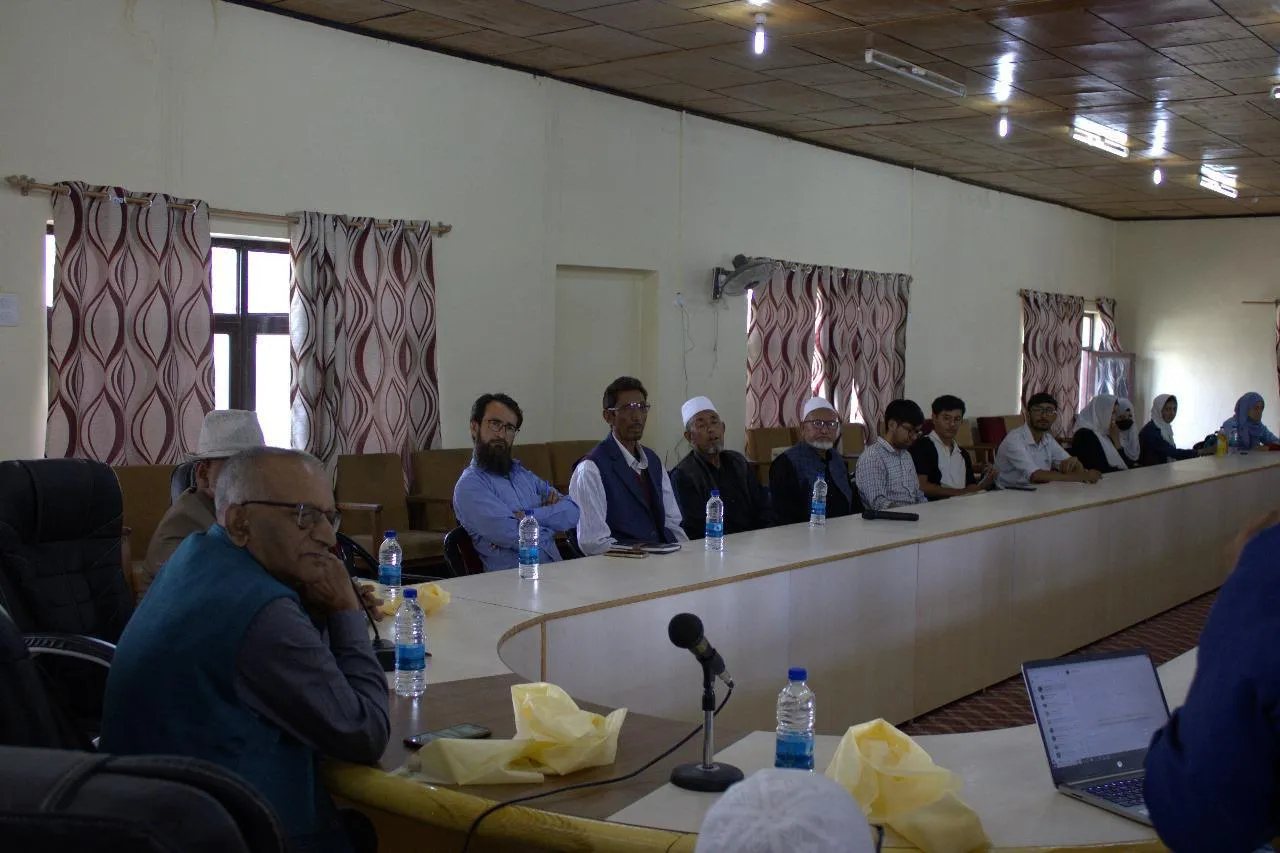
Kargil: The second day of the three-day Focus Discussion Group (FDG) on “Sustainable Livelihood in Ladakh: Prospects and Challenges” was convened Wednesday at Dakbanglow, Drass.
Organized by National Academy of Sciences, India (NASI) in collaboration with Government Degree College, Drass, the session brought together a diverse group of stakeholders including representatives from agriculture and forestry departments, ex-administrators, local leaders, educators, religious figures, and students.
Chaired by Prof. R.N. Gohil, Chairman of NASI Jammu Chapter, and graced by the Sub-Divisional Magistrate (SDM) of Drass as the chief guest, the session commenced with presenting traditional khataks to welcome to all guests.
In his welcome speech, Dr. Amjad Ali Abassi, Principal of GDC Drass, underscored the significance of such forums in fostering sustainable development.
He emphasized the importance of balancing developmental activities with environmental preservation and highlighted strategies for achieving sustainability across all sectors.
Prof. Gohil provided insights into NASI’s mission of integrating science with societal needs for the benefit of the people. Reflecting on his personal experience since first visiting Ladakh in 1969, he stressed the necessity of local governance for ensuring sustainability.
He also emphasized the importance of preserving local traditions and cultural practices alongside development initiatives. Prof. Gohil called for increased scientific research on local flora and fauna, including the unique Prongos plants found in the Drass region.
SDM Drass contributed valuable perspectives on promoting sustainable livelihoods, suggesting the encouragement of local entrepreneurship in sectors like sheep farming and organic product manufacturing. He also advocated for leveraging traditional housing for homestays to attract tourists, thereby boosting local economies.
Throughout the session, various stakeholders shared their insights and suggestions, addressing challenges such as soil infertility and advocating for better coordination among departments to ensure sustainable livelihoods. Recommendations were made for cultivating indigenous plants like wild zera and Prongos, known for their medicinal and ecological value, to stimulate local economies and enhance tourism.
Dr. Amjad Ali Abassi concluded the session with vote of thanks to Prof. Gohil, all participants, guests, and students for their contributions and active participation. The proceedings were moderated by Sajjad Hussain, Assistant Professor of Environmental Sciences.