

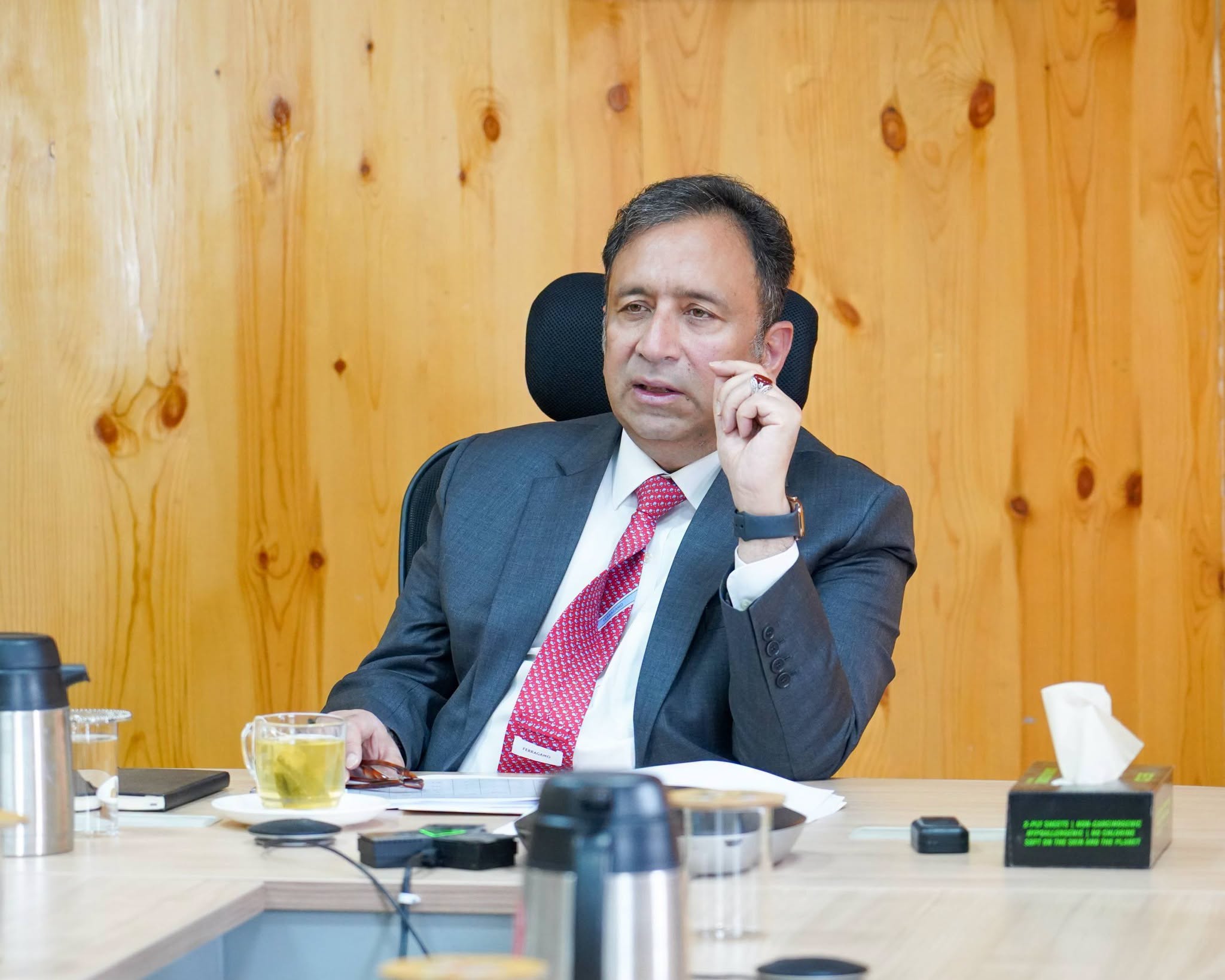
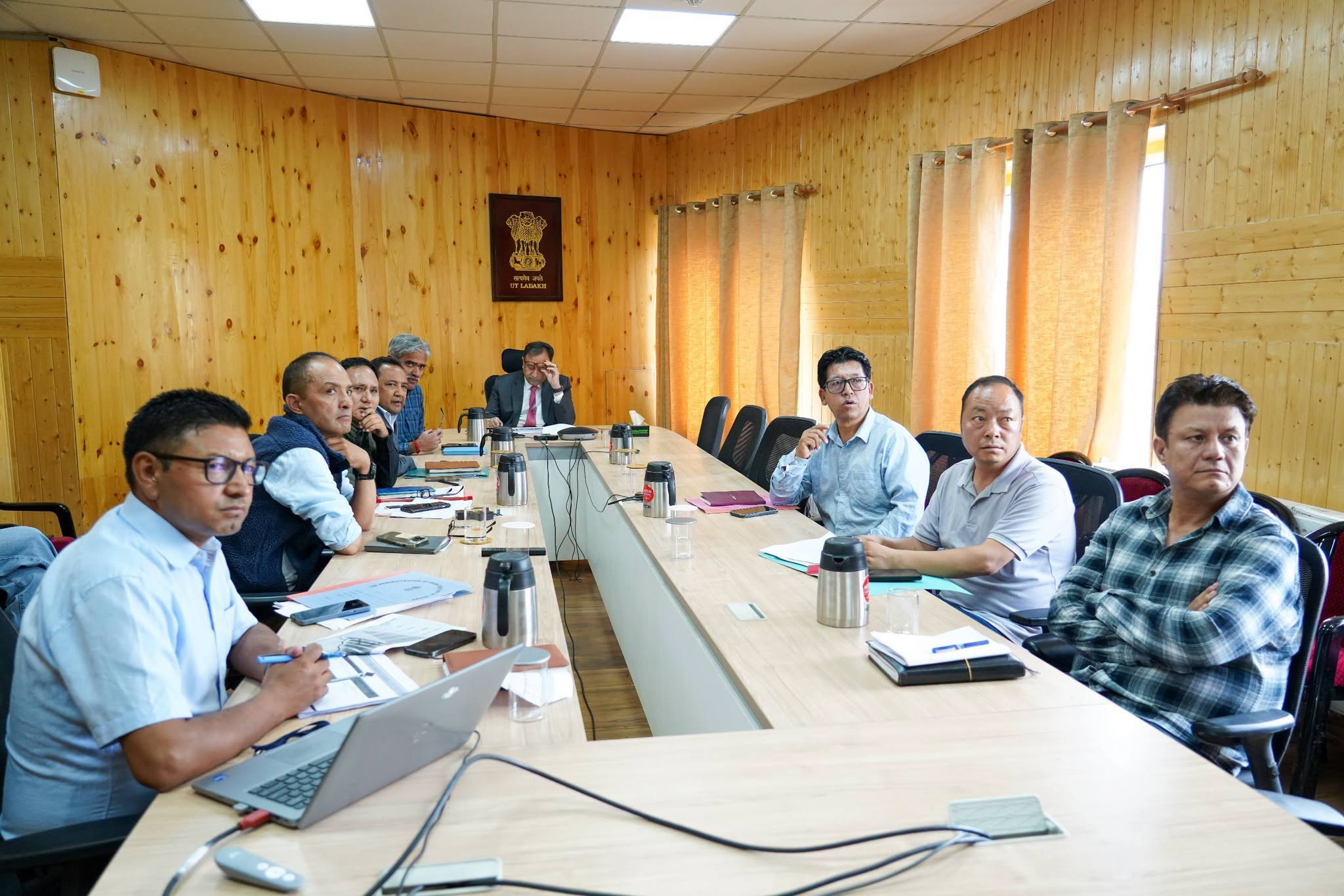
Leh, July 9: In a major push to transform Ladakh’s rural economy, Chief Secretary Ashish Kundra has called for a cooperative-led growth model in the Animal Husbandry and Fisheries sector, stressing that livestock, dairy, fisheries and pashmina should become key drivers of employment, entrepreneurship and sustainable livelihoods across the Union Territory.
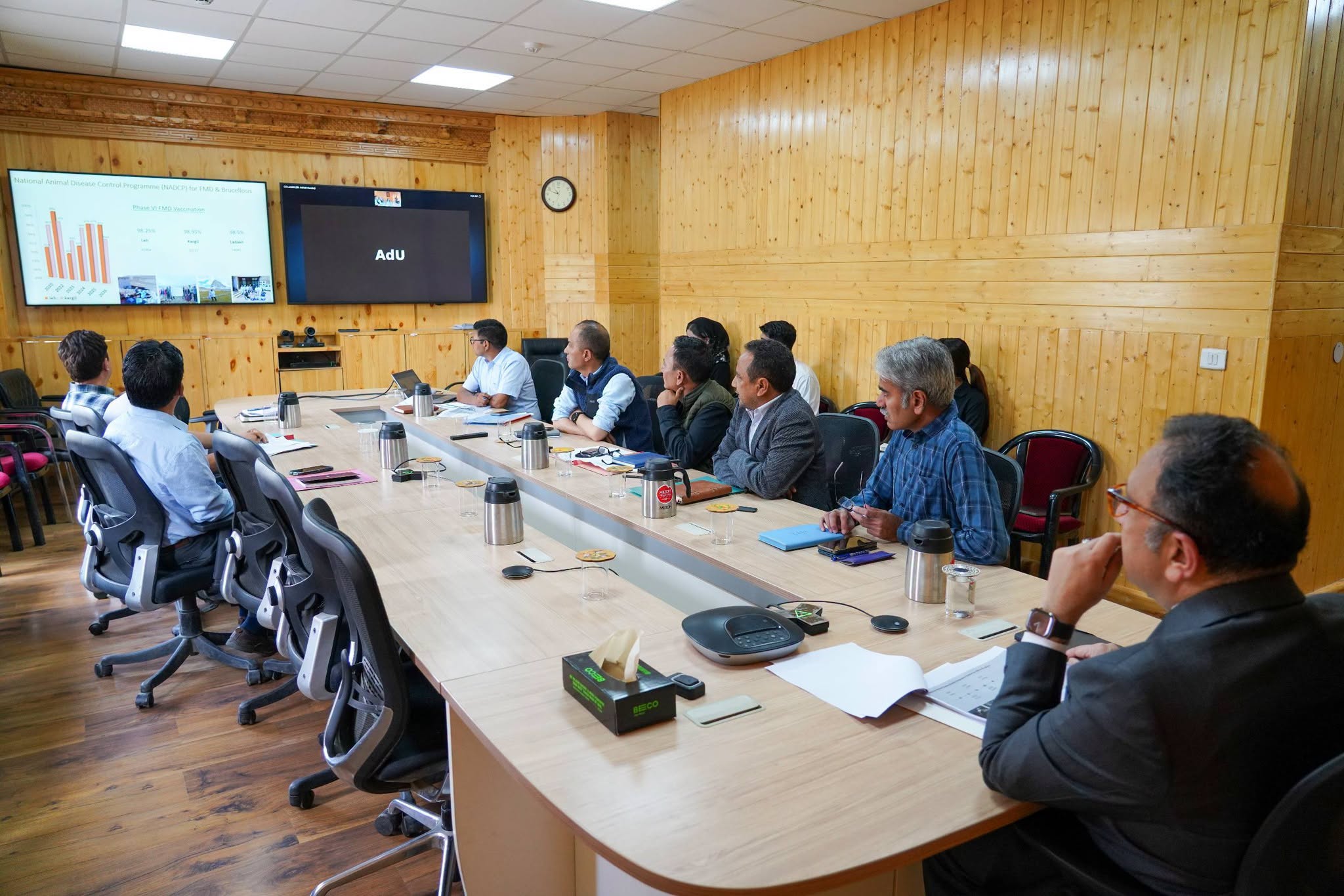
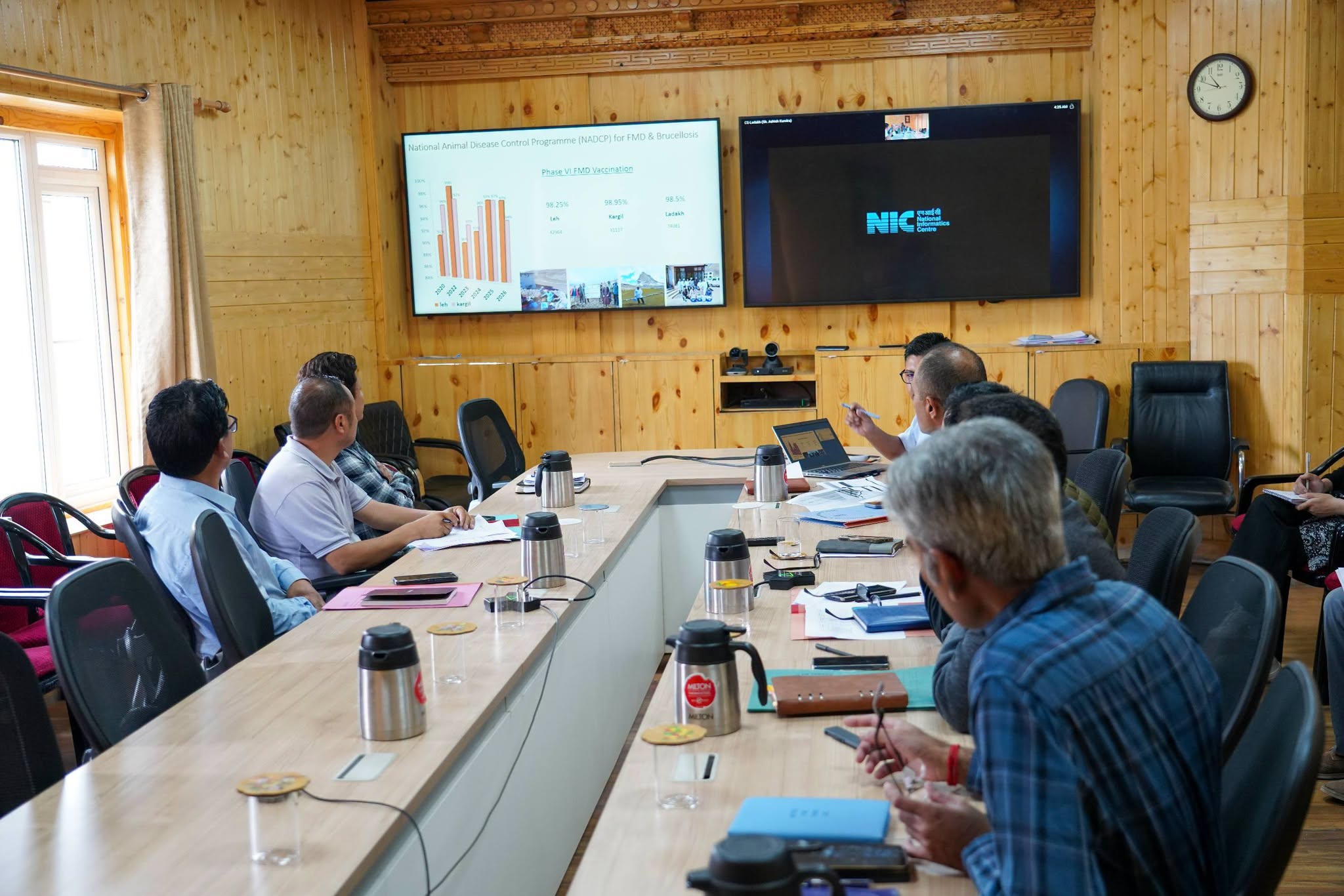
Chairing a comprehensive review meeting of the Animal Husbandry and Fisheries Department in Leh on Thursday, the Chief Secretary reviewed the implementation of departmental schemes, Special Development Projects, State Sector initiatives and Centrally Sponsored Schemes, while directing officials to focus on innovation, scientific planning and community-based development.
During the meeting, Administrative Secretary Rudra P. T. Goud presented a detailed overview of flagship programmes, including the National Animal Disease Control Programme, Pradhan Mantri Matsya Sampada Yojana, Rashtriya Gokul Mission, National Programme for Dairy Development and the National Livestock Mission, along with the department’s financial and physical progress for 2026-27.
Kundra sought updates on fund utilisation, livestock procurement, deployment of Mobile Veterinary Units and district-wise implementation of schemes. He directed the department to maintain a comprehensive livestock database covering species-wise population, geographical distribution, tagging status and resource mapping to enable evidence-based policymaking.
Emphasising that Ladakh has immense potential in dairy, fisheries, livestock and the globally renowned pashmina sector, the Chief Secretary said future growth should be driven through strong cooperative institutions rather than individual efforts. He instructed the department to identify and strengthen promising dairy cooperative societies, improve milk collection systems, ensure timely payments to producers and build community-owned dairy infrastructure.
He also called for nurturing successful entrepreneurs in dairy farming, fisheries, yak-based products and pashmina by providing financial support, common infrastructure, branding assistance and skill development programmes.
Highlighting the importance of the pashmina economy, Kundra stressed the need for an integrated strategy focusing on fodder development, livestock management, processing, cooperative marketing and dedicated training centres, particularly in Changthang, to support nomadic communities.
In a unique suggestion, the Chief Secretary proposed promoting community-based pastoral tourism, allowing visitors to experience Ladakh’s traditional nomadic lifestyle and pashmina production, creating an additional source of income for local communities.
Calling for greater coordination among the Animal Husbandry, Agriculture, Horticulture, Industries and Cooperative Departments, Kundra said integrated planning would strengthen value chains, increase farmers’ incomes and generate sustainable rural employment.
Appreciating the department’s efforts, he urged officers to move beyond routine implementation and adopt result-oriented initiatives to transform the livestock and fisheries sectors into major pillars of Ladakh’s economy.
