

By Shivaji Sarkar
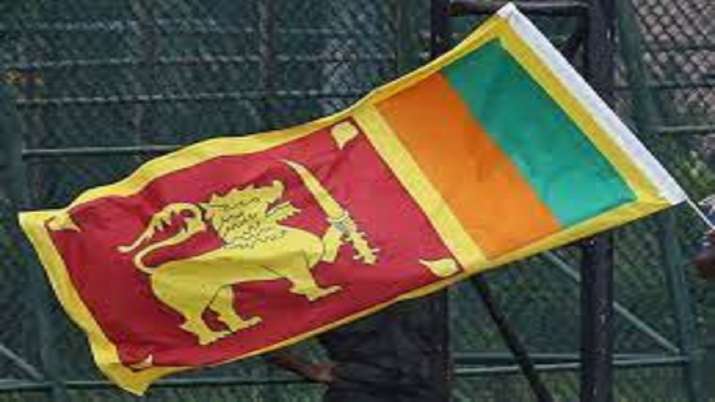
Is globalisation failing? The Sri Lankan economic crisis is a grave warning that reckless consumption promoted by global Multi-National Companies, the International Monetary Fund and World Bank at the cost of localised economies and ignoring decentralised agriculture, rural or small entrepreneurship, is not a sustainable model.
The Ukraine war is possibly the last nail in a crisis-hit world. The war is not a doing of India, but it is disrupting the global supply chain impacting all countries “like the Covid-19 pandemic”, Finance Minister Nirmala Sitharaman tells the Rajya Sabha.
The Sri Lanka crisis and the disquiet among the working class, reflected by the March 28-29 all-India strike by dozens of labour unions, are a pointer to an impending danger. It is due to the faulty global designs of curbs on wages, cash transactions, over dependence on banks, extreme stress on high-cost infra and other facilities. Sitharaman assures that the Central government is focusing on “sustained recovery through a predictable taxation regime.”
India has to recall the strength of its mixed economy. That was the people’s economy and it overcame the Soviet Union collapse or the 2007 meltdown. But since 1948, Sri Lanka had never been in such deep economic crisis. It has 10-hour power cuts, extreme fuel crisis and rice selling at Rs 500 a kg. Exams are put off for shortage of paper and two newspapers have ceased publication. Colombo rushes to sign six pacts with India with a $2.4 billion credit lines and is assured petroleum supply.
A small neighbour in deep trouble with forex reserves falling to $2.3 billion, not enough for immediate imports and an external debt pegged at $45 billion, $8 billion to China alone, and outstanding sovereign bonds of $12.55 billion, does shake India in more than one way. The 119 per cent Lankan debt to GDP now has started distress refugee influx into India’s southern shores of Tamil Nadu. Lanka hit by the globalisation, reckless imports, multiplexes, malls and artificial glitter has lessons for all.
The crisis was in the making for almost a decade, largely due to the country’s excessive dependence of imports and borrowings for a raft of massive infrastructure project. It highlights how unbridled borrowing for big-ticket infra projects, such as those under China’s Belt and Road Initiative (BRI), can lead to complications. The government’s tax cuts and switch to organic agriculture further squeezed the revenues.
On the Indian front, the working class protest called by dozens of labour unions representing both public and private sectors highlights the difficult situation that stalks the country with more privatisation, striving to bypass the minimum wages and less jobs. It’s against trade unions say, new labour law allowing contract employment; giving employers greater leeway in setting wages and extending working hours. Sale of PSUs throws more out of jobs. Reports say that banks were hit across the country and in some areas in the south, transport and normal life were affected.
The government has repeatedly been telling the unions that it is trying to create jobs, continuing with free food grains and edible oil dole at least till September for 80 crore people belonging to the families of farmers and labourers. This is a heavy burden on the exchequer. The government committed to welfare is spending almost Rs 4.5 lakh crore since 2020 through a regime of high inflation and not so high production as purchasing power capacity has reduced.
Sri Lanka, the workers’ stir and the global economic crisis testify that the 1991 privatisation prescription of the IMF-World Bank is not a solution. The G-20 prescription of monopolisation and centralisation of the economy, at the cost of the labour, has caused more problems for real growth though it multiplies profits of the MNCs and large companies control the economies. It has led to an inequitable growth and the pandemic has come as a further destroyer of whatever little was left.
The world did not learn from the follies of 2007-08 Lehman Brother-financial institutions induced sub-prime crisis of siphoning of people’s deposits that hit the United States and Europe the most. The US public sector AIG took the worst hit.
It also shows that a globalised war by the US in Afghanistan, Iraq, Syria and the Middle East has helped none, but the arms’ lobby. It weakens the economies of the super power and its NATO allies. Shaky European economies are afraid of going to a war with Russia or even check its aggression in Ukraine. The Americans are against Joe Biden administration rushing to another war as they don’t want any more body bags. The US today has almost $27 trillion of global debt, largely from five countries, including China.
The crisis continues globally and India would need to lead in correcting the course. Should the world go back to strengthening the public sector and check the private that has fudged balance sheets and misappropriated public money? It’s wishful thinking in an unethically controlled world.
The Narendra Modi government has the power with its massive mandate to take the call for a change. It must review infra and extreme dependence on coal-generated electricity for domestic to running of trains, buses and cars. The centralised control is susceptible to security threats that can jeopardise economic activities. It should promote a cash economy as digital stresses the banking system and is vulnerable to fraudulent deals. Cash is inclusive, quick and has the least cost.
Sri Lanka learns the hard way that high consumption is not sustainable without higher production, income and self-reliance. India has been trying to be atmanirbhar, reincarnation of the Gandhian swadeshi, but all the same opting for Free Trade Agreement with Australia and West Asian countries. It also has 87.8 per cent debt to GDP ratio. The model of expensive toll roads, high priced transportation-communication, high income and other taxes are leading to soaring costs, inflation and a thaw in the economy. Additionally, India unwisely is junking 10-year-old private, government vehicles and kisan’s tractors. It devastates wealth building. Similar luxurious follies have led to the Lankan crisis.
During the last 30 years, the world has seen Soviet Marxism collapsing, Maoism turning to capitalist exploitation, Manmohanomics failing and Theodore Levitt’s globalisation becoming junk. It is India’s turn to give a viable alternative of sustainable consumption and a mix of people-centric independent low-cost mixed economy, free from the control of big banks and large corporations. Sri Lanka exposes the dangers; the world must trudge cautiously.
