

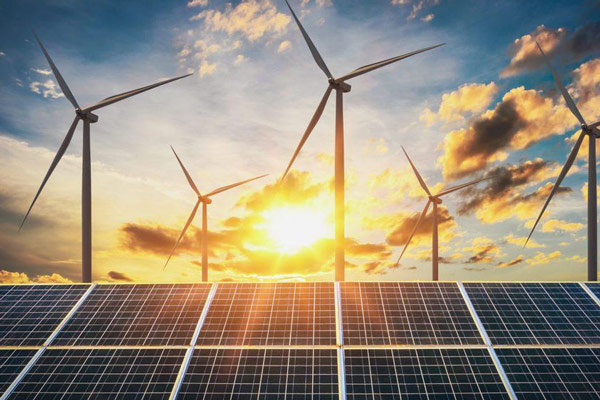
LEH: With the aim to enhance sustainable energy solutions in the cold desert, Government of India (GoI), Ministry of New and Renewable Energy has allocated a grid-connected Solar PV power project of capacity 25 MWac/50 MWdc with battery storage of 40 MWh at Taru, Leh, in Union Territory of Ladakh.
And envisaged Hybrid Renewable Energy (RE) park of total 13 GW capacity across Pang, Debring and Kharnak areas of Union Territory of Ladakh and includes solar, wind and battery energy storage system.
In a written reply to Member of Parliament, Raja Ram Singh, Minister of New and Renewable Energy, Shripad Yesso Naik told Lok Sabha, “Solar Energy Corporation of India Limited (SECI) is implementing a grid-connected Solar PV power project of capacity 25 MWac/50 MWdc with battery storage of 40 MWh at Taru, Leh, in Union Territory of Ladakh.”
The EPC contract for this project has been awarded to M/s Prozeal Green Energy Private Limited.
The project, located at Taru in Leh, would be a vital step toward enhancing sustainable energy solutions in the cold desert region. The contract marks a significant milestone in government’s commitment to harnessing renewable energy sources. As the world grapples with the effects of climate change, initiatives like this in remote and ecologically sensitive areas are crucial not only for energy security but also for fostering sustainable development.
He said that the Hybrid Renewable Energy (RE) park of total 13 GW capacity is envisaged across Pang, Debring and Kharnak areas of Union Territory of Ladakh and includes solar, wind and battery energy storage system.
As of now, no companies have been selected for setting up renewable power projects in the aforesaid RE park.
By tapping into abundant natural resources, the Hybrid RE park aims to provide uninterrupted power supply, driving both domestic and industrial energy consumption in Ladakh.
Ministry is implementing Inter State Transmission System in GEC-II for evacuation of 13 GW RE Projects in Ladakh with a total project cost of Rs. 20,773.70 crore and providing Central Financial Assistance of 40% of DPR cost or awarded cost, whichever is lower. The scheme is implemented by PowerGrid Corporation of India Limited, the minister said in reply.
Zunkul Small Hydro Power project of 2.5 MW and Bogdang Small Hydro Power project of 0.80 MW are under construction in Ladakh.
The Solar Photo-Voltaic Power Projects are not covered under the ambit of environment Impact Assessment (EIA) Notification 2006 and no environment clearance is required for such projects under the provisions thereof.
Further, to manage e-waste generated after the use of solar photo-voltaic modules or panels or cells, Ministry of Environment, Forest and Climate Change has notified the E-Waste (Management) Rules, 2022, effective from 1st April, 2023.
Additionally, the recycling of solar photo-voltaic modules or panels or cells are mandated for recovery of material as laid down by the Central Pollution Control Board (CPCB).
The projects mentioned in beginning of the report promote clean energy and reduce reliance on fossil fuels, thereby lowering greenhouse gas emissions and minimizing the environmental impact.
Furthermore, the projects are expected to benefit the local community by creating employment opportunities, boosting small-scale businesses and enhancing the socio-economic conditions of the region. Interlinking works like Road/bridge infrastructure strengthening will facilitate movement of heavy equipment and shall lead to improved road access for local residents. The optimized electricity supply will improve energy reliability, contributing to the overall development and sustainability of the area.
Additionally, SECI has undertaken Corporate Social Responsibility (CSR) activities, including the digitalization of education system, training of teachers, Environment Sustainability, and supporting medical facilities, further demonstrating its commitment to social responsibility and community welfare.
Ladakh presents unique challenges for energy infrastructure. However, the strategic implementation of these renewable energy projects is expected to enhance electricity availability, thus promoting social and economic development in the region. Enhanced access to reliable power sources will facilitate better education, improved healthcare services, and support for local industries, helping Ladakh transition towards a self-sufficient and sustainable economy.
The projects not only signify hope for energy independence but also encourages sustainable practices in a region where nature and ecology are tightly intertwined. Using cutting-edge technology and innovative approaches, the Taru solar project and the larger hybrid energy park are set to become pivotal in balancing development needs with environmental sustainability.