

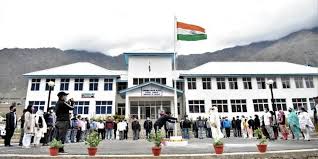
Leh: The Centre for Chinese Studies and Language at the University of Ladakh, in collaboration with the Department of History, Zakir Husain Delhi College (Evening), University of Delhi, is organizing the first-ever National Conference on Chinese Studies (NCCS) 2025.
Scheduled for September 11–12, the two-day academic event will focus on the theme “Asia’s Giants in Global Governance: Navigating India-China Relations in the 21st Century.”
The conference aims to explore the evolving relationship between India and China in the global context. While both countries share a long and complex history marked by border disputes, strategic rivalries, and competing regional visions, they also cooperate as key players in major international platforms like BRICS, SCO, AIIB, and the United Nations. This paradox of competition and collaboration forms the core of discussions at the upcoming event.
The event will bring together scholars, researchers, and policymakers to engage in critical dialogue around India-China relations. Topics to be discussed include border issues, geopolitical shifts in the Indo-Pacific, global trade, military modernization, cybersecurity, cultural diplomacy, disinformation, and diaspora politics. The conference also seeks to examine the two countries’ roles in shaping the future of global governance in an increasingly multipolar world.
Prof. Bharat Singh, Principal of Zakir Husain Delhi College (Evening), and Prof. (Dr.) Saket Kushwaha, Vice-Chancellor of the University of Ladakh, are serving as chief patrons for the event. The advisory and editorial committees include senior academics and experts from both institutions who will oversee the structure and quality of academic discussions.
The University of Ladakh has opened a call for research papers, inviting academicians and students from across the country to submit their work based on the announced themes. Organizers hope this national-level platform will promote deeper understanding of India-China relations and contribute meaningfully to academic and policy debates in the country.
This initiative not only reflects the growing importance of Chinese studies in India but also marks a significant academic milestone for the University of Ladakh as it positions itself at the center of national scholarly discourse on international affairs.
