


Just two kilometres north of Leh town, where the barren slopes of the Himalayas soften into the quiet edges of Sankar village, rises a monument that seems to hold its breath against the Ladakhi wind. At first glance, the ancient stupa of Tiserru appears like any other weathered structure scattered across this high-altitude desert. But step closer, and its mass, its myth, and its quiet insistence on being remembered begin to take hold.
Local lore says the name Tiserru comes from two ancient Ladakhi words—Teu, meaning mule, and gseru, meaning yellow. Before the stupa existed, villagers tell of a strange, mule-shaped crag that stood exactly where the monument now rests. Its odd, looming form turned the air heavy with superstition. Elders whispered of an evil spirit that haunted the stone, bringing misfortune to the people of Leh. Some claimed the very sight of it could steal a person’s health.
One queen, according to tradition, learned this the hard way. After gazing upon the yellow crag, she fell dangerously ill, setting off a wave of fear across the kingdom. The king, Grags-pa Bum-lde—who ruled Ladakh between 1410 and 1440—called upon his lamas for counsel. Their advice was as drastic as it was transformative: entomb the malevolent force beneath a grand stupa.
And so, a monument was raised.
Centuries later, when archaeologists from the Archaeological Survey of India (ASI) conducted a scientific clearance of the site, they confirmed what legend had already preserved in communal memory: a large rock—possibly the very crag of the stories—remains buried beneath the stupa’s foundation. The Ladakh Chronicle, one of the region’s historical records, hints that its construction followed a fatal incident in Leh, reinforcing the belief that something at Tiserru had once been deeply feared.
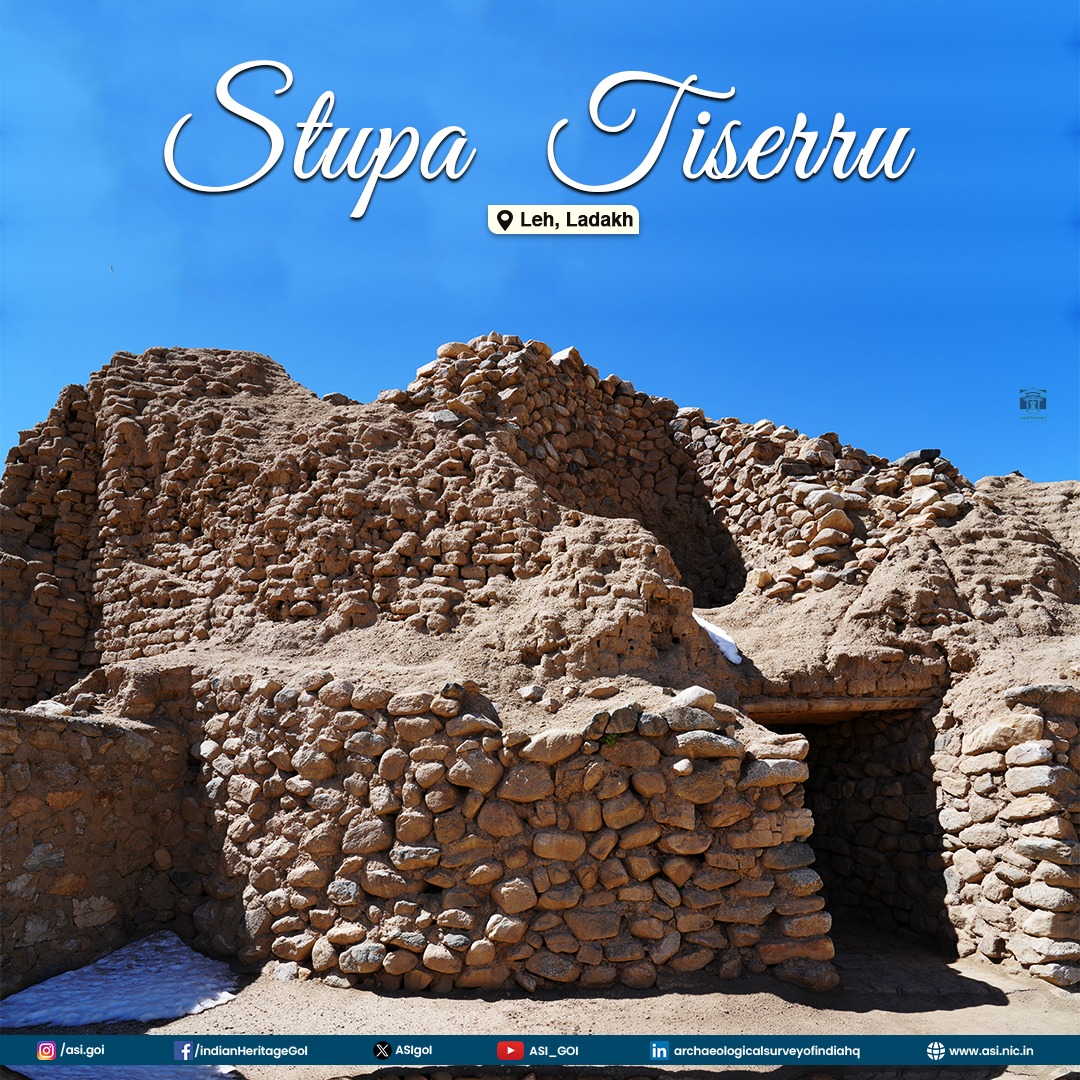
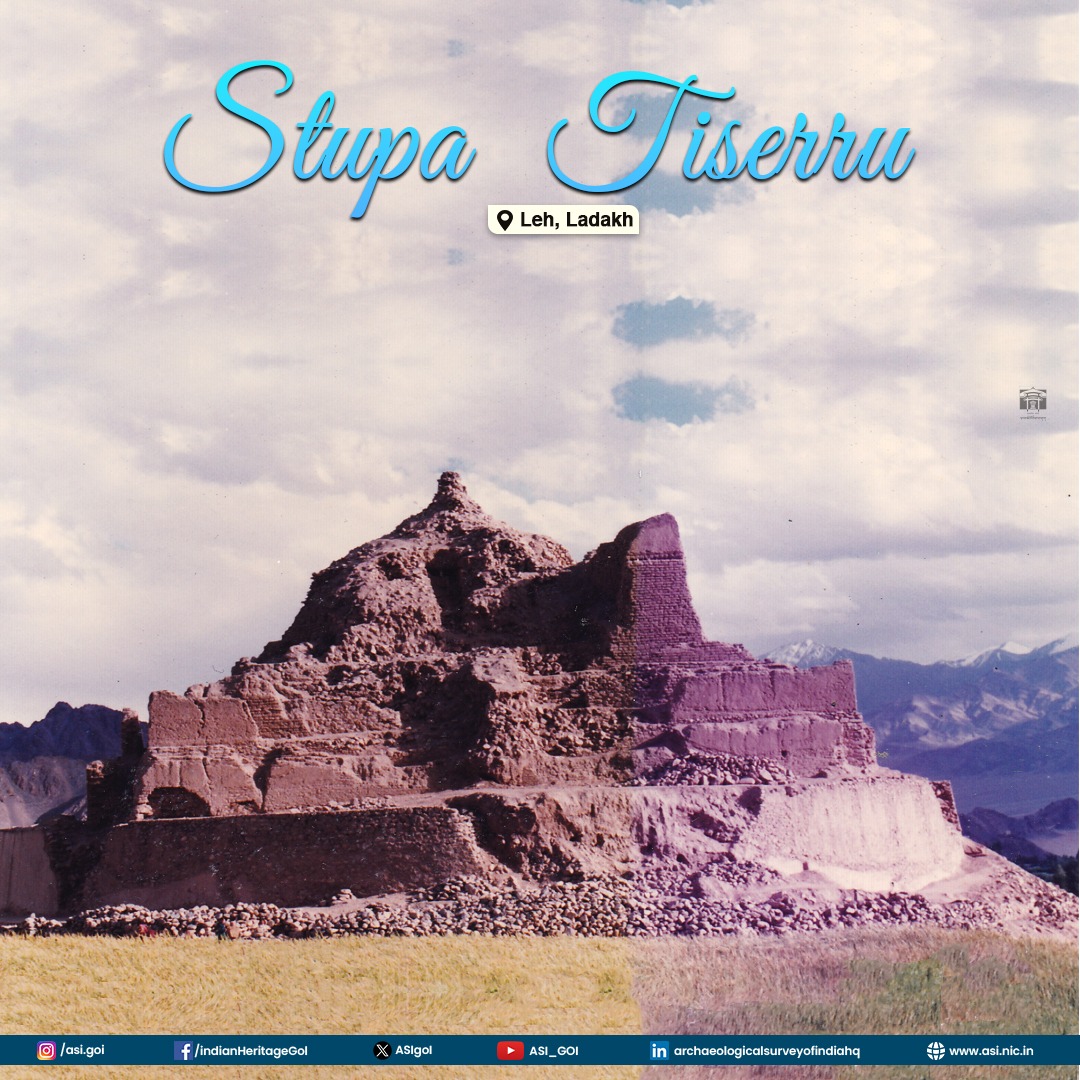
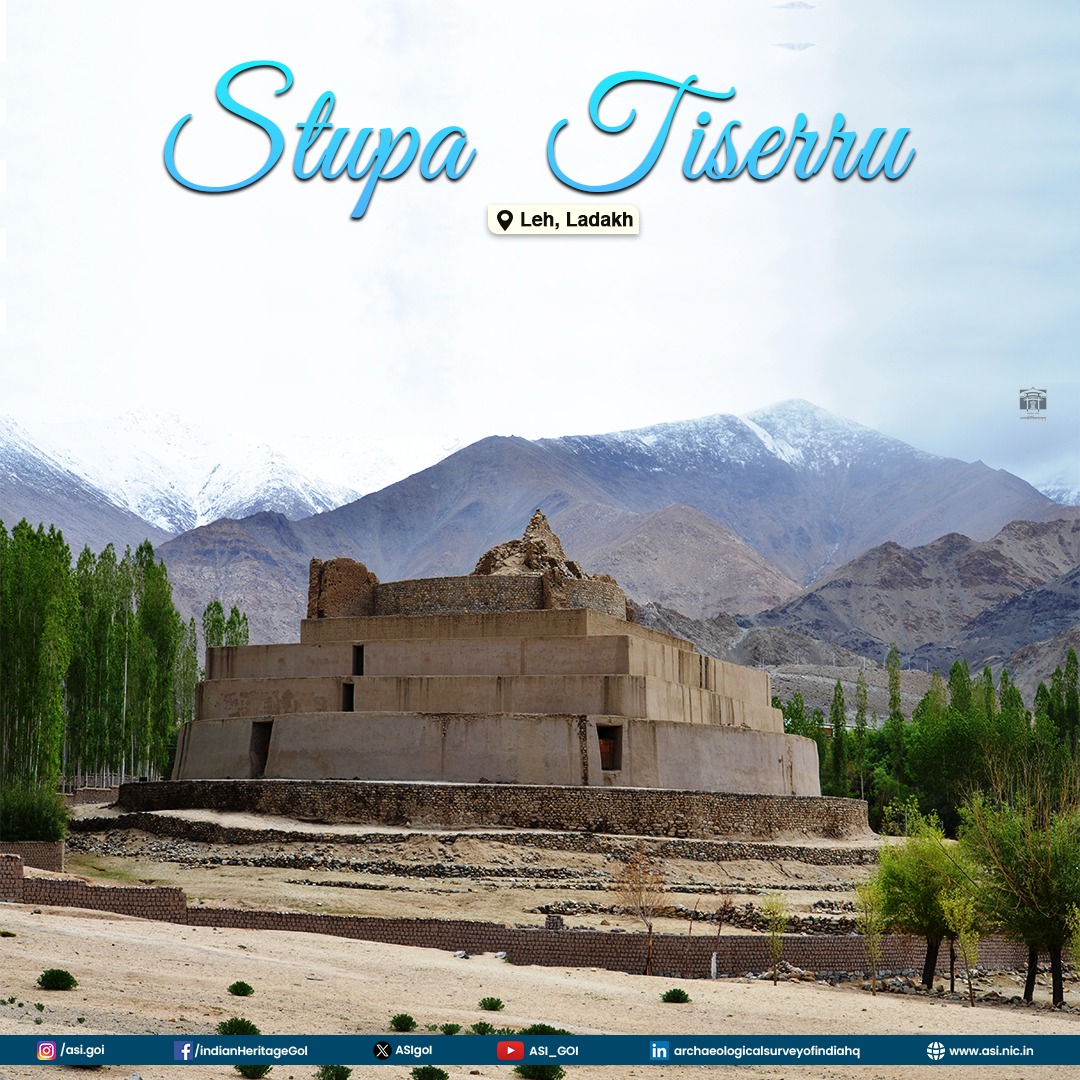
What stands today may be weather-worn, but its construction speaks volumes about the craftsmanship of its era. Built from random rubble stones bonded with sun-dried mud bricks and coated in mud plaster, the stupa once featured poplar beams laid into its ceilings—an architectural choice as practical as it was beautiful in a region where wood is precious. When ASI teams explored the ruins in the early 1980s, they uncovered four tiers of the collapsed structure, each offering clues to a design unlike any other in Ladakh.
For all its quiet disrepair, Tiserru remains the largest stupa in the region—a giant both in scale and in story. It is a monument that blends history with myth, belief with engineering, fear with devotion.
Today, as prayer flags flutter nearby and the mountains cast their long shadows across the plain, the stupa stands as a reminder of a time when the line between the spiritual and the earthly was not merely blurred, but lived. The yellow mule may be long gone, buried beneath layers of stone and centuries, but its presence continues to shape the landscape—and the imagination—of Ladakh.
