

By Ravish Handoo
Sixty-four years after the Sino-Indian War, China’s coordinated military offensive remains a defining example of how diplomatic promises can collapse under territorial ambition, military coercion and strategic miscalculation.
The Day Friendship Collapsed into War
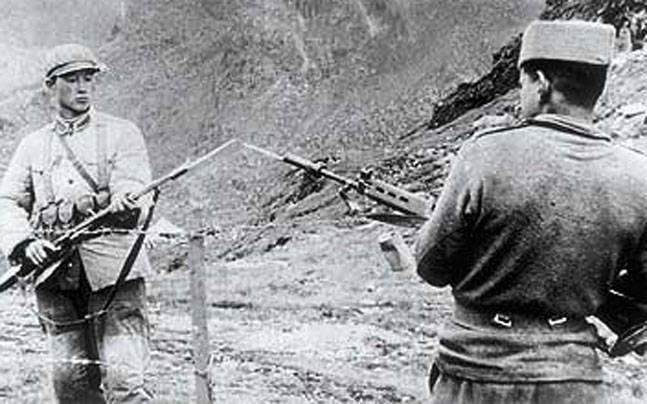
On 20 October 1962, China launched a coordinated military offensive against India across the Himalayan frontier, transforming years of diplomatic tension into a devastating war. The attack shattered India’s expectations of peaceful coexistence with a country it had publicly embraced as an Asian partner. While New Delhi had promoted friendship through negotiations and the principles of Panchsheel, Beijing had strengthened its military positions along the disputed frontier. The offensive exposed the dangerous distance between diplomatic assurances and strategic intentions. For India, it became a painful lesson in the consequences of misplaced confidence, inadequate military preparedness and the failure of diplomacy to prevent aggression.
Hindi-Chini Bhai-Bhai: Friendship Under Growing Strain
During the 1950s, Prime Minister Jawaharlal Nehru promoted Asian solidarity and peaceful relations with China. The 1954 Panchsheel Agreement established principles including mutual respect for territorial integrity, non-aggression and peaceful coexistence. The popular slogan Hindi-Chini Bhai-Bhai symbolised hopes of lasting friendship. Yet fundamental differences remained unresolved. China’s consolidation of control over Tibet, competing territorial claims and Beijing’s rejection of the McMahon Line steadily undermined bilateral trust. The contradiction was stark: two governments publicly supported peaceful coexistence while disagreeing over the very frontier separating them.
Tibet, Aksai Chin and the Warning Signs
The deterioration accelerated after the 1959 Tibetan uprising and India’s decision to grant asylum to the Dalai Lama. China had constructed a strategic road connecting Xinjiang and Tibet through Aksai Chin, territory claimed by India. Its importance to Chinese military logistics intensified the dispute. Border confrontations at Longju and Kongka Pass in 1959 demonstrated that relations were moving dangerously beyond diplomatic disagreements. India subsequently adopted its Forward Policy, establishing small posts in contested frontier areas. China regarded these deployments as provocative, while India considered them an assertion of sovereignty. The crisis was therefore not entirely unexpected. Warning signs existed, but neither government successfully prevented the confrontation from escalating.
September 1962: Military Pressure Replaces Diplomacy
On 8 September 1962, Chinese troops surrounded India’s Dhola Post near the Namka Chu River in the eastern sector. Tensions intensified around Thag La Ridge, where competing interpretations of the frontier complicated military decisions. Indian authorities ordered Chinese forces to be pushed out, despite serious limitations in logistics, artillery and high-altitude preparedness. On 10 October, fighting at Tseng-Jong further exposed the danger. By 19 October, Indian military accounts recorded unmistakable indications of an imminent Chinese attack. India was not entirely unaware of the threat; its leadership underestimated the scale and coordination of the offensive that followed.
20 October: China’s Coordinated Himalayan Offensive
Before dawn on 20 October, Chinese forces launched major attacks in the eastern and western sectors. In the North-East Frontier Agency, now Arunachal Pradesh, Chinese troops overwhelmed Indian positions around Namka Chu. Simultaneously, attacks struck Indian forward posts in Ladakh. The offensive demonstrated extensive Chinese preparation, including troop concentrations, coordinated operations and superior logistical arrangements. Outnumbered and inadequately equipped Indian soldiers fought under extraordinarily difficult Himalayan conditions. Beijing described its operation as a defensive counterattack against Indian provocations. India rejected that explanation and regarded the offensive as aggression against its territory. Whatever the disputed origins of individual frontier clashes, China’s decision to launch a large-scale, coordinated offensive fundamentally transformed the confrontation into war.
India’s Soldiers Paid the Price
The Chinese advance exposed serious deficiencies in India’s military planning, intelligence assessment, equipment and command arrangements. Nevertheless, Indian soldiers fought determinedly in battles including Rezang La and Walong. On 21 November, China announced a unilateral ceasefire, ending the principal phase of the conflict. Chinese forces withdrew from many positions in the eastern sector, while China retained control of Aksai Chin. India’s National War Memorial records 3,177 Indian soldiers who made the supreme sacrifice during the conflict. Their courage remains inseparable from the institutional failures that left them confronting a better prepared adversary.
The Enduring Lesson: Trust Must Be Backed by Strength
The 1962 war permanently damaged the political confidence that had supported India-China friendship. It also exposed the limits of agreements unsupported by credible deterrence, realistic intelligence and military readiness. For India, the lesson was not that dialogue is meaningless, but that diplomacy cannot substitute for preparedness. On 20 October 1962, China did more than launch a military offensive: it destroyed an era of Indian confidence in peaceful coexistence. Sixty-four years later, the enduring warning is unmistakable friendship between nations must be demonstrated through conduct, not merely proclaimed through handshakes, slogans and diplomatic promises.
