

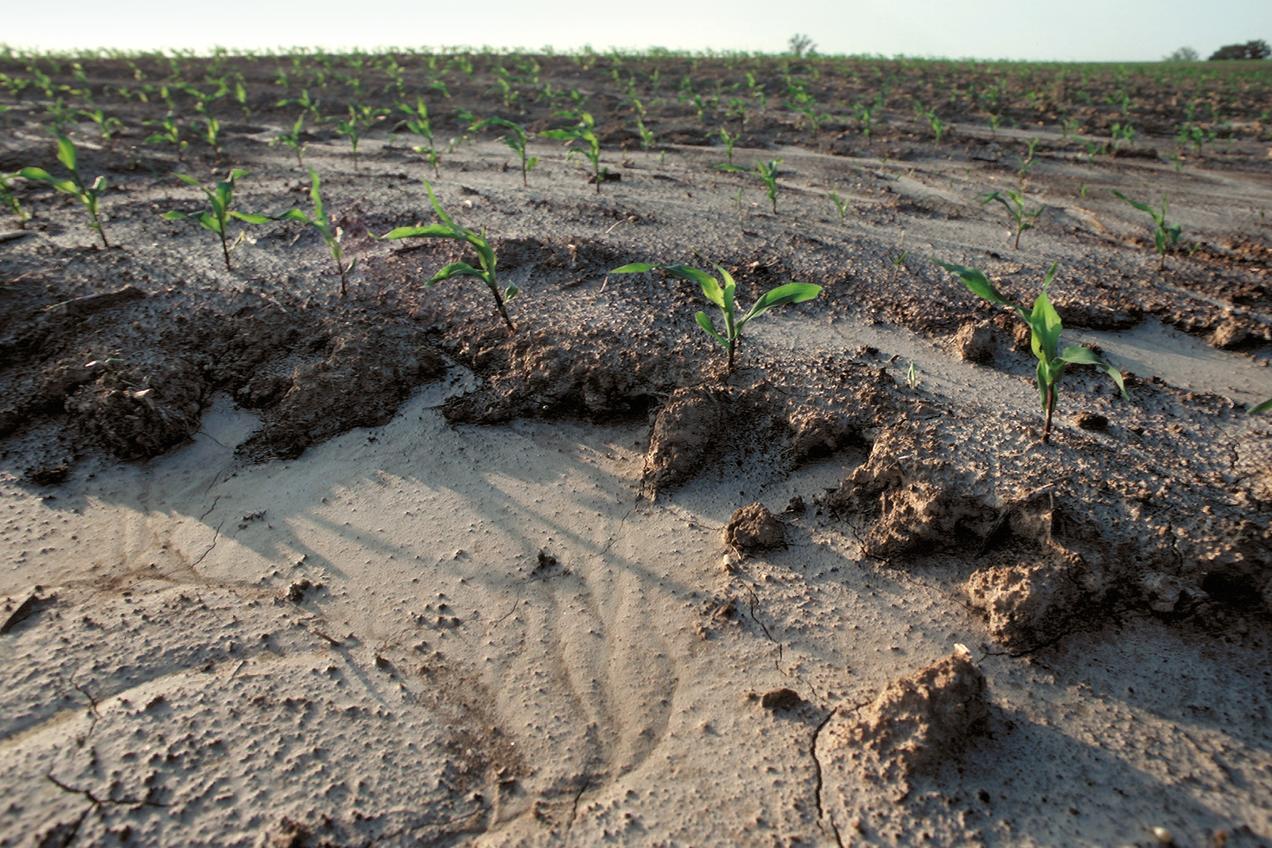
The recently concluded conference of UN Convention to Combat Desertification (UNCCD COP 15) at Abidjan, Cote d’Ivoire found that desertification has been on the rise in most parts of the world. Droughts represented 15 percent of natural disasters globally, taking the largest human toll — 50,000-odd deaths in 50 years (1970-2019), which caused economic losses of roughly $124 billion during that period. A report released at the conference noted that 128 countries, including India, expressed willingness to achieve or exceed ‘Land Degradation Neutrality’ and nearly 70 countries participated in the Convention’s global drought initiative.
An earlier UNCCD report released in April showed that 40 percent of all ice-free land is already degraded globally, affecting 50 percent of humanity. It also noted that the current scale of degradation threatens half of global GDP (US$44trillion). According to Ibrahim Thiaw, Executive Secretary, UNCCD, the best comprehensive solution is to indulge in land restoration, which addresses many of the underlying factors of degraded water cycles and the loss of soil fertility. He voiced the need for re-building landscapes better, mimicking nature wherever possible and creating functional ecological systems.
Today, there can be no doubt that desertification has emerged as a major global issue. The fact is that we are only beginning to see the grave impact of climate change. Experts believe that these are expected to become more deadly as temperatures continue to spiral, which may get out of hand. It is also clear that the impact of this corrosive change — increasing number of disasters due to growing intensity and frequency of weird and abnormal weather will make the poor poorer. Also such desertification has an impact on soil health and food production.
It is vital to understand the importance of soils, which play a crucial role in areas such as:helping combat and adapt to climate change by storing carbon and decreasing greenhouse gas emissions in the atmosphere;provide water infiltration through soil, trapping pollutants and preventing them from leaching into groundwater;capture and store water for crops; minimise surface evaporation and maximise water use efficiency; host a quarter of the planet’s biodiversity and contribute to global cycles that make all life possible; and provide fibre, fuel, medicinal products and other ecosystem services.
Many experts both in India and abroad, including Sadguru, founder of Isha Foundation, suggested a three-pronged strategy to save soil and appealed to representatives from 196 nations to redouble government efforts aimed at reversing the degradation of agricultural land across the globe. Addressing a session at the UNCCD COP 15, he suggested that “farmers must achieve the minimum threshold of 3-6 percent organic content by providing attractive incentives for getting to this threshold”.
He suggested a phased programme of implementation over a number of years with the first being that of inspiration, followed by a second phase of proving incentives and eventually having a third phase with some appropriate disincentives. Referring to the second phase, he pointed out the need to facilitate carbon credit incentives for farmers, noting that the current processes for farmers to avail of carbon credit benefits are far too complex and therefore it needs significant simplification. Thirdly, he suggested the need to develop a mark of superior quality for food grown from soils that have the target of 3 to 6 percent organic content level.
Coming to the case of India, it has about 160 million hectares of arable land, but nearly 40 percent of this soil is labeled as distressed soil. That means in another twenty-five to thirty years’ time, we may not be able to grow the food that we need in this nation. When there is no water and food, the level of civil strife that will happen will impact demolish the nation adversely in many ways. People from rural areas, where water completely runs out, are going to migrate in large numbers into urban centres. This is not far away. With no infrastructure, they may find their way in squatter settlements and even pavements. It could also lead to social strife.
Soil erosion that is quite rampant in the country is affecting soil health and productivity by removing the highly fertile topsoil and exposing the remaining soil. It has been decreasing agricultural productivity, degrading ecosystem functions and amplifies hydro-geological risk, such as landslides or floods. Experts believe that soil erosion has been causing significant losses in biodiversity, damage to urban and rural infrastructure and, in severe cases, leads to displacement of human populations. The Food and Agriculture Organisation (FAO) estimates that by 2050, it may reduce up to 10 percent of crop yields, which is equivalent to removing millions of hectares of land from crop production.
Experts are unanimous that soil erosion has to be stopped at all costs. “It takes up to 1,000 years to form one centimetre of topsoil, but this one centimetre can be lost with just one heavy rainfall if soil cover is not protected”. To prevent and minimise soil erosion, farmers and other land users have to adopt sustainable soil management practices under an enabling environment.
There is a cry the world over to fight soil erosion for it is needed to “save our future.” A movement to save soils has gained momentum and it is expected that by 5 December (World Soil Day) there would be renewed efforts and awareness generation at the grass-root levels to focus attention on the importance of healthy soil and to advocate for the sustainable management of soil resources.
Meanwhile, it is indeed distressing to note that various factors of warming, specially droughts and excessive pressure on soils has led India to figure at the bottom of the 2022 Environmental Performance Index (EPI) ranking of 180 countries, released by US-based institutions such as the Yale Centre for Environmental Law & Policy. the Centre for International Earth Science Information Network and other agencies. The US, the largest historical polluter, is ranked 43rd while the current biggest emitter, China has been ranked at the 160th position. The report pointed out: “India, with its increasingly dangerous air quality and rising greenhouse gas emissions falls to the bottom of rankings for the first time . . . . . China and India are projected to be the largest and second largest emitters of GHG in 2050, despite recently promising to curb emissions growth rates”.
Considering all these developments and also the increasing use of chemicals and pesticides, which are not just hazardous to human health but also to soil health, there is need for the government to formulate a guideline to check desertification and ensure that soil health is not disturbed.
