

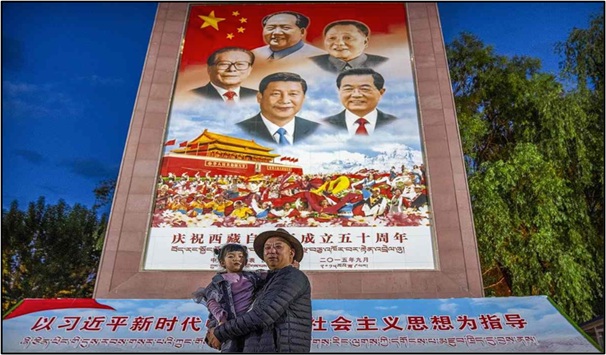
Beijing’s policies in Tibet have systematically eroded Tibetan identity, heritage, and autonomy through cultural assimilation, economic marginalization, and political repression. As the 66th Tibetan Uprising Day approaches on March 10, it serves as a stark reminder of the ongoing struggle against the oppressive Chinese regime. The 1951 “17-Point Agreement” promised autonomy but instead facilitated Chinese control over Tibet. Key strategies employed by Beijing include suppressing the Tibetan language by prioritizing Mandarin in schools and closing private Tibetan institutions. Economic policies have led to resource appropriation and an influx of Chinese migrants, further marginalizing the Tibetan population. Despite international condemnation, Beijing intensifies its crackdown on Tibetan culture, threatening its survival. The upcoming anniversary highlights the urgent need for global awareness and action to support Tibetans in their fight for autonomy and preservation of their unique cultural identity amidst relentless Chinese oppression..
Photo Credit: indo-pacificstudiescenter.org
A report by the East-West Centre Washington on 02 Oct 2004, In 1951, the “17-Point Agreement” was signed between China and Tibet, under which Tibet became a part of China. While the agreement initially allowed for some autonomy, including the preservation of Tibetan institutions, it also paved the way for a Chinese military administration and eventual reforms. According to the International Campaign for Tibet (ICT), China has largely deviated from the promises made in the agreement, instituting increasingly hardline policies that suppress Tibetan culture and religion and deny freedom of expression.
According to a news article published in tibet.net on 19 Oct 2020, one of the primary means by which Beijing is undermining Tibetan identity is through cultural assimilation. A key component of this is the suppression of the Tibetan language. China has expanded the use of boarding schools where Mandarin Chinese has replaced Tibetan as the main language of instruction. Tibetan educational sociologist Gyal Lo believes that these reforms are designed to prevent the younger generation from practicing their own language and culture, thus weakening their ability to resist Chinese rule.
In addition, the Chinese government has closed village schools and private schools teaching Tibetan, further limiting access to education in the Tibetan language. Critics argue that this language policy violates international human rights law. According to the UN special rapporteur on cultural rights, these policies run contrary to international human rights law.
According to the RFA, China’s policies in Tibet have also led to the economic marginalization of Tibetans. The Chinese state has appropriated Tibet’s natural and economic resources while encouraging large numbers of Chinese migrants to move to the region. This demographic shift threatens to further marginalize Tibetans in their own land.
A report by the Human Rights Watch 2020, China’s policies in Tibet have also led to the economic marginalization of Tibetans. The Chinese state has appropriated Tibet’s natural and economic resources while encouraging large numbers of Chinese migrants to move to the region. This demographic shift threatens to further marginalize Tibetans in their own land.
Tibetans face significant restrictions on their fundamental rights, including freedom of speech, assembly, movement, and religion. They are unable to openly discuss their history, have limited say in policymaking, and face extreme restrictions on their religious practices, access to information, and foreign travel.
The “Regulations on the Establishment of a Model Area for Ethnic Unity and Progress in the Tibet Autonomous Region,” which is poised to take effect in May, exemplifies this repression. This law aims to combat separatism and strengthen ethnic unity, but analysts like Sangey Kyap argue that it could be used to punish or discipline anyone discussing the preservation of Tibetan culture, language, and unity, as per VOA.
Beijing’s policies in Tibet have created a system of oppression that threatens the survival of Tibetan identity, heritage, and autonomy. From cultural assimilation and language suppression to economic marginalization and political repression, these policies aim to integrate Tibetans into the Chinese state. The international community has expressed concerns of these abuses, but activists say that Chinese officials have been busy in Tibet. Unless there is a change in approach, the unique cultural and spiritual identity of Tibet is in danger of disappearing.
Sources:
https://www.rfa.org/english/news/tibet/agreement-05252021171255.html
https://www.voanews.com/a/extremism-watch_exiled-tibetans-alarmed-chinas-unity-law/6183147.html
https://tibet.net/beijings-motives-for-crushing-tibetan-language/
https://www.files.ethz.ch/isn/35281/EWC_WP_02.pdf
