

KARGIL, 26 NOVEMBER
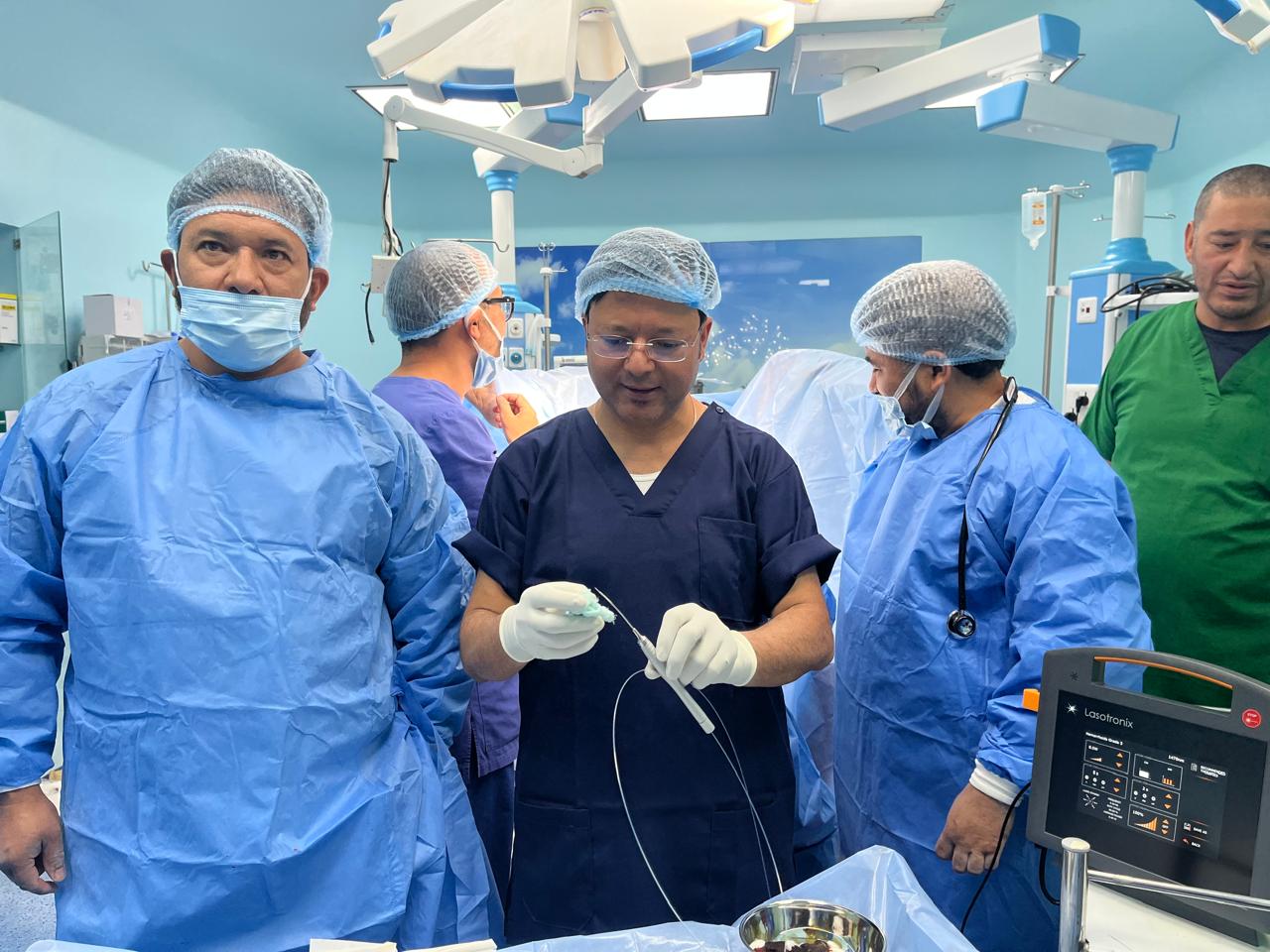
In a historic development for District Hospital Kargil, the Department of Surgery has begun performing LASER surgeries after receiving the latest advanced Lasotronic LASER Machine.
The first procedure was successfully conducted on 6 November 2024 in the main Modular OT, and the patient was discharged after complete recovery.
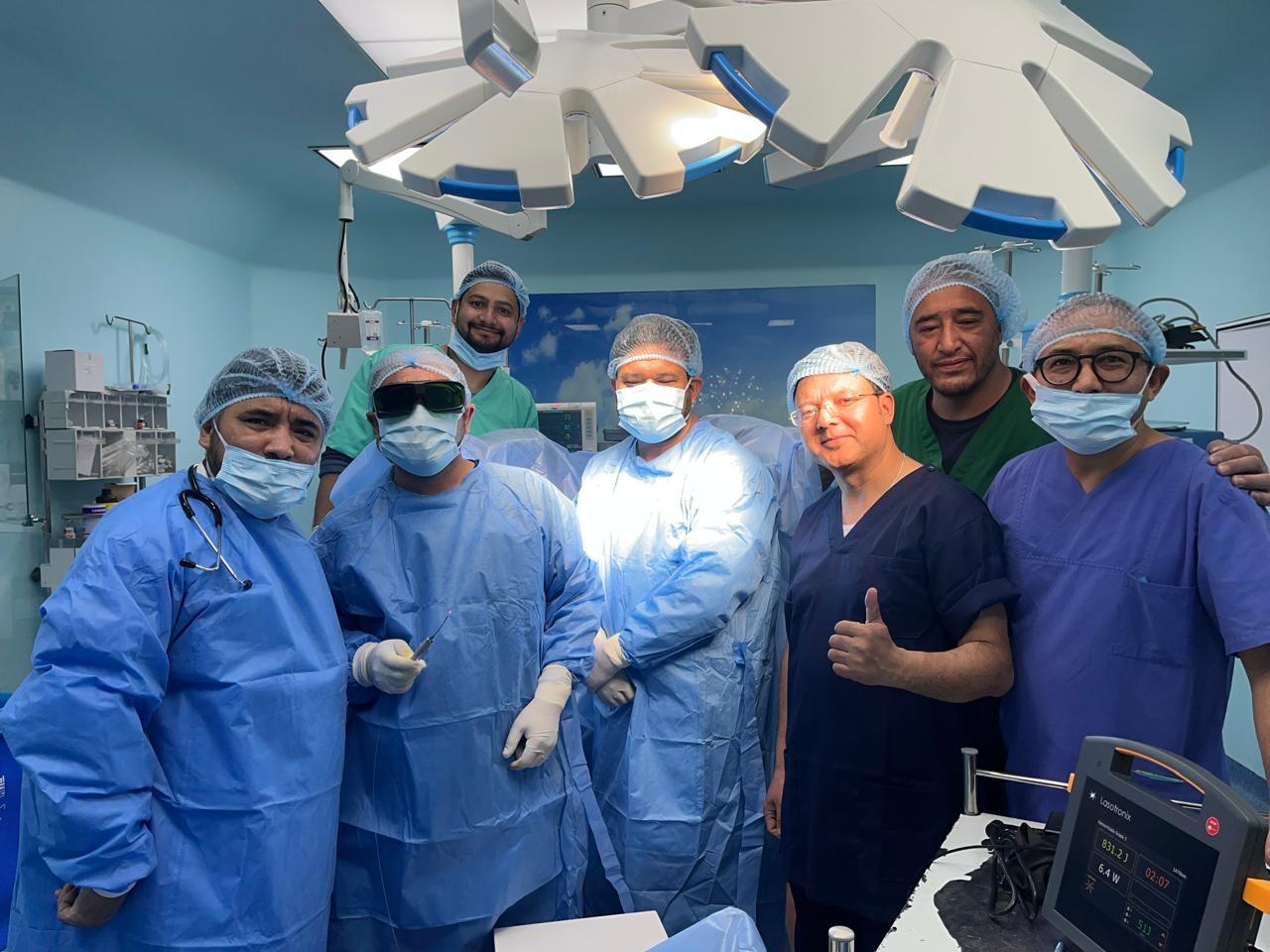
The technical setup of the LASER machine was carried out by Dr. Sajjad Hussain, while the LASER procedure itself was performed by Dr. Mohd Abass and Dr. Mohd Feroz, under the supervision of Dr. Tsewang Namgyal.
The Anaesthesia team was led by Dr. Asif Hussain, Senior Anaesthesiologist, supported by the dedicated OT staff.
Medical Superintendent, District Hospital Kargil, Dr Mohammad Abass Akhoon congratulated the team on the first successful LASER Hemorrhoidectomy and appreciated their continued efforts to adopt cutting-edge surgical techniques.
He emphasized that such advancements contribute to making the Department of Surgery at District Hospital Kargil a Centre of Excellence.
The Surgery Department expressed gratitude to the Hon’ble Lt. Governor Shri Kavinder Gupta, Hon’ble CEC Dr. Mohd Jaffer Akhone, Dr. Pawan Kotwal (IAS), Chief Secretary, Principal Secretary Health Sanjeev Khirwar (IAS),Deputy Commissioner & CEO Kargil Shri Rakesh Kumar (IAS), Director Health Service UT Ladakh Dr. Tashi Thinles, Chief Medical Officer Kargil Dr. Kacho Liaqat Ali Khan, and Medical Superintendent Dr. Mohammad Abass Akhoon for facilitating the procurement of the latest surgical equipment.
These advancements will greatly benefit poor and underserved patients of District Kargil by providing access to state-of-the-art treatment.
This latest LASER technique is available in only a few centres across India. LASER (Light Amplification by Stimulated Emission of Radiation)—specifically diode lasers—is used to treat surgical conditions such as varicose veins, fistulas, fissures-in-ano, hemorrhoids, and pilonidal sinuses.
LASER surgeries offer several advantages, including faster recovery due to minimal or no cuts, stitches, pain, or bleeding.
It would be Pertaining to mention here,that LASER surgeries are different from laparoscopic surgeries. Laparoscopic procedures have been routinely performed at District Hospital Kargil for the past eight years for conditions such as gallstones, appendicitis, hernias, and various abdominal and pelvic pathologies. LASER procedures, by contrast, use collimated, coherent, and monochromatic light delivered through radial and bare fibres to target diseased tissues. Diode lasers typically act on melanin, hemoglobin, and water in tissues, causing controlled degeneration. Diode LASERs of 980 nm and 1470 nm wavelengths are used for venous and proctology procedures and represent some of the most advanced surgical technologies available today.
