

The Galwan Valley clash on 15-16 June 2020 marked a significant turning point in Sino-Indian relations, leading to profound shifts in the geopolitical landscape and strategic calculus of both nations. This incident, the deadliest confrontation between Indian and Chinese forces in over four decades, has had far-reaching implications for bilateral ties, regional stability, and global geopolitics.
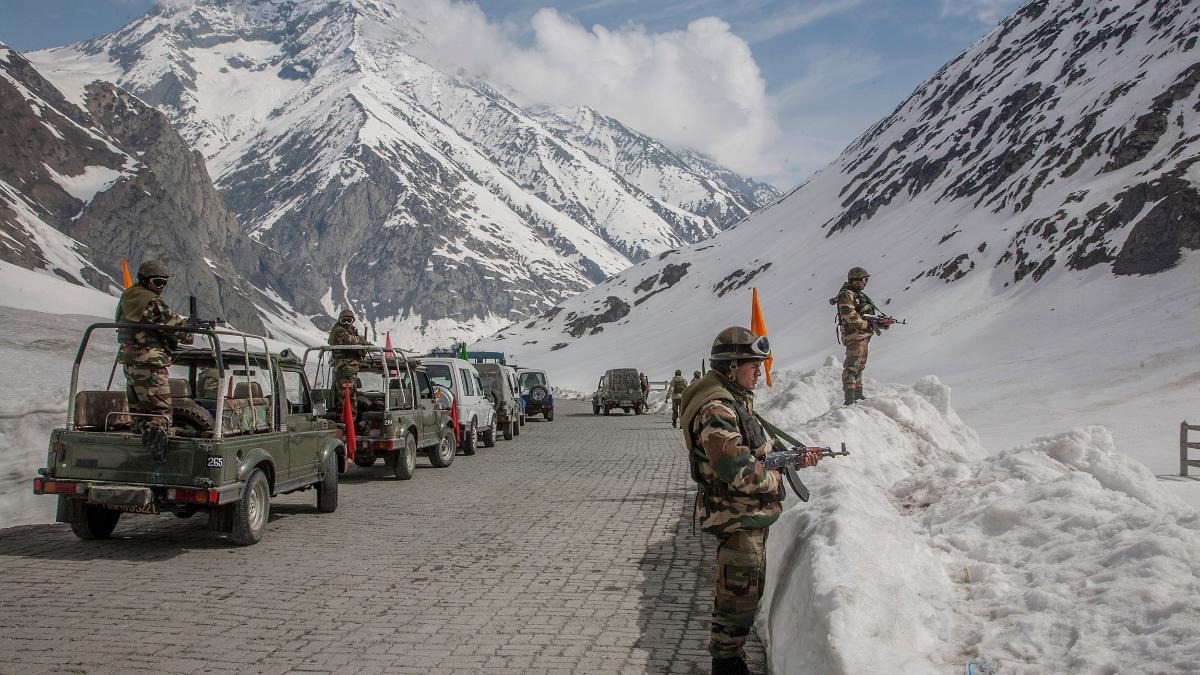
Historically, the Sino-Indian relationship has been fraught with tension, rooted in a long-standing border dispute. The Galwan Valley clash, occurring amidst the backdrop of these unresolved territorial issues, escalated tensions to an unprecedented level. The immediate aftermath saw both countries reinforcing their military presence along the Line of Actual Control (LAC), with India ramping up infrastructure development and China augmenting its logistical capabilities. There has been an overall increase in India’s deployment against China in all three sectors— the northern, central and eastern sectors.
Prior deployment by India directed towards China included 14 Corps based in Leh, 17 Corps and 33 Corps based in West Bengal, and 3 Corps and 4 Corps in the eastern sector.
India deployed over 68,000 Army soldiers, around 90 tanks and nearly 330 BMP infantry combat vehicles, radar systems, artillery guns and other weapon systems are deployed to eastern Ladakh from across the country along the Line of Actual Control (LAC) after the deadly clashes in the Galwan Valley. India has also rapidly increased the construction of roads, bridges, airstrips, and other logistical facilities to support military operations and enhance border infrastructure near LAC post Galwan incident.
However, it’s worth mentioning that deployment numbers are subject to change and can fluctuate based on specific events and circumstances.
China, on the other hand, in total, roughly 20,000 PLA soldiers are assessed to be deployed over the 250-mile front in the Aksai Chin along the LAC. China has rapidly reinforced its military infrastructure which included the construction of new roads, bunkers, and helipads, alongside the deployment of additional troops and advanced weaponry.
In the western sector, Beijing deployed one border regiment, backed by 02 divisions from the Xinjiang and Tibet Military Districts, with 04 combined arms brigades (CAB) in reserve. In the eastern sector, 03 light-to-medium CABs were deployed from other Theater commands. Additionally, China stationed 03 more CABs in the central sector, enhancing their overall military presence along the LAC. Key areas of focus included the strategically important regions of Eastern Ladakh, the Pangong Tso Lake area, and the Depsang Plains.
PLA has demanded the creation of an enlarged buffer zone of 15 to 20 kilometres in the Depsang Plains presently under India’s control. This is in addition to the 18-20 km of territory from Y Junction/Bottleneck to Patrolling Points 10,11, 11A, 12 and 13, the access to which has been physically denied by the PLA since May 2020. This proposal was reportedly made during the 18th round of Corps Commander level talks held in April 2023.
In response to the Galwan clash, India undertook several strategic measures to promote its defense posture. This included a significant increase in defense spending, expedited procurement of advanced weaponry, and a focus on enhancing surveillance capabilities. India also sought to strengthen alliances with other regional powers, notably through the Quadrilateral Security Dialogue (Quad) with the United States, Japan, and Australia. These moves signify a shift towards a more assertive and self-reliant defence strategy.
Diplomatically, the post-Galwan period has been marked by a cautious engagement between India and China. Multiple rounds of military and diplomatic talks have been held to de-escalate tensions, but progress has been slow and often contentious. The trust deficit between the two nations has widened, complicating efforts to achieve a lasting resolution.
The Galwan incident has also reverberated on the global stage, impacting international geopolitics. It has drawn attention to the Indo-Pacific region as a critical arena for great power competition, with the United States and its allies viewing India as a pivotal counterbalance to China. Consequently, the U.S.-India strategic partnership has deepened, encompassing areas such as defence cooperation, intelligence sharing, and joint military exercises.
Furthermore, the European Union and other global players have shown increased interest in the stability of the Indo-Pacific, recognizing the broader implications of Sino-Indian tensions for global trade and security. The Galwan clash has thus underscored the interconnected nature of regional conflicts and their potential to reshape global alliances and power structures.
Economically, the post-Galwan period has seen India adopting measures to reduce its dependence on Chinese imports, promoting self-reliance through the “Atmanirbhar Bharat” initiative. This shift towards economic nationalism has led to the diversification of supply chains and increased emphasis on domestic manufacturing.
The Galwan clash has stimulate India’s push to reduce dependence on Chinese technology, accelerating efforts to decouple from it. Restrictions on Chinese apps and telecom gear, alongside a drive for homegrown alternatives, demonstrate India’s strategy to protect its digital sovereignty and address security concerns. This shift underscores the nation’s commitment to promoting indigenous innovation and reducing reliance on external sources, reflecting a broader trend towards bolstering technological self-reliance in the wake of geopolitical tensions.
The Galwan Valley clash significantly changed Sino-Indian relations and regional geopolitics, heightening tensions and influencing strategic dynamics between the two nations, impacting their future interactions and regional stability. The strategic, diplomatic, and economic shifts that have emerged in its wake underscore the complexity and volatility of this bilateral relationship. As both nations navigate this new era of heightened tensions and strategic recalibrations, the broader implications for regional stability and global power dynamics will continue to unfold, shaping the future of the Indo-Pacific and beyond.