

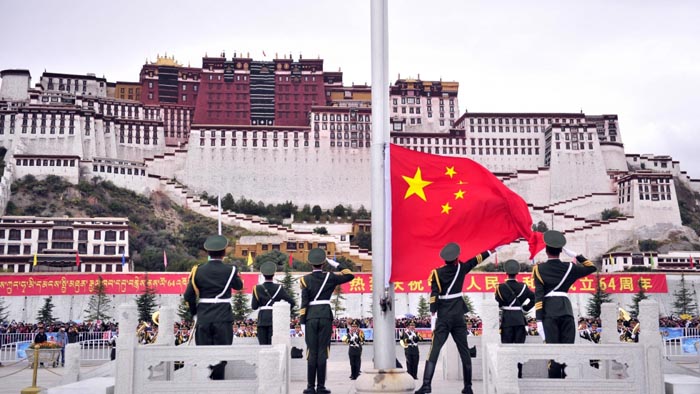
Tibet, a region with a rich cultural heritage and a history steeped in spirituality, has become a focal point of international attention due to the complexities surrounding its autonomy and the influence of external actors. However, in recent years, Tibet has also found itself entangled in a web of disinformation, where narratives are manipulated to serve political agendas and distort the truth. To understand the dynamics of disinformation in Tibet, one must first recognize the historical context.
The region has long been a sensitive geopolitical issue, with debates surrounding its autonomy and the influence of China. This historical backdrop sets the stage for the manipulation of information to sway public opinion.
Disinformation in Tibet manifests through various methods, including state-controlled media, social media manipulation and propaganda campaigns. State-controlled narratives often downplay dissent and portray a harmonious picture of Tibet under Chinese rule. Meanwhile, social media platforms become battlegrounds for competing narratives with both sides vying for international support.
IMPACT
The consequences of disinformation in Tibet are profound for the local population. It not only contributes to the suppression of dissenting voices but also hampers the ability of Tibetans to share their stories and perspectives on a global stage. The dissemination of false information can also contribute to the exacerbation of tensions within the region.
CURRENT GEOPOLITICAL CLIMATE
The current geopolitical climate in Tibet is characterized by territorial disputes and political tensions. These disputes involve neighbouring countries such as China, India, and Nepal, as well as the Chinese government’s policies towards Tibet’s political and cultural identity. As a result, there is significant disinformation and propaganda spread about Tibet on both the official and unofficial level. This disinformation often involves accusations against the Dalai Lama, as well as portrayals of the Tibetan resistance as extreme and violent. It is important for individuals to fact-check any information they encounter about Tibet and to seek out diverse perspectives to fully understand the complexities of the geopolitical situation.
CCP SPONSORED DOCUMENTARIES SPREAD DISINFORMATION ABOUT TIBET
Chinese documentaries are spreading misinformation about Tibet. The Chinese Communist Party is using propaganda tools, including documentary films, to promote its narrative and legitimize its occupation of Tibet. One such documentary, “Daughters of Tibet,” focuses on the lives of Tibetan women and claims to highlight their achievements and freedom in modern Tibet. However, critics argue that these documentaries are misrepresentations of the true conditions in Tibet, where human rights violations continue to occur. The Chinese propaganda aims to portray Tibet as an integral part of China and downplay any notions of Tibetan independence. Overall, the article emphasizes the need to challenge and call out these false narratives presented in Chinese documentaries about Tibet.
DISINFORMATION THROUGH ALL PLATFORMS
The CCP uses Tibetology forums and think tank forums to legitimize its claim on Tibet. The CCP’s establishment of institutions and events are also promoting false narratives to re-assert its control over Tibet. In Aug 2022, China-appointed Panchen Lama, holds panel discussions with experts and scholars to further propagate the CCP’s sponsored narrative.
SOCIAL MEDIA MANIPULATION
The rise of social media has amplified the dissemination of information and disinformation alike. Various parties, including government-sponsored entities and independent actors, engage in shaping narratives on platforms like Twitter, Facebook, and Instagram. Hashtag campaigns, manipulated images, and coordinated efforts contribute to the spread of misleading information.
PLAYING WITH WATER RESOURCES DEVELOPMENT DATA
On October 10, 2023, the Global Times revealed that the Chinese Communist Party (CCP) has been spreading misinformation about China’s water resources development in Tibet. It shows China’s downplay in ecological and economic disruption in Tibet, which is under constant stress due to CCP-driven activities like mining, dam construction and deforestation. China sees Tibet’s water resources as a key asset for its economic growth. However, the dam building has had significant environmental and social impacts, with local Tibetans not adequately compensated. The incident highlights the need for transparent information and critical thinking when evaluating news from Chinese state-controlled sources.
International organizations, human rights groups, and the media play a pivotal role in shedding light on the realities in Tibet. Fact-finding missions, independent journalism and advocacy for free expression become essential tools in uncovering the truth and challenging the narratives perpetuated by disinformation.
GLOBAL REPERCUSSIONS
Disinformation in Tibet does not confine itself within the region’s borders. It has global repercussions as international actors engage in the debate. Misinformation can influence diplomatic relations, shape public perception and impact policy decisions, making it imperative for the global community to critically evaluate the information they consume.
Disinformation in Tibet is a complex web woven with historical, political, and cultural threads. State-sponsored narratives, social media manipulation and global repercussions underscore the challenges Tibet faces in presenting an authentic and unbiased narrative. The role of international organizations, the resilience of Tibetan communities and the need for critical media literacy emerge as crucial elements in navigating this intricate landscape. As disinformation persists, the quest for truth and justice for the people.
