

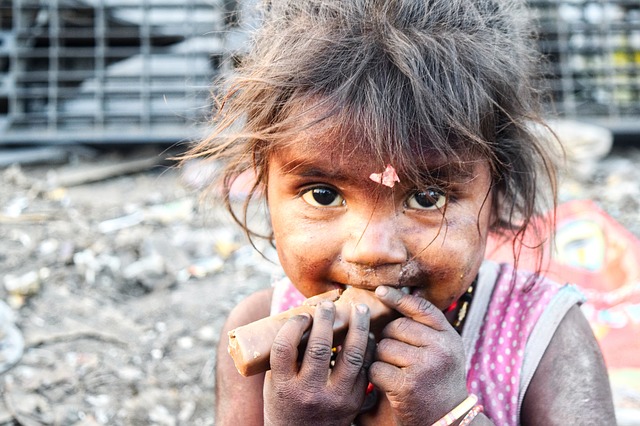
The Global Hunger Index, 2022 in its 17th edition ranked India 107 among 121 countries out of 136 nations. India was accorded a dismal score of 29.1 out of 100, falling under ‘serious’ category and was placed behind Sri Lanka (66), Myanmar (71), Nepal (81) and Bangladesh (84). Afghanistan was the only country behind India among SAARC nations. The Modi government has rejected the report, but those in the field find it distressing and question the government’s performance over the years.
Authors of the report primarily refer to the United Nations’ Sustainable Development Goal 2 (SDG 2) that endeavours to achieve ‘zero hunger’ by 2030. According to them, the report attempts to “raise awareness and understanding of the struggle against hunger”. The index score is computed using four broad indicators — undernourishment (measure of the proportion of the population facing chronic deficiency of dietary energy intake), child stunting (low height for age), child wasting (low weight for height) and child mortality (death of a child under the age of five).
A nation with a low score on the index gets a higher ranking, and the higher the country’s score, the lower its ranking. All the four indicators used in calculating global hunger are recognised by the world community, including India, and used for measuring progress towards the UN SDGs. In 2021, India ranked 101 out of 116 countries, and a year before it was placed 94th.
The latest ranking is poor quite justifiably as undernourishment and malnutrition are severe problems in the country, while in matters of child wasting it’s possibly the worst in the world. But the Ministry of Women and Child Development has said the report “is not only disconnected from ground reality but also chooses to deliberately ignore the food security efforts of the Central government especially during the pandemic.” Besides, “Three out of the four indicators used for calculation of the index are related to the health of children and cannot be representative of the entire population.”
The report’s rejection can’t be said to be judicious and acceptable globally. Some commentators have highlighted the government’s flimsy objections and questioned the WHO’s criteria. But the criteria is fixed by an international committee of experts from different countries across the globe. It would be better for India to suggest modifications, rather than discard the report.
According to Niti Aayog, 25 per cent of the population in India is poor. Every fourth person of the total population of India is in poverty. However, the somewhat encouraging news is reflected in the Multidimensional Poverty Index, 2022 which found that as many as 415 million people exited poverty in India in 15 years (2005-06 to 2019/2021) with the incidence of poverty showing a steep decline from 55.1 per cent to 16.4 per cent. The UNDP was quick to add in the report the challenge faced by India as it continued to have the largest number of poor people worldwide at 228.9 million in 2020.
The prevalence of hunger is directly related to the incidence of poverty in the country. Poverty in India is an ever-present problem that has endured throughout the country’s history and unfortunately it seems that it will continue to be a problem as long as income inequality continues to exist and the percentage of the population living below the poverty line remains so high. Although there are some schemes that have been put in place to help alleviate poverty, there will always be those who struggle due to lack of access to resources and opportunities.
People may also stay trapped in poverty because it has become too risky to move up to better jobs; they often do not have money to buy equipment and supplies, pay school fees for their children or start small businesses such as shops. The scenario is quite grim in the rural and backward areas. With a huge population and limited resources, poverty alleviation in India has been a slow, yet persistent process. Successive governments have tried to stem rural-urban migration through pro-rural policies aimed at improving living conditions and employment opportunities, but millions still live below their means.
It is worth mentioning here the World Bank’s report, Poverty and Shared Prosperity (2022), which sheds light on a historic increase in global poverty in 2020 due to the Covid-19 pandemic shock — 71 million more people are likely living in extreme poverty, 11 per cent higher than in 2019. The magnitude has been the largest in South Asia. Between 23-56 million or 32-80 per cent of the poor are estimated to be in India, a feature consistent with the shock GDP contraction in the pandemic year, the largest among the developing economies.
In 2021, according to the World Bank, little progress was made to reverse the pandemic-induced increase in global poverty to pre-Covid levels. Overall, these have been very uneven and not strong enough growth in at least low and middle-income countries. Worse, this restoration is not expected to be stalled this year, at least in India due to high food and energy prices. Despite the RBI’s interventions, the increase in food inflation has greatly affected the poorer sections, causing unimaginable sufferings.
Deepening inequality, which is reflected in the latest Oxfam report indicates the scale of the chasm. This includes leakages in the public distribution system, agrarian distress and effects of climate change are obviously the causes of poverty and hunger. Added to this are the disruptions of the mid-day meal programme and the paltry sum allocated to the scheme. The starvation deaths in Jharkhand and elsewhere may be attributed to the bureaucracy’s propensity to ignore hunger deaths and not evolve any solution to tackle the problem.
Thus, food insecurity remains an alarming issue due to such entitlement failures in India. While the government has rejected the findings of the Global Hunger Index as “unscientific”, we cannot ignore the dismal ground realities. India faces an undernutrition challenge that is not only large but worsening, more so after the pandemic. It is time for the government to face up to these inconvenient truths and pursue the means and mechanisms needed to improve the situation.
However, fast the economy grows, poverty and hunger remain big challenges before the government. The need therefore is to strengthen the social infrastructure of the country and focus on villages in the rural and backward districts of the country. There is a need to increase funding for poverty eradication and undernourishment programmes, specially the zero hunger programmes by curtailing other expenses, however necessary they may be.
India cannot move ahead when a substantial portion of the population struggles for its livelihood, living in poverty and squalor and doesn’t live a human existence. It should take the aim of the GHI report i.e. to “raise awareness and understanding of the struggle against hunger”, in the right spirit. Act it must and do so earnestly. —INFA
