Close Menu
Indus Dispatch
  • Home
  • Top Stories
  • Editorial
  • Ladakh Stories
  • Essential Ladakh
  • Forgotten Geography
What's Hot

LG  Saxena Announces 275% Hike in Artisan Trainee Stipend, Nearly 1,000 Youth to Benefit

September 7, 2026

Kargil Tops Men, Leh Dominates Women as UT-Level Athletics Meet Concludes

September 7, 2026

Culture, Youth Power Take Centre Stage as Two-Day Drass Festival Ends on a High Note

September 7, 2026
Facebook X (Twitter) Instagram
Indus Dispatch
Monday, September 7
Facebook X (Twitter) Instagram YouTube
  • Home
  • Top Stories

    LG  Saxena Announces 275% Hike in Artisan Trainee Stipend, Nearly 1,000 Youth to Benefit

    September 7, 2026

    Ladakh Showcases Horticulture Potential as 250+ Farmers Join Grand Kisan Mela in Leh

    September 7, 2026

    Tawang and Joshimath: India and China Build New Guardrails on a Contested Border

    September 3, 2026

    LG Saxena Approves 7 LAHDCs, Paving Way for Local Elections

    September 3, 2026

    LG Saxena pushes Hunderman as Ladakh’s next border tourism hotspot

    September 3, 2026
  • Editorial

    The General Who Commanded Doklam and Galwan, Now Erased

    September 3, 2026

    Ladakh at a Turning Point: From Administrative Reform to Democratic Renewal

    August 20, 2026

    Ladakh’s Democratic Transformation: A Hill Council for Every District

    July 13, 2026

    Kucha: India’s Civilisational Bridge Across the Taklamakan

    June 20, 2026

    Agni Desa and India’s Old Road to Central Asia

    June 12, 2026
  • Ladakh Stories

    Kargil Tops Men, Leh Dominates Women as UT-Level Athletics Meet Concludes

    September 7, 2026

    Culture, Youth Power Take Centre Stage as Two-Day Drass Festival Ends on a High Note

    September 7, 2026

    Culture, Youth Power Take Centre Stage as Two-Day Drass Festival Ends on a High Note

    September 7, 2026

    DSHO Reviews Sheep Husbandry Services Across Nyoma, Engages Nomadic Herders on Ground Issues

    September 7, 2026

    25 Years of Seva Sankalp Abhiyan Celebrated in Leh

    September 4, 2026
  • Essential Ladakh

    Alchi Monastery: A Treasure of Ancient Art in Ladakh

    April 4, 2026

    Lamayuru Monastery: Exploring the Moonland of Ladakh

    April 4, 2026

    Diskit Monastery: Spiritual Majesty Amidst Nubra’s Sand Dunes

    April 4, 2026

    Hemis Monastery: The Grand Heart of Ladakhi Culture

    April 4, 2026

    Thiksey Monastery: Ladakh’s Mini Potala with Spiritual Grandeur

    April 4, 2026
  • Forgotten Geography
Indus Dispatch
Home»Top Stories»Youths in border village of Ladakh look towards stars for their future
Top Stories

Youths in border village of Ladakh look towards stars for their future

The Dispatch StaffBy The Dispatch StaffAugust 4, 2025Updated:August 4, 2025No Comments4 Mins Read
Facebook Twitter Pinterest LinkedIn Tumblr Email
Share
Facebook Twitter LinkedIn Pinterest Email

Leh: Youths in a border village in Ladakh are looking up towards the dark night sky for their future, with the stars shining bright down on their hopes and expectations.

They are the ‘astro-ambassadors’ at Hanle, the country’s first dark sky reserve, who have taken up stargazing as a profession, giving astronomy enthusiasts and tourists a glimpse into the vast, deep universe through their telescopes.

“The Indian Astronomical Observatory (IOA) is located here, which has been a driving point for the declaration of the Hanle Dark Sky Reserve (HDSR). The local administrations came together with them to set this concept of ‘astro-ambassadors’ rolling,” Rangdol Dorjey, one of the youths enrolled in this initiative, told PTI here.

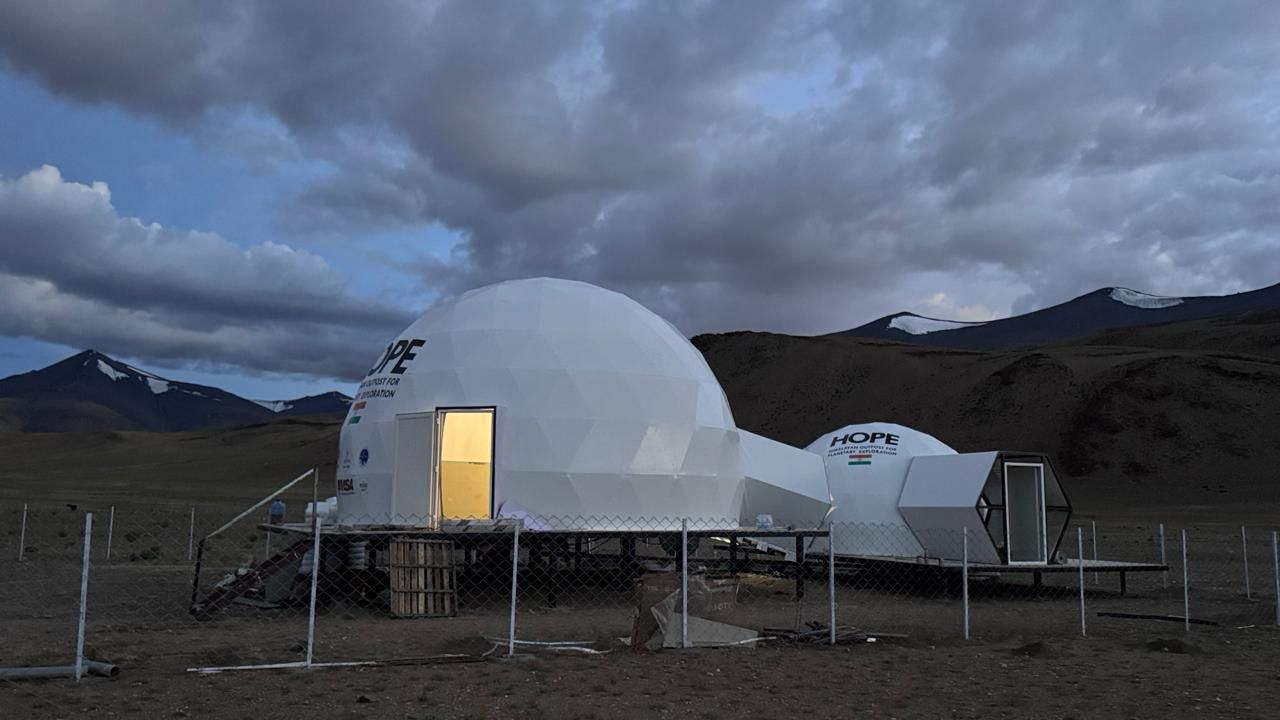
The region around Hanle, along the border with China, has one of the darkest skies in the country and is home to the IAO of the Indian Institute of Astrophysics (IIA, Bengaluru).

A region of about 22 km radius around Hanle, inside the Changthang Wildlife Reserve, was declared as the HDSR in December 2022.

It is the first dark sky reserve in the country, and is being operated through an MoU between the Union Territory (UT) of Ladakh, Ladakh Autonomous Development Council (LAHDC) Leh, and IIA.

“After the different stakeholders came together, they asked the ‘Nambardar’ (village headmen) to collect applications from willing youths to train as astro-ambassadors. About 40 applicants applied for it, with 24 of us getting selected,” another ‘astro-ambassador’ Kesang Dorjey said.

The selected youths are from the seven hamlets that together form Hanle village, with 70 per cent of the astro-ambassadors being women, Tsering Yangdol added.

Rangdol said they were imparted training for 15 days by the IIA on how to operate a telescope, look for the celestial bodies, etc, and also provided with an 8-inch telescope each, funded by UT Ladakh.

He said the area draws tourists for the IOA, the world’s tenth highest optical telescope in the world at present, located in the village, and Khardung La, the world’s second highest motorable pass, which is also nearby.

Tourists also came for wildlife spotting as the village is located within the wildlife reserve, Rangdol added.

With the declaration of HDSR, the area is now receiving tourists for stargazing also, Yangdol said.

She said favourites among the tourists are spotting the milky way, looking for Saturn, Jupiter and pole star, with the stargazing done mostly between 9 pm to 11 pm. Dark moon nights are best for spotting the celestial bodies, she added.

“Generally, the skies are clear here. But if there are clouds, we continue till past midnight also, as the skies clear out soon,” Yangdol said.

Though stargazing is not in itself a means of income to sustain a family at the moment, tourist footfalls have been increasing with this facility in Hanle gaining popularity through social media, Kesang said.

“Some of us also run homestays to add to our income. Source of income is limited here, and being selected as ‘astro-ambassador’ has definitely helped increase our income,” he said.

Along with the rise in tourist arrivals, issues of sustainability are also being addressed by all stakeholders, including the IIA, administration and astro-ambassadors.

A HDSR Light Management Plan, which prescribes rules, guidelines and measures to keep light pollution inside HDSR to a minimum, complements astro-tourism.

Equipment like thick curtains, warm light bulbs, lamp shades, etc, are being provided to each house inside the region by UT Ladakh.

“Sustainable tourism committees have been formed, which hold regular community meetings. Light pollution has to be manageable, and we are also working on awareness among the local people and visitors to maintain the uniqueness of the region,” Rangdol said.

The astro-ambassadors are looking to beat any challenges that may come in the way and find their future among the stars twinkling away in the dark, night sky in this remote village.

Share. Facebook Twitter Pinterest LinkedIn Tumblr Email
The Dispatch Staff
  • Website
  • Facebook
  • X (Twitter)

The Dispatch is a diversified news and knowledge media startup in India. Reach us at [email protected] or WhatsApp +91 9103331503

Related Posts

LG  Saxena Announces 275% Hike in Artisan Trainee Stipend, Nearly 1,000 Youth to Benefit

September 7, 2026

Ladakh Showcases Horticulture Potential as 250+ Farmers Join Grand Kisan Mela in Leh

September 7, 2026

Tawang and Joshimath: India and China Build New Guardrails on a Contested Border

September 3, 2026
Leave A Reply Cancel Reply

Top Posts

Chief Secretary confirms May 22 MHA talks with KDA, LAB to proceed as scheduled

May 20, 20262,416 Views

Anand Jain posted as DGP Ladakh

June 22, 20261,181 Views

Ex-LBA president writes to HM Shah, flags imbalance in Ladakh dialogue representation

November 10, 20251,068 Views

Thupstan Chhewang steps down as Leh Apex Body chairman; members accept resignation

May 4, 20261,037 Views
Stay In Touch
  • Facebook
  • Twitter
  • Instagram
  • YouTube
Facebook X (Twitter) Instagram YouTube
© 2026 Indus Dispatch. All Rights Reserved. | Powered by Ideogram Technology Solutions [P] Ltd..

Type above and press Enter to search. Press Esc to cancel.