

Militancy has resurged in part of Khyber Pakhtunkhwa over the last recent months, particularly in the province’s tribal districts that were affected by terrorist violence. The region has witnessed death, destruction and displacement due to militancy, and the subsequent military operations.
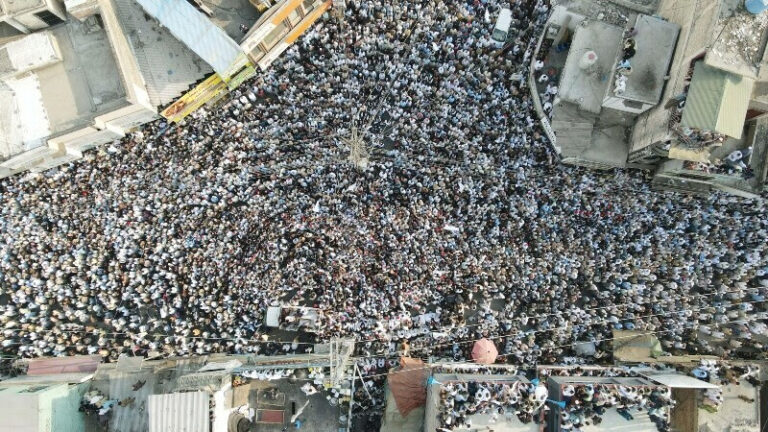
In Swat, following an incident in which gunmen killed a van driver and injured two schoolchildren, the residents demonstrated demanding the arrest of the culprits and warned of marching to Islamabad if the demands were not met within 24 hours. However, this was not the first demonstration in Swat. The residents held a series of demonstrations demanding decisive action against “anti-peace elements” in the valley and warned taking up arms if the State failed to do so. They would want to preserve the “hard-earned peace” in the region.
These demonstrations have come amidst a surge in militant attacks in the region. A few of the incidents include the following: attack on PTI MPA Malik Liaquat Khan in Lower Dir; a video on social media claiming TTP member interrogating an army major whose hands had evidently been tied behind his back, and asserting that the militants had taken him and two others hostage; and an attack on policemen in the border of Swat and Dir districts.
Violence in Swat: Five factors
First, the resurgence of TTP in the region. In the last two years, the Tehreek-i-Taliban Pakistan(TTP) has returned to several areas of Khyber Pakhtunkhwa as part of the TTP-government negotiations being held in Kabul. Five splinter groups, including Jamaatul Ahrar and Hizbul Ahrar, returned to their fold (from?) Afghanistan. However, it is unclear how these militants returned given that the negotiation remains inclusive. Meanwhile, some have argued that the TTP members have returned with arms;, some believe they entered Dir district and later reached Swat.
However, the TTP presence has been seen in several areas within the region. According to Pakistan Institute for Conflict and Security Studies (PICSS), Khyber Pakhtunkhwa and the erstwhile Federally Administrative Tribal Areas (FATA) region recorded a 137 per cent and 75 per cent increase in militant attacks in September 2022 compared to August 2022 respectively. Five militant attacks in Khyber Pakhtunkhwa and three militant attacks were claimed by TTP in the FATA region.
While there is a resurgence of the TTP, the government has initiated reconciliation negotiations with the group. However, the last round of talks between members of a joint Pashtoon Jirga in Kabul in July ended without any progress. Until now, there has not beenormal announcement or consensus reached during this negotiation as the TTP remains adamant on their demands.
Second, the threat from splinter groups. While there has been a surge of militancy in Swat, the perpetrators remain unknown. Since August 2022, neither has the TTP nor any other group claimed responsibility for the attacks. The Khyber Pakhtunkhwa government spokesperson claimed that ‘splinter groups’ opposed to the peace negotiations between the state and the banned TTP were behind the upsurge in violence.
Third, the failure of the National Action Plan. The National Action Plan (NAP) to counter terrorism saw success in successful Karachi operations and the merger of the FATA in Khyber Pakhtunkhwa was an important achievement under the plan. However, the plan was never fully implemented due to several reasons, including lack of civilian ownership for the execution of the plan, confusion on the definition of terrorism and absence of a national narrative on terrorism. Almost eight years later the sustainability and efficiency of these efforts are being tested. Following the recent spate of violence, the incumbent government has decided to revisit the action plan and possibly revive the National Counter Terrorism Authority (Nacta). However, the effectiveness of such measures would only see success if they can implement sustainable steps to curb the threat of terrorism.
Fourth, the centre-province politics. Amid the surge in militancy in Swat, the federal and provincial governments have been politicising the issue. In a tit-for-tat, the PML-N-led federal government blamed the PTI government in Khyber Pakhtunkhwa for failing to address the issue. However, the Khyber Pakhtunkhwa government spokesperson Barrister Muhammad Ali Saif claimed that the security situation in better in the province stating that border management is the responsibility of the federal government and national institutions, passing the buck on to Defence Minister Khwaja Asif. It is unfortunate these concerning issues become politicises due to centre-province tension. This in turn only jeopardises the issue further.
Fifth, the Afghan Taliban. The return of the Taliban to Afghanistan sparked hopes of addressing the threats of militancy in Pakistanand ensuring that Afghan soil is not used for cross-border attacks. However, the Taliban has shown no particular interest towards the issue. Although the Taliban is playing the role of the mediator in the negotiations between the TTP and the government they have also raised disappointment over the statements of Pakistani lawmakers about the talks. Meanwhile, whether indirectly or directly the return of the Taliban has fuelled the surge of militancy in the country.
References
Tahir Khan, “Why and how is the TTP resurfacing in Swat?,” Dawn, 12 October 2022
Fazal Khaliq, “Swat residents warn of vigilantism if terror activities not reined in,” Dawn, 7 October 2022
Aasim Sajjad Akhtar, “Why Swat matters,” Dawn, 14 October 2022
“Militancy redux,” Dawn, 12 August 2022
“Renewed threat of militancy,” Dawn, 28 July 2021
“School van attack: Swat protesters end 40-hour sit-in after successful negotiations with administration,” Dawn, 11 October 2022
“Anti-militancy protests,” Dawn, 13 October 2022
“Militancy fears,” Dawn, 6 September 2022
Syed Irfan Raza, “Govt to revisit National Action Plan,” Dawn, 28 April 2022
Saleem Shahid, “Implementation of National Action Plan against terrorism reviewed,” Dawn, 31 May 2021
Pakistan Reader is an academic exercise at the National Institute of Advanced Studies (NIAS) in the Indian Institute of Science Campus, Bangalore, India. The objective of this alert – “Pakistan Reader – Evening Brief” is to update the readers on contemporary developments within Pakistan, on a regular basis. The PR Evening Briefs are a part of the focus on Pakistan at the International Strategic and Security Programme (ISSSP) within the NIAS.
