

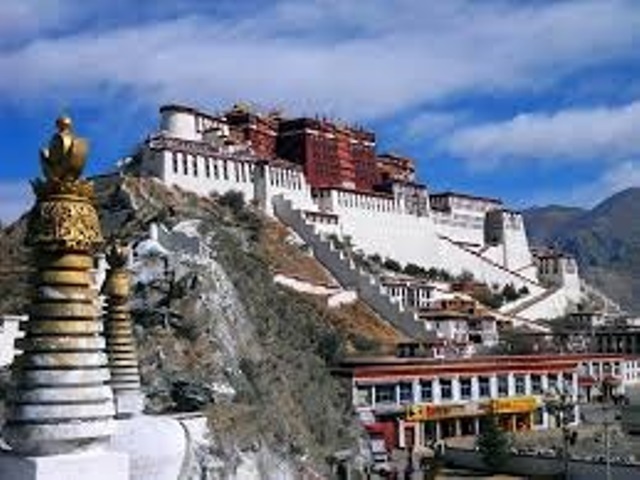
Introduction
Sinicization, in its broadest sense, refers to an effort to conform any religious faith’s theory and belief systems to CPC ideals. China is pushing Tibet’s sinicization—a multifaceted and ongoing process—by attempting to incorporate Tibetan society, culture, and religion into a broader Chinese identity. This phenomenon has been more intense since Tibet was annexed by the People’s Republic of China in 1951, and continues till the time, it has had a significant and adverse impact on the politics, society, and culture of the Tibet and Tibetan people.
Historical Background
Tibet has a long and complicated history with China, having had periods of autonomy or independence mixed with differing degrees of Chinese influence. But after the People’s Liberation Army invaded Tibet in 1950 and the Chinese government formally annexed the area in 1951, the current phase of sinicization got underway. Tibetans were supposed to have some degree of self-governance once the Tibet Autonomous Region (TAR) was established in 1965, but in reality, the Chinese Communist Party has tightened its grip over the area.
As People’s Liberation Army seized Tibet, Communist Government started to impose further control over the area. Beijing has attempted to force a significant number of Han Chinese people into Tibet over the years by using economic development as a springboard and by suppressing aspects of Tibetan culture and religion. While some academics refer to this process as “Sinicization,” Tibetan organizations prefer to refer to it as “cultural genocide.”
Cultural Social and Religious Impact
The five major religious groups in China—Buddhism, Daoism, Catholicism, Protestantism, and Islam—discussed a plan in 2015 to Sinicize their doctrines. The loss of Tibetan cultural and religious traditions is one of the most obvious effects of sinicization in Tibet. Chinese policy has primarily targeted Tibetan Buddhism, which is essential to Tibetan identity.
By requiring political education for monks and nuns, registering monasteries, and placing religious institutions under state surveillance, the Chinese government has attempted to restrict the practice of Buddhism. Chinese intervention has also affected the choice of religious leaders, such as the Dalai Lama, with the Chinese government claiming control over the high lamas’ reincarnation cycle.
The authorities persisted in imposing limits on the size of Buddhist monasteries and other religious establishments, as well as in forcing monks and nuns to leave their homes and refrain from engaging in religious activity abroad. In an effort to reframe and rewrite religious teachings to conform to CCP ideology, the CCP persisted in promoting Sinicization measures. Norbu Gyaltsen, the youngster that the Dalai Lama recognized as the Panchen Lama at the age of six vanished in 1995 together with his family, and his whereabouts were never confirmed.
Another crucial area of sinicization is language. Since Mandarin Chinese has become more and more common as the primary language of instruction in schools, the Tibetan language has frequently suffered.
In Tibet, boarding schools have been established, with Chinese serving as the only language of instruction. Tibetan children are likewise being forced to adopt a Chinese way of life. Concerns regarding the disappearance of the Tibetan language and its significance for cultural preservation have arisen from this change. Many believe that the preference for Mandarin over Tibetan is a conscious attempt to erode Tibetan cultural identity.
Demographic Changes
The sinicization of Tibet has also been significantly influenced by changes in the population. The migration of Han Chinese to Tibet, especially to cities like Lhasa, the capital of the TAR, has been promoted by the Chinese government, which has caused Tibetans to fear cultural dilution and marginalization.
Following his ascent to power, Deng Xiaoping declared in 1987 that “two million Tibetans are not enough to handle the task of developing such a huge region and send Han to Tibet area. This was a component of his “four modernizations” agenda, which also involved the gradual relocation of millions of Chinese labourers to Tibet and other “border regions.” Economic policies that favour Chinese-owned businesses and sectors go hand in hand with these demographic shifts, frequently putting Tibetans at a disadvantage, many Tibetans see this as a type of economic colonization that favours Han Chinese residents over the native populace.
Political Persecution
Political repression is another feature of Tibet’s sinicization. With strong security and constant monitoring, the Chinese government tightly regulates every element of Tibetan life. Tibetan opposition is strictly prohibited, including displays of it through internet communication, cultural events, and protests.
Chinese authorities insisted on having Buddhist monasteries switch works from Tibetan to Mandarin. Monks, nuns, and ordinary individuals were nonetheless subject to restrictions on their religious activities which included forbidding them from burning incense or hanging prayer flags. along with forcing them to replace pictures of the Dalai Lama and other lamas in their houses with photographs of CCP officials.
The attendance of children in religious festivals, and religious education were regulated. It has been claimed by several sources that Tibetans are still facing prejudice from society when they go on pilgrimages, work, or conduct business Numerous cases of arbitrary imprisonment, torture, and other types of repression against Tibetans who defy Chinese authority have been documented by international human rights organizations.
International Response
Global opposition of Tibet’s sinicization has been voiced, especially by Tibetan advocacy groups and human rights organizations. The Central Tibetan Administration (CTA), which is headquartered in Dharamshala, India, is in charge of the Tibetan diaspora and has worked nonstop to advocate for the preservation of Tibetan culture and autonomy as well as to increase public knowledge of the situation in Tibet. However, many nations find it difficult to adopt firmly opposing China’s actions in Tibet due to the Chinese government’s economic and political might on the world arena.
Director of Human Rights Watch China Sophie Richardson warned rights watchers that Xi’s comments about faith are concerning, “Xi’s campaign of Sinicization is a model of anti-rights policies. People have the right to worship and believe as they like.
Conclusion
The preservation of Tibetan identity and autonomy is severely threatened by the sinicization of Tibet. Tibet’s unique culture, language, and religious customs are under jeopardy as long as the Chinese government maintains its territorial dominance. The truth is that Tibetans are fighting a losing battle to preserve their political and cultural independence in the face of persistent efforts at sinicization, despite continued international pressure and advocacy efforts.
