
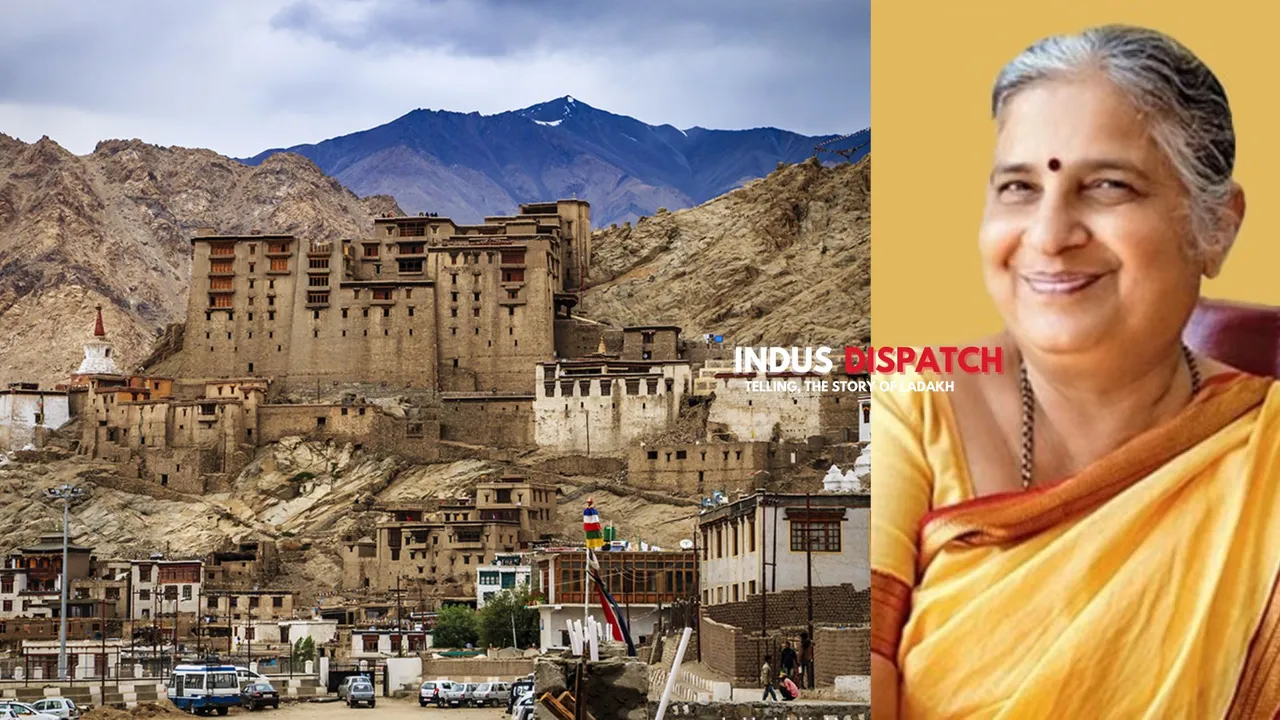
Leh: Perched high above the town of Leh, against the backdrop of rugged Himalayan peaks, stands the magnificent Leh Palace—a 17th-century royal residence once home to the Namgyal dynasty.
Recently, author and philanthropist Sudha Murty drew national attention to this architectural marvel, calling it an “impressive royal residence” inspired by Tibet’s iconic Potala Palace.
Built by King Sengge Namgyal, the nine-storey palace was among the tallest buildings of its time, watching over Leh with majestic pride. Though abandoned during the Dogra invasion in the mid-1800s, the palace still tells stories of royalty, war, and resilience.
View this post on X
Today, preserved by the Archaeological Survey of India, Leh Palace has been transformed into a museum, showcasing ancient Buddha relics, intricate murals, royal utensils, and artifacts. Visitors are also rewarded with panoramic views of Stok Kangri and the Zanskar ranges, making it a must-see destination.
The palace’s construction began in 1553 under Tsewang Namgyal and was completed by his successor Sengge Namgyal in the early 1600s. The upper floors once housed the royal family, while the lower levels served as storerooms and stables.
Visitor details
Leh Palace is open daily from 7 AM to 4 PM. Entry tickets cost ₹15 for Indian nationals and ₹100 for foreigners. The best time to visit is April to September, when skies are clear and roads remain open.
How to reach
Leh is accessible by air from Delhi, Srinagar, and Jammu. Road enthusiasts can drive or ride in from Manali or Srinagar, while the truly adventurous can cycle across winding Himalayan passes for a once-in-a-lifetime experience.