

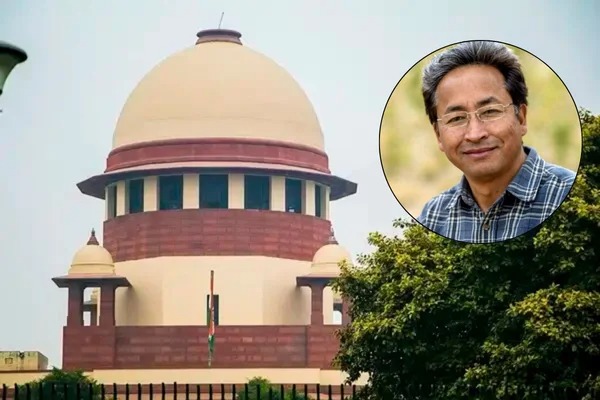
New Delhi, Dec 8: The Supreme Court on Monday posted the petition challenging climate activist Sonam Wangchuk’s detention under the National Security Act for further hearing on December 15, after the Centre opposed his request to appear via video conferencing from Jodhpur jail.
The matter was being heard on a plea filed by Wangchuk’s wife, Gitanjali J Angmo, who has alleged that his detention is illegal, arbitrary, and violative of his fundamental rights. Appearing for Angmo, senior advocate Kapil Sibal informed the bench of Justices Aravind Kumar and N V Anjaria that Wangchuk wished to be connected through video link and sought permission for the same.
Solicitor General Tushar Mehta, representing the Centre, objected to the request, stating, “We will have to give the same treatment to all convicts across the country.” Following this, the bench adjourned the case to December 15.
The Supreme Court had earlier deferred hearings — on November 24 after the Centre and Ladakh administration sought time to respond to Angmo’s rejoinder, and on October 29 when notices were issued to them on her amended petition.
Wangchuk was detained under the NSA on September 26, two days after violent protests in Ladakh demanding statehood and Sixth Schedule status left four people dead and 90 injured. Authorities accused him of inciting the unrest.
Angmo’s amended plea argues that the detention order relies on “stale FIRs, vague imputations, and speculative assertions” with no proximate link to the alleged grounds of detention, making it legally unsustainable. It terms the move an arbitrary use of preventive powers that strikes at the heart of constitutional liberties.
The petition also asserts that it is implausible for Wangchuk—celebrated for decades for his work in grassroots education, innovation, and environmental conservation—to be suddenly targeted. It maintains he had no role in the September 24 violence in Leh; in fact, he had publicly condemned the unrest, calling it the saddest day of his life and warning that violence would undermine Ladakh’s peaceful struggle.
The NSA permits preventive detention for up to 12 months to forestall acts deemed prejudicial to national defence, though the period may be curtailed earlier.
