




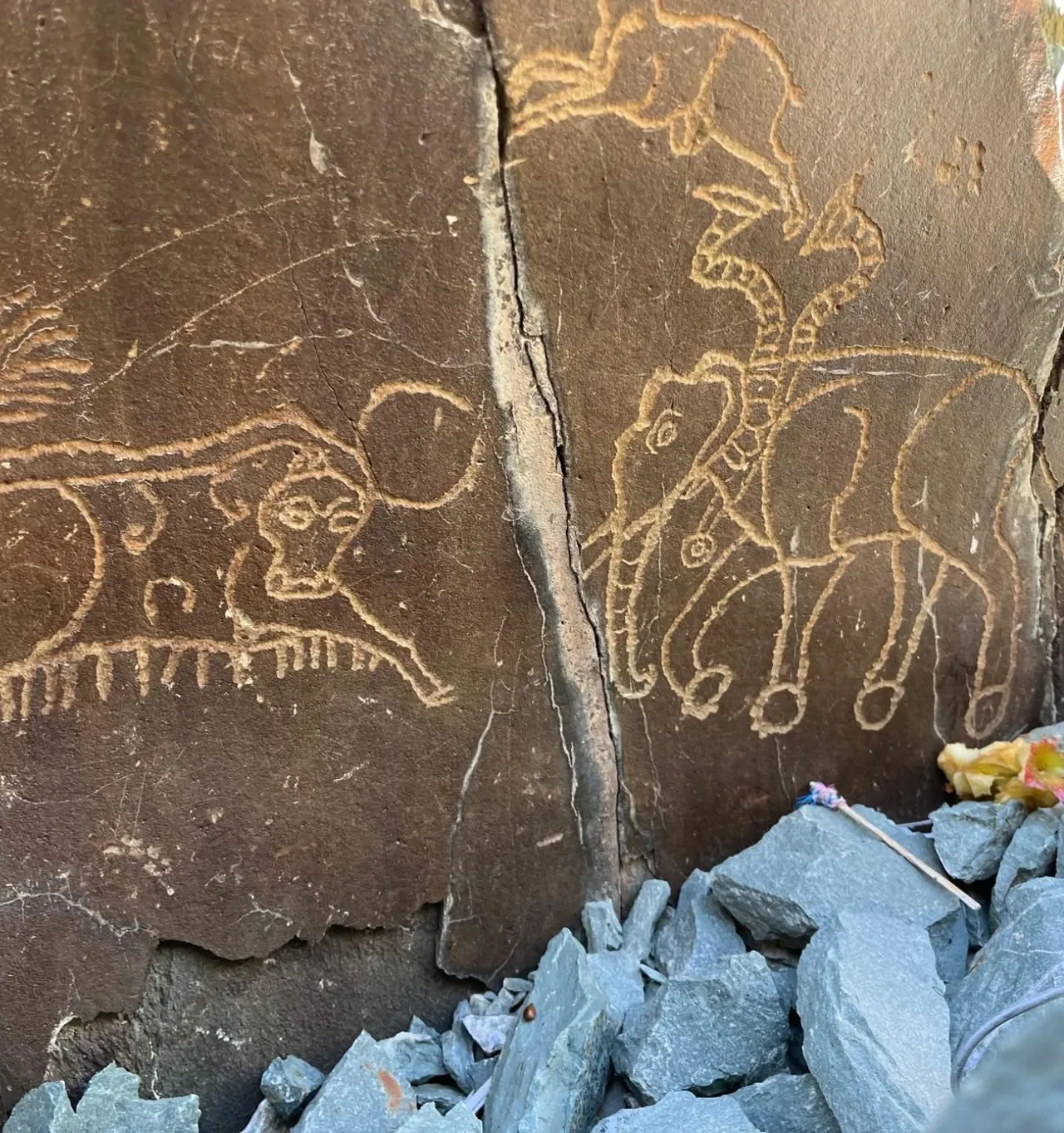
From the confluence of the Indus and Zanskar Rivers at Sangam to the historic settlement of Chilling, the rugged cliffs of Ladakh hold stories older than memory itself. Etched into the dark rocks are thousands of petroglyphs — ancient carvings of ibex and horses, snow leopards and hunters, travelers and traders, and symbols of faith like stupas and spirals.
These silent inscriptions are more than art; they are records of how early communities moved through this high-altitude landscape, observed wildlife, marked sacred places, and expressed their understanding of the world. Each figure chiseled into stone speaks of a moment in time, a belief, a connection between people and the land they called home.
Recognising their immense cultural and archaeological value, the Tourism Department, Ladakh has intensified efforts to document and protect these priceless remnants of human history. Director Tourism Tsering Paldan, accompanied by AD Tourism Leh Padma Angmo and Associate Professor of Zoology at EJM College, Tashi Ldawa, a noted expert on petroglyphs, recently visited several ancient rock art sites along the Nimoo–Chilling road in Leh district.
Their visit underlines the growing commitment to preserve these “voices in stone” through responsible tourism and scientific study. As researchers continue to decode the meanings hidden in these carvings, Ladakh’s rock art stands as a powerful reminder — that long before words, people here spoke through stone.