

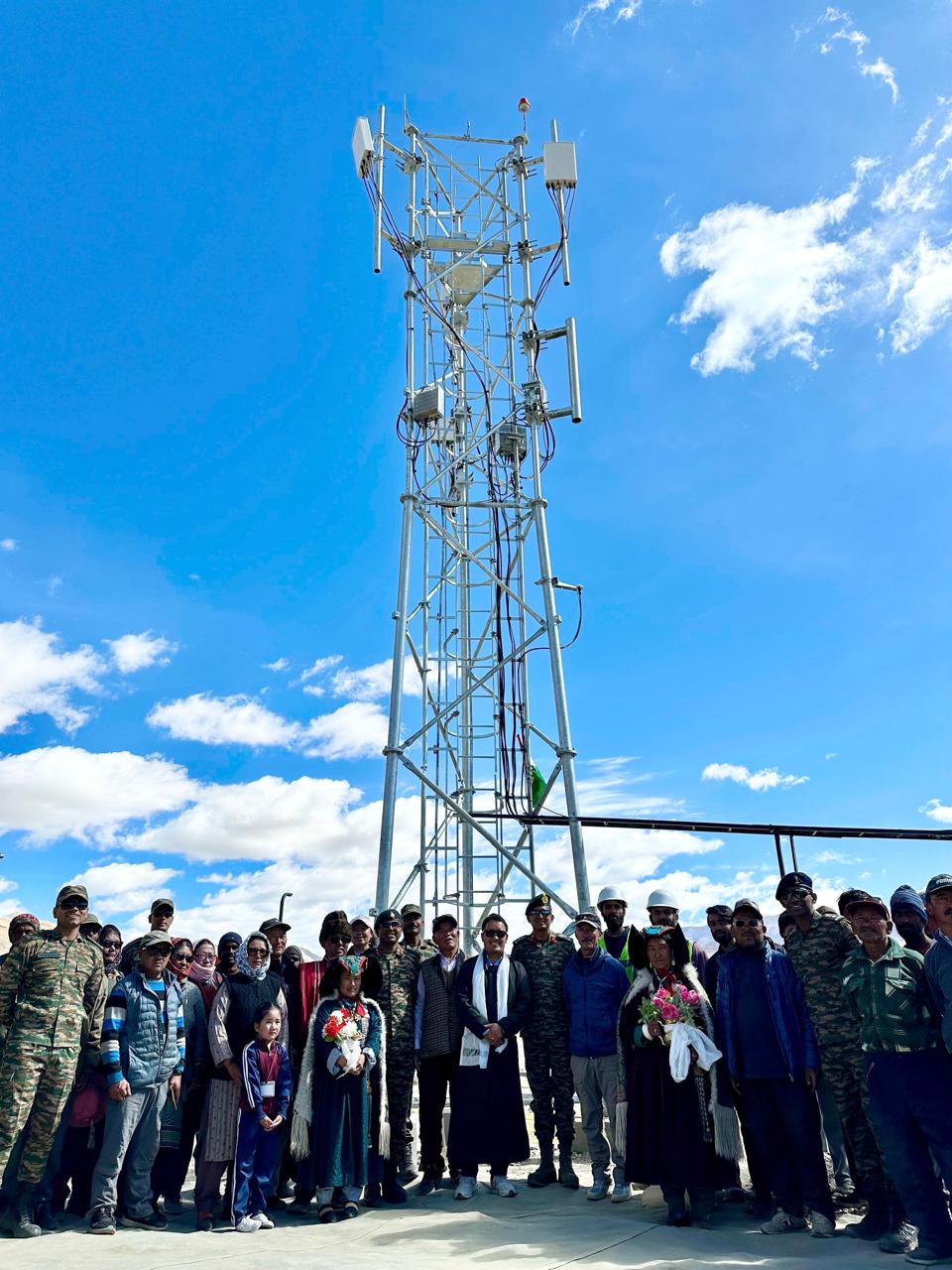
LEH: In an age where connectivity defines opportunity, the Parashu Warriors Brigade of the Indian Army partnered with Airtel to launch the first 4G service in Phobrang, one of Ladakh’s last border villages, marks a significant milestone in the realm of telecommunications and nation-building.
Situated at an altitude of 14,500 feet, Phobrang has remained cut off from 4G service for far too long. Finally, the residents of this remote village are being handed a crucial key: access to the digital world.
The benefits of this venture extend far beyond the mere provision of 4G services. For its residents, this initiative translates to enhanced last-mile connectivity, empowering them with access to everything possible that were previously out of reach.
The introduction of this robust network signifies a new dawn for Phobrang, democratizing access to essential services and opportunities. The provided connectivity speaks volumes about the commitment to nation-building and contributing to digital India.
By prioritizing remote and underserved areas for the greater good of country, the telecom companies won’t just offering a service; it would foster economic growth and reinforce the idea that every citizen deserves equal access to the tools that will help them thrive. Reliable cellular connectivity can catalyse local enterprise, allow farmers to access market information, and enable students to participate in online learning programs.
This expansion into remote regions aligns with the Indian government’s objectives to bolster infrastructure in border areas, ensuring that even the most isolated communities are not left behind in the digital age. The service providers’ deployment of 4G services is testimony to this vision, showcasing how the private sector can play a pivotal role alongside governmental efforts to enhance accessibility.
It is essential to recognize that top telecom companies in India have factually faced challenges in extending their services to remote locations. As this initiative paves the way for better connectivity, it underscores the urgent need for all telecom providers to come forward and contribute towards nation-building. By prioritizing investments in underserved areas, these companies can play a crucial role in empowering communities across the country.
By collaborating with the Indian Army and other agencies alike Airtel, the other companies should ensure the security and reliability of services besides providing an excellent model for public-private partnerships. With continued investment in infrastructure, regular upgrades, and community engagement, any telecom company would ensure to sustain and amplify the benefits of this development.
The collective effort of all telecom companies is essential in ensuring that similar initiatives reach every corner of the nation. This would provide a wide range of opportunities for community members through internet and broadband connectivity.
This initiative stands as a beacon of hope, demonstrating that technology can bridge the gaps that geography and isolation have created.
Together, the telecom industry must rise to the challenge and work towards a more connected and inclusive India.
