

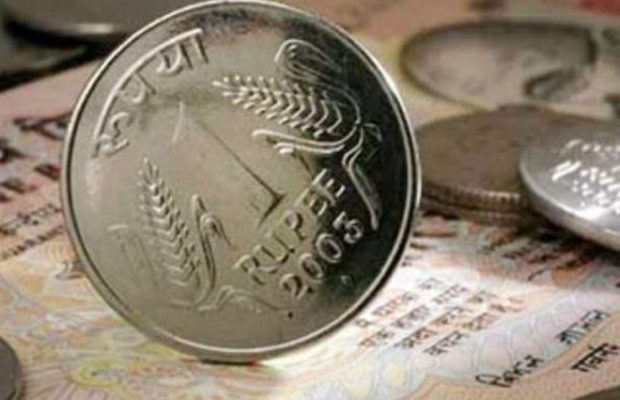
The Reserve Bank of India engages in knee jerk reactions to arrest the decline of the rupee against the dollar. It is doing so by boosting foreign exchange inflows amid growing current account deficit and simmering inflation, a difficult prescription.
If it’s any consolation, even the British pound is on a two-year low against the dollar and is not expected to do better amid pressure from a mix of domestic and global concerns. The sterling pound fell to $1.87, a drop of about 12 per cent as Britain passes through a political crisis with the resignation of Prime Minister Boris Johnson.
The RBI is faced with a critical task of managing the domestic inflation accentuated by the global price rises, using the dollar management, largely through its selling and losing $40 billion reserves in the last nine months. It is accentuated by $30 billion worth of withdrawal by foreign funds in past nine months. The concerns have increased as trade deficit shot up to $25.64 billion in June, a record, due to rising import bill for oil and coal. It leads to the highest current account deficit since 2013 of about 3 per cent of GDP.
The RBI is managing the situation through doubling annual overseas borrowing limits for corporate to $1.5 billion and temporarily abolishing interest caps for banks to attract deposits from non-resident Indians (NRIs). This means that till now the external borrowings were largely dealt by the government, now this is being extended to wider arena. India could face the 2008 global Lehman meltdown because of the resilience of parallel systems. Many other resilience of the society eroded with the note-ban. The present situation has the potential of emerging into a deep debt situation beyond the government or official level.
This may put the rupee under further stress. It has depreciated by 6 per cent against the dollar so far and with heavy portfolio outflows and tightening post-Ukrainian war the situation may be on a razor’s edge. Prices were rising even before the war broke out. Now the increasing trade gap in June, because of rising imports of crude gold and commodities, has added to the burden. The trade gap is expected to double this year to 3 per cent of the GDP. This means the larger imports are to devour more of foreign exchange.
The discounted Russian oil has provided some financial relief to India just as inflation skyrockets alongside surging prices of everything from food to fuel. The access to cheap crude is already boosting India’s petroleum imports, which grew almost 16 per cent in April from last year. The share of oil from the Eurasian region, which includes Russia, expanded to 10.6 per cent in April against 3.3 per cent a year earlier, according to Ministry data.
Overall this may help the RBI manage a bit with ease, but it does not check depletion of forex reserves down to $593 billion. It would require government to open up its fist on taxation side. The recent GST decision to bring milk products and so far untaxed commodities, hospitality and tourism sector, health sector, under its net may have deleterious effect on consumption, though government finances may show some better numbers. In effect, it would further hit the purchasing power that may impact real growth. Tax revenue numbers may not be indicator of the actual growth process.
It is being said that India is in a better situation than many other economies to navigate a recession in the US and Europe as that is expected to cool oil prices. It slumped from $121.46 on July 4 to $113 two days later. The Citi Research says that if recession unfolds oil can slump to $60. Since it is expected that India would do better, the government would be prudent to pass on this benefit to the consumers that it did not during the pandemic almost zero price situation. Had it passed on such benefits, possibly it could have cut on the heavy food dole burden. Political considerations and impending elections are keeping the government under pressure in winding it up. High taxes on fuels and tolls are hitting all, including the industry, hard and leading the country to a kind of vortex.
The banks are going under stress with slew of road, high speed rail and other infra projects. Some business houses have borrowed over Rs 34,000 crore from consortium of banks. The latest decision of the RBI on relaxation of cash reserve ratio and statutory liquidity ratio on foreign currency and rupee denominated term deposits on NRI deposits for inviting funds, stretches a bit far. Some experts say that measures are fundamentally good for attracting funds.
In effect it increases cost on the banks, already under pressure. The large corporate lending with little chances of early repayments may create a stress on the system. So will the oil deals with Russia come to aid? Oil costs about $87.3 a barrel, about $26 less than western crude. But if oil slumps to $60 would Russian crude also come down?
So far it has not helped the rupee recover. It hovers over Rs 79.24 to a dollar despite continuous RBI intervention amid suggestion that it should allow rupee to find its base. With inflation expected to keep pressure on the RBI bank to raise rates, foreign investors are expected to wait and watch how the interest rate differentials with the US play out before starting to reinvest in Indian markets.
If the corporate resort to external borrowings, it has to be seen whether it helps the Indian economy or not. There are apprehensions that the overall debt burden on the country can increase. The debt repayment is a bigger concern, particularly when the sales in the market remain stymied. It has very worrisome figures. The world economy is estimated at $90 trillion. But the world is in a debt trap. Its total debt of governments, corporate and other entities are of $305 trillion.
In other words, the glittering world of GDP is subsisting on ballooning interest rates and artificial non-existent inflationary money. The development paradigm is an El Dorado. While for short term, the RBI prescription may help, the country has to evolve an economic system that is different, less globalised, more swadeshi and which sustains on a sound footing. India has to redraw its economic contours with a multi-support parallel system that can thrive even in the most adverse conditions. — INFA
