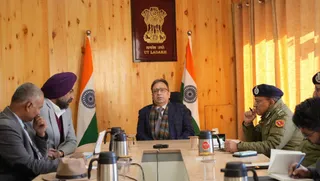


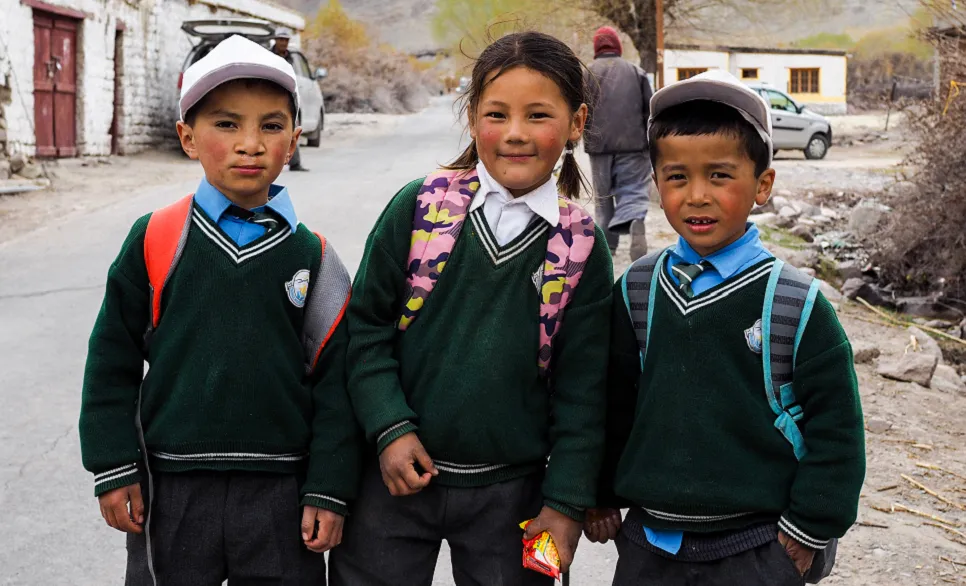
LEH: In a testimony of the gigantic efforts made by the UT administration in past years to bring its school education ecosystem at par with the best in the country, Ladakh has secured fourth position among all the Union Territories in the Performance Grading Index (PGI) for the year 2020-21, released by the Union Ministry of Education on Wednesday.
Within only three years of its formation, Ladakh made significant improvement in PGI rankings, jumping from the Level 10 (Grade 7), the bottom step of the ladder, in 2019-20 to Level 4 (Grade 1), a year later. The UT has scored an impressive 844 out of maximum 1000, up from 545 in 2019-20, and has beaten many states and UTs including Jammu and Kashmir, from which it was carved out in 2019.
“This improvement of 299 points is the highest ever improvement in a single year,” said a ministry spokesman, adding that only Chandigarh, Delhi, and Andaman and Nicobar Islands are ahead of the newly formed UT of Ladakh.
The PGI, it may be mentioned, is a unique index for evidence based comprehensive analysis of school education system across State and UTs, and is released by the Department of School Education and Literacy, Ministry of Education every year after assessing 14.9 lakh schools, 95 lakh teachers, and nearly 26.5 crore students across the country, to provide insights and data driven mechanism on school education to the states and UTs.
The PGI rates states and UT on 70 indicators, grouped into 5 domains viz., Learning Outcomes (LO), Access (A), Infrastructure& Facilities (IF), Equity (E) & Governance Process (GP), totaling to a maximum score of 1000.
In this year’s PGI, Ladakh has scored 132 points out of 180 in Learning Outcomes, 66 out of 80 in Access, 137 out of 150 in Infrastructure& Facilities, 214 out of 230 in Equity and 295 out of 360 in Governance Process, adding to a total score of 844 out of 1000.
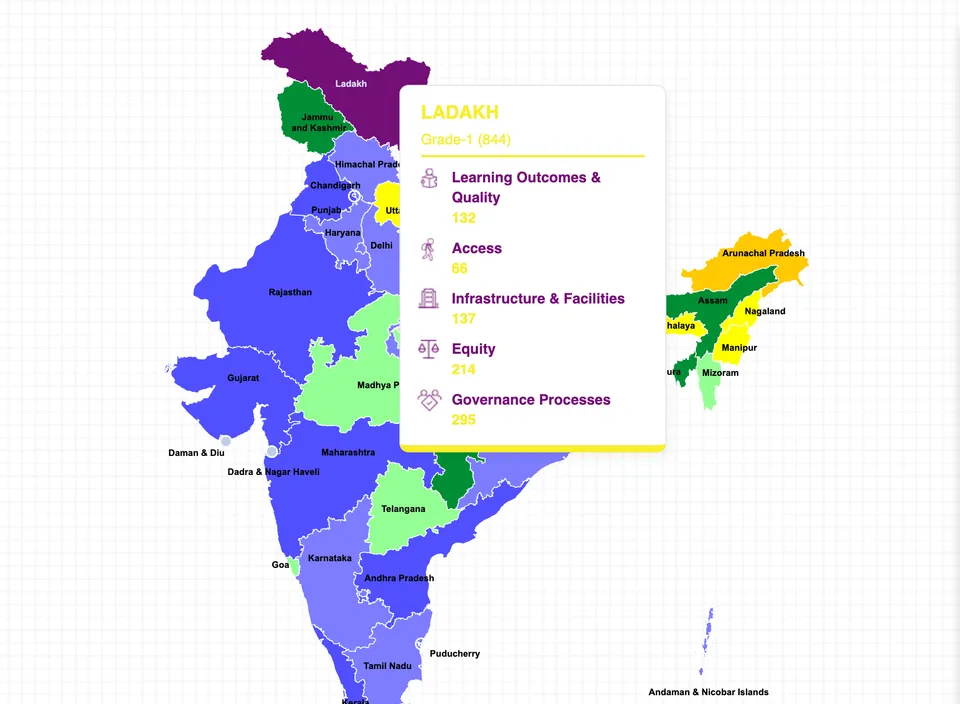
Ladakh has scored better than Chattisgarh (843), Jharkhand (841), J&K (834) and Tripura (833), the other Grade-1 States and UTs, besides Madhya Pradesh, Telangana, Goa, Bihar, Uttarakhand, Sikkim, Mizoram, Meghalaya, Manipur, Nagaland and Arunachal, all of these regions failing to touch even 800 points.
The PGI classifies the States and UTs into ten grades viz., highest achievable Grade is Level 1, for scores more than 950 points and lowest grade is Level 10 which is for score below 551. While none of the states and UTs could reach into Level 1, Kerala, Punjab, Chandigarh, Maharashtra, Gujarat, Rajasthan, and Andhra Pradesh attained Level II (score 901-950) in this year’s PGI, while 12 states penetrated into Level III, followed by Ladakh among 6 States and UTs in Level IV.
It is pertinent to mention here that the interventions made by the Ladakh administration in the last three years of its existence as a Union Territory has led to substantial improvement in the quality of education, besides enhancing the enrolment and retention indicators, all this while braving the difficult geographical conditions.
Concerted efforts are being made to revamp the education system in Ladakh to ensure that no child remains bereft of quality education. In what could be termed as harbinger of a new era, all schools across the UT now stand affiliated to the Central Board of School Education (CBSE), a significant move which will enhance the participation of students of Ladakh at national level examinations.
With the addition of ICT, Astronomy labs, and Atal Tinkering labs over the past three years, school infrastructure has been upgraded. To cover the digital divide among students of various areas and also to provide hybrid education to cope up COVID and winter challenges, all students of government schools from class 6th to 12th were provided digital educational tablets (YOUNTAB) with online/offline educational contents in Ladakh. With the intensive capacity building workshops and training of the teachers, the education delivery system is improving resulting in higher enrolment. Anganwadi Centres are simultaneously being strengthened to offer children supplementary nutrition in addition to early childhood care and education.