

Leh: On the occasion of the International Snow Leopard Day on 23 October 2022, a seminar was organised by the Ministry of Environment, Forest and Climate Change to deliberate with key stakeholders from different States and Union Territories with snow leopard habitats, and representatives of various organisations working on conservation of snow leopard like UNDP-India, WWF-India, Wildlife Crime Control Bureau, and Wildlife Institute of India.
From Ladakh, experiences of developing community-based, community-led tourism in the Rong valley were shared by Tanuj Nagpal from UNDP, State Project Officer of SECURE Himalaya, who interacted with other stakeholders to inform the various initiatives made under this project to develop a model of sustainable tourism in this area. Interventions pertaining to forming market linkages, training nature guides, mushroom cultivation, and waste management were discussed. He emphasised on the threats inequitable growth of tourism may present to the ecology and society of Changthang landscape. He also informed about a common brand identity called ‘Thang’ created for tourism, sheep and yak wool, mushroom products, and other local produce emanating from project interventions in this landscape.
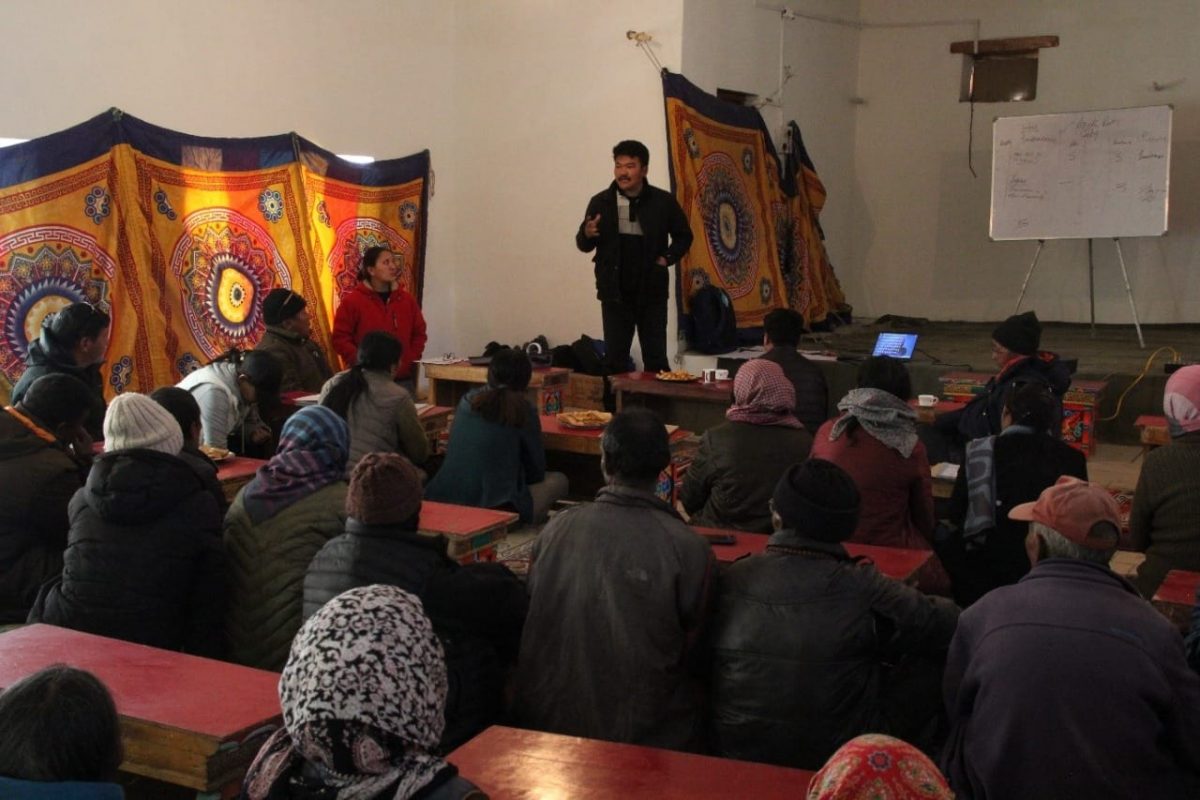
SECURE Himalaya along with the Ladakh Biodiversity Council also organised a Biodiversity Management Committee capacity building workshop with the Biodiversity Management Committees of Liktse, Himya, Kungyam, and Skitmang where the BMC members of these villages were acquainted with Biological Diversity Act and its benefits with the help of an animated film, interactions, and financial trainings. This was facilitated by Stanzin Namdol, Santosh Kumar, and Palzes Angmo from UNDP. The Councillor of Kungyam, Mr. Thinles Nurboo, also addressed the community members about the benefits of strengthened Biodiversity Management Committees.
The Project also organised second in the series of training workshops in Khatpoo village of Rong Valley where the community members were trained to grow and cultivate oyster mushroom in poly-houses with technical support from G B Pant National Institute of Himalayan Environment. One set of training was completed in Tarchit Village and one more in Himya is to be organized soon. Additionally, the project will also be installing 25 cultivation units in these villages.
All three initiatives will be linked to the ‘Thang’ branding developed by the project, along with planned interventions on sheep and yak wool promotion and marketing of local produce such as tsepo (local baskets) and tsukden (local rugs).
