

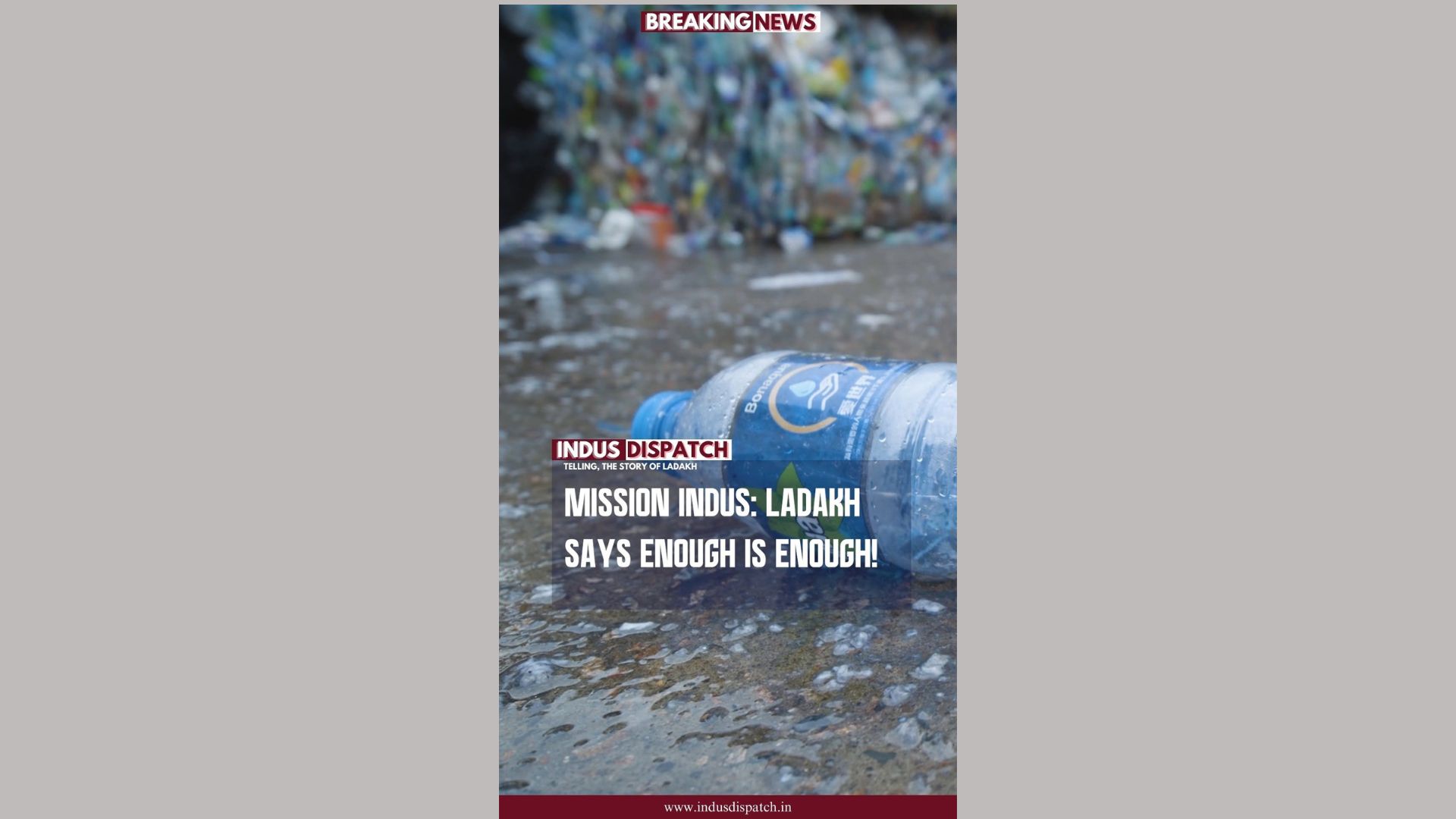
Leh: In a landmark move under the ongoing “Mission Indus” initiative, the Ladakh Autonomous Hill Development Council (LAHDC) Leh has issued a strong message to major corporations such as Coca-Cola and PepsiCo, warning of a district-wide boycott if they continue to ignore their Extended Producer Responsibility (EPR) in Ladakh. The decision came during a multi-stakeholder interactive session held at Hotel Zen Ladakh, chaired by LAHDC Leh Chairman and Chief Executive Councillor Tashi Gyalson.
The session brought together community leaders, civil society groups, religious organisations, trade and tourism bodies, and local administrative heads to review the progress of Mission Indus and set the course for the coming months. A key outcome of the meeting was the unanimous declaration of August 1 as “Tsangday Lasgul” or “Safai Andolan” Day—a district-wide cleanliness drive aimed at mobilising citizens across Ladakh in a show of collective civic responsibility.
The CEC announced that all Sub Divisional Magistrates will ensure strict enforcement of cleanliness directives issued under Section 152 of the BNSS. A dedicated flying squad is also being constituted to monitor implementation on the ground. Army representatives will now be integrated into the Mission Indus framework to ensure wider coordination and reach.
Recognising the vital role of grassroots leadership, the Council announced a monthly financial incentive for each Goba and extended financial grants to the All Ladakh Goba Association and the Revenue Nambardars Association. These steps aim to empower village heads and support their active involvement in the successful rollout of Tsangday Lasgul.
The session was attended by Deputy Chairman Tsering Angchuk, Executive Councillors Stanzin Chosphel and Ghulam Mehdi, district officers, Gobas and Nambardars from across Leh, and representatives from various religious, trade, tourism, and youth associations. The meeting underscored a shared commitment to preserving the fragile Himalayan ecosystem through community-led action and accountability.
The CEC called on self-help groups, especially women-led collectives, to play a proactive role in awareness campaigns and sustainable waste management. He urged residents, market bodies, students, and religious institutions to take ownership of the Safai Andolan and make Mission Indus a people-driven movement.
Leaders from organisations such as the Ladakh Buddhist Association, Anjuman Imamia, Anjuman Moin‑ul‑Islam, and Christian Association pledged their full support. They stressed the need for a behavioural shift, starting with household-level waste segregation. Participants also raised concerns about the degradation of the Indus River due to unchecked tourism, illegal dumping, and poorly managed poultry farms. Suggestions included mapping waste-dumping hotspots and deploying real-time monitoring systems.
Deputy Commissioner Romil Singh Donk called the Indus “the spine of India” and reaffirmed the administration’s commitment to strict enforcement and civic engagement. Civil society leaders added that brands benefiting from Ladakh’s market must also share responsibility for its environmental upkeep.
In a bold resolution, the Merchant Association, supported by Gobas and civil society, declared that if corporations like Coca-Cola, PepsiCo, and others fail to activate their CSR and EPR mechanisms in Ladakh, their products would face a district-wide boycott. The move was presented not as a threat, but as a call for accountability and sustainable business practices.
The session ended with an open dialogue where community representatives, including youth and women leaders, shared ideas to make Mission Indus more inclusive and impactful. CEC Tashi Gyalson thanked all stakeholders for their participation and assured that their feedback would help shape a long-term, community-driven roadmap for a cleaner and more sustainable Ladakh.
