

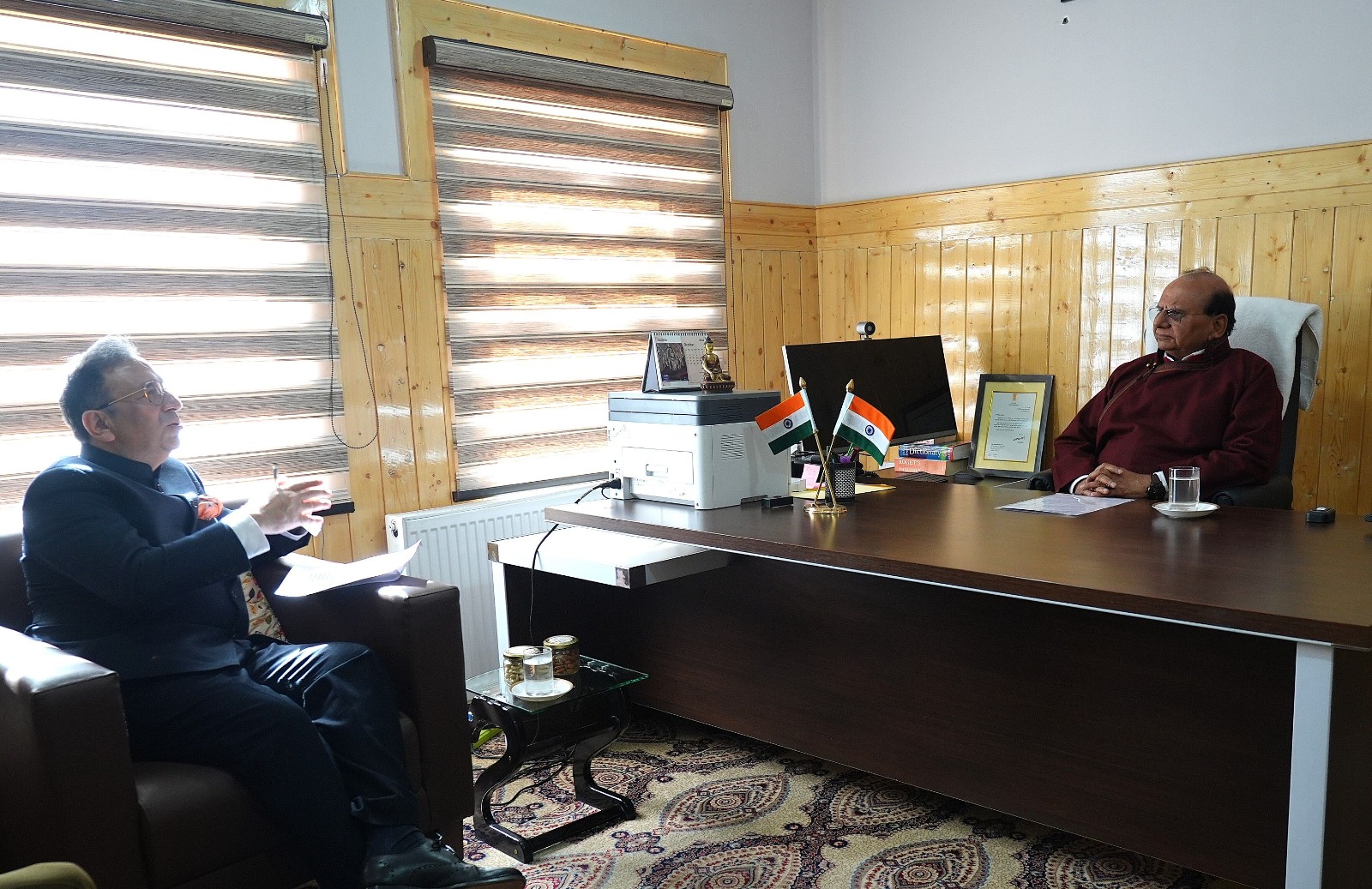
Leh: Lieutenant Governor Vinai Kumar Saxena on Saturday directed officials to prepare a comprehensive plan for creating at least 50 small water bodies across Ladakh to address the region’s growing water challenges.
During a meeting with Chief Secretary Ashish Kundra, the LG asked the administration to identify suitable locations and submit a detailed action plan within 15 days.
The proposed initiative aims to tackle water scarcity faced by people in the high-altitude region, particularly farmers who depend on limited water resources for irrigation. Saxena said the creation of small water bodies would provide a reliable source of water for agricultural fields and support roadside plantation drives that the administration plans to undertake in mission mode.
The water bodies will also help conserve rainwater and melting snow that otherwise goes to waste each year.
The LG said the project should be implemented in consultation with local communities to ensure it meets the needs of residents.
Saxena also suggested that the water bodies could serve as venues for winter sports when they freeze during the colder months. He directed officials to incorporate recreational facilities such as parking spaces and eateries around the sites.
Highlighting Ladakh’s fragile environment, the LG said the region is increasingly facing the impacts of climate change, including declining snowfall, receding glaciers, rising temperatures and depletion of the water table.
He stressed the need for sustainable water management practices to ensure long-term water security for the people of Ladakh and strengthen the livelihoods of local communities.
The Lieutenant Governor also directed that the plan be designed scientifically, keeping in view Ladakh’s unique geographical and climatic conditions so that the water bodies effectively serve both agricultural and community needs.
Reiterating the administration’s commitment to protecting Ladakh’s fragile ecosystem, Saxena said proactive measures are essential to address climate challenges while ensuring the welfare and livelihood security of the region’s people.
