

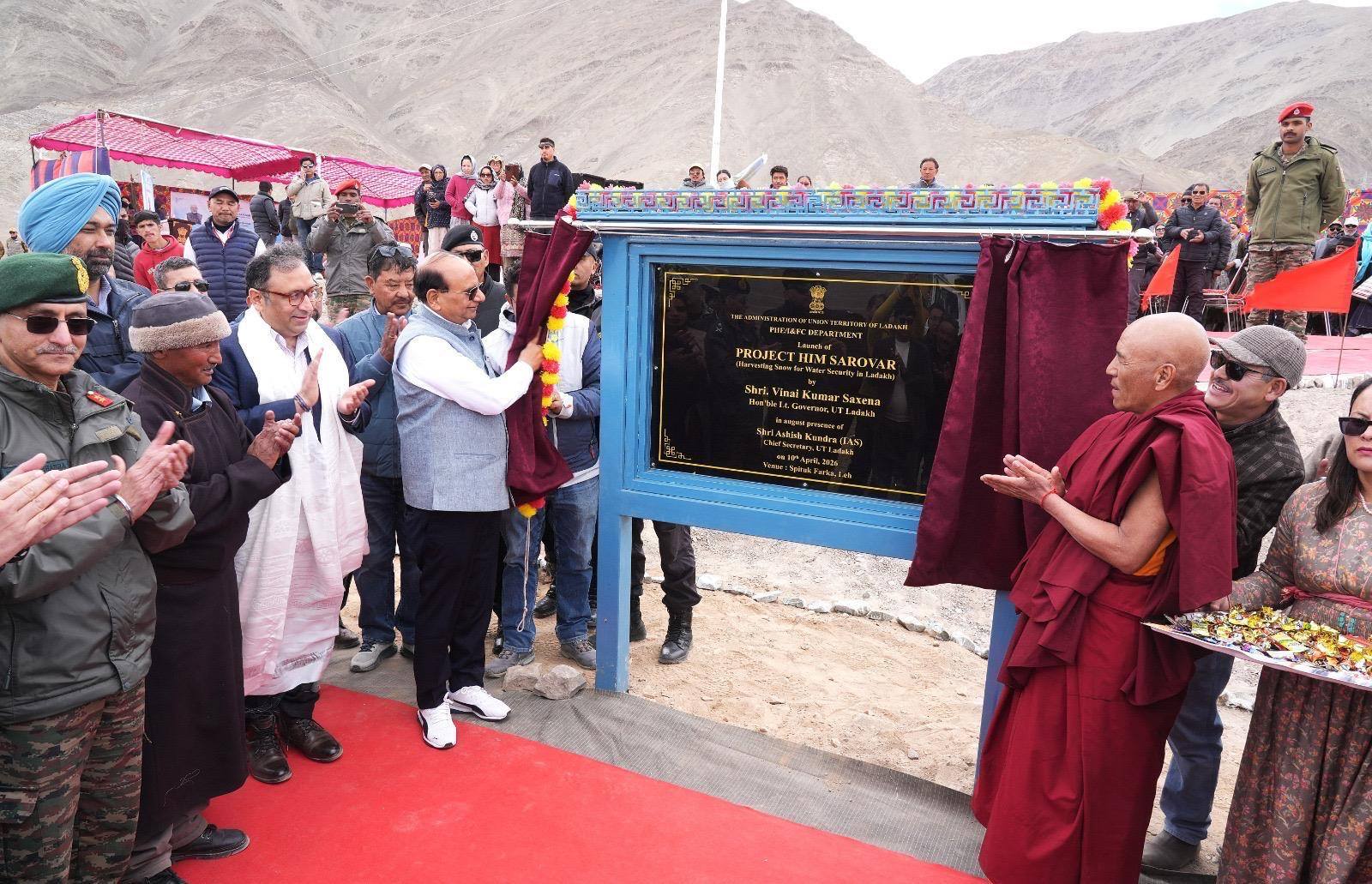
Leh: Lieutenant Governor Vinai Kumar Saxena on Friday launched Project Him Sarovar, a major initiative aimed at strengthening water security through scientific snow harvesting and creation of water bodies across Ladakh.
The project seeks to address the region’s persistent water scarcity by conserving snowmelt and glacial runoff, ensuring a more reliable supply of water for irrigation and other essential needs in the cold desert landscape.
Marking the launch, excavation work for 50 water bodies began simultaneously in Leh and Kargil districts. Each structure, measuring 40×30 metres with a depth of 2 metres, is designed to store snowmelt that would otherwise go to waste, providing a sustainable water source for local communities, particularly farmers.
Describing the initiative as a historic and scientific intervention, the Lieutenant Governor emphasised that water is not merely a resource in Ladakh but a lifeline. He noted that soon after assuming office on March 13, he had directed the Chief Secretary to identify suitable locations and prepare an action plan for the construction of these water bodies.
Highlighting key directions, Saxena stressed the need for a long-term, sustainable approach to water management, integrating modern scientific techniques with traditional irrigation practices. He underlined that the project will play a crucial role in addressing irrigation challenges, supporting agriculture, and generating livelihood opportunities for local communities.
The Lieutenant Governor also linked the initiative to broader environmental goals, stating that Project Him Sarovar aligns with the vision of restoring degraded land and enhancing ecological resilience. He called for collective efforts from all stakeholders to create new “green and blue assets” that will ensure long-term environmental balance in the region.
He further noted that the project has received support from multiple stakeholders, including the Indian Army, Indo-Tibetan Border Police (ITBP), Border Roads Organisation (BRO), and local communities. He appreciated the active participation of the people of Ladakh in backing the initiative.
Addressing the growing impact of climate change in Ladakh, Saxena pointed to declining snowfall, melting glaciers, rising temperatures, and falling water tables as serious concerns. He emphasised the urgent need for sustainable water conservation practices to mitigate these challenges.
The project has been conceptualised keeping in view Ladakh’s fragile ecosystem and unique geographical conditions, with provisions for community consultation to ensure location-specific effectiveness. In addition to water conservation, it is expected to support plantation drives and enhance green cover across the region.
Reaffirming the administration’s commitment, the Lieutenant Governor called for coordinated and sustained efforts to secure Ladakh’s water future while preserving its ecological balance.
