

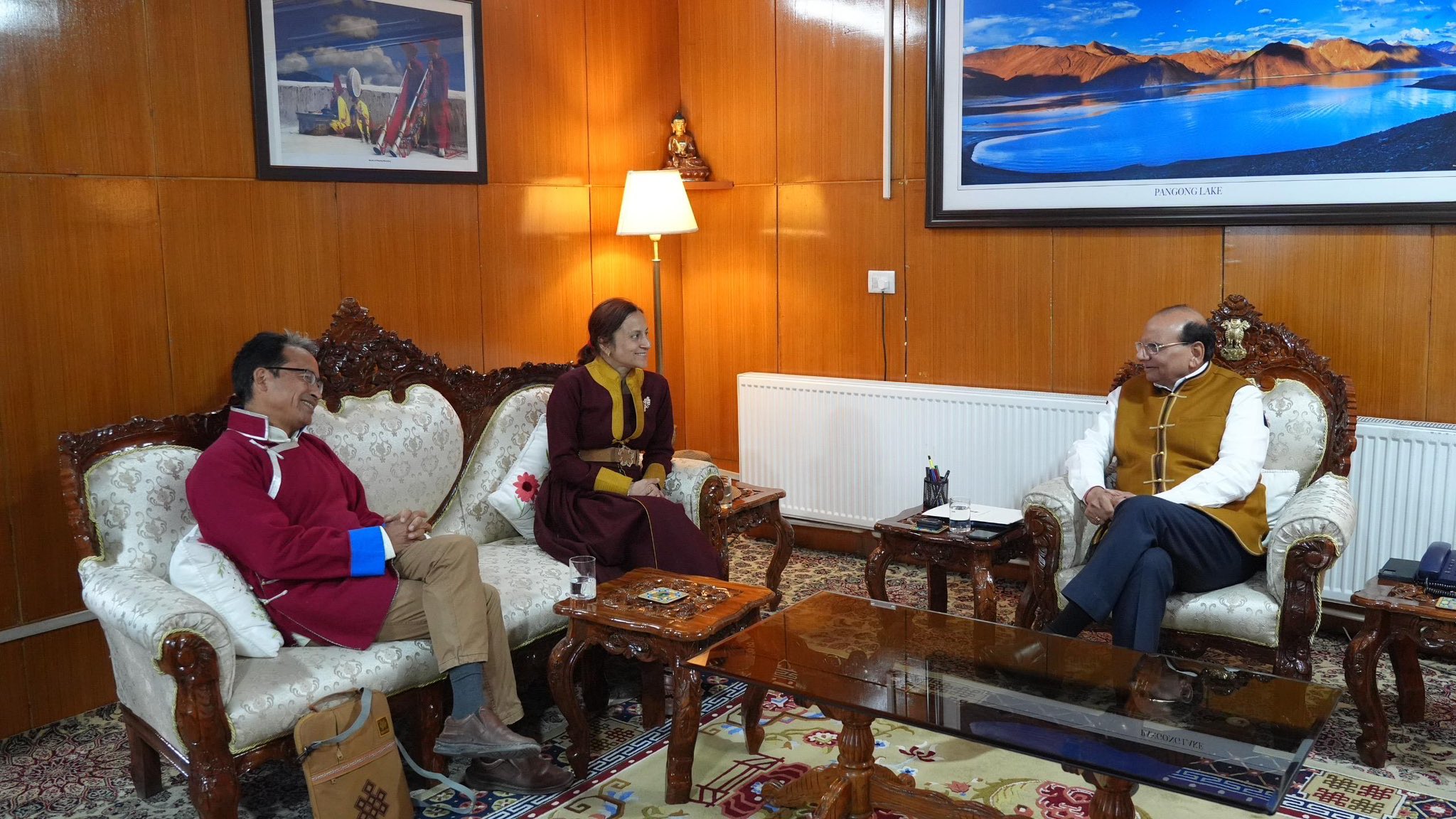
Leh: Lieutenant Governor of Ladakh Vinai Kumar Saxena on Tuesday said he cautioned education reformer and activist Sonam Wangchuk against “weaving a misleading and provocative narrative” that vitiates public discourse during a candid exchange held amid the ongoing dialogue process between Ladakh leaders and the Union Home Ministry.
Had a candid exchange with Shri Sonam Wangchuk and Smt. Gitanjali Angmo in the backdrop of the constructive dialogue in the Union Home Ministry. We agreed that an air of positivity, both in terms of development initiatives and political dialogue, needs to be maintained.
— LG Ladakh (@lg_ladakh) May 26, 2026
The remarks came after the LG met Wangchuk and activist Gitanjali Angmo and discussed the political atmosphere in Ladakh in the backdrop of recent talks held with the Ministry of Home Affairs (MHA) over the region’s key demands, including statehood, Sixth Schedule safeguards, public service recruitment and parliamentary representation.
In a detailed statement shared on X, the LG said both sides agreed that “an air of positivity” needed to be maintained in Ladakh, both in terms of political dialogue and developmental initiatives being undertaken in the Union Territory.
“I cautioned Shri Wangchuk to abjure from weaving a misleading and provocative narrative, which vitiates public discourse,” the LG said, while stressing that democratic expression should not become “a license for fabricating falsehoods and rabble rousing.”
The LG further claimed that Wangchuk acknowledged that comparing the situation in Ladakh with Manipur was “an error of judgement.”
The comparison had triggered criticism in recent weeks, with several political and social groups terming the remarks inappropriate and inflammatory.
According to the LG, Wangchuk also said he was unsure about the origins and intent of the so-called “Cockroach Party” and would revisit his stand after studying the motivations of its founders, if necessary.
The LG said he also raised concerns over the impact of frequent protests and demonstrations on Ladakh’s fragile tourism-driven economy. He noted that repeated rallies despite what he described as “positive developments” initiated by the Centre could adversely affect tourist inflow and economic activities linked to the sector, which remains the backbone of livelihoods in the region.
The meeting assumes significance as it comes at a time when Ladakh’s civil society groups and political leadership are engaged in renewed dialogue with the Centre over constitutional and administrative safeguards for the region following the abrogation of Article 370 and the creation of Ladakh as a Union Territory in 2019.
Highlighting ongoing developmental works, the LG said Wangchuk appreciated several recent initiatives undertaken in Ladakh, including the Him Sarovar project, restoration of the Igoo Phey Canal, construction of the Mahe–Topko Canal and large-scale plantation drives aimed at improving water conservation and ecological sustainability in the cold desert region.
