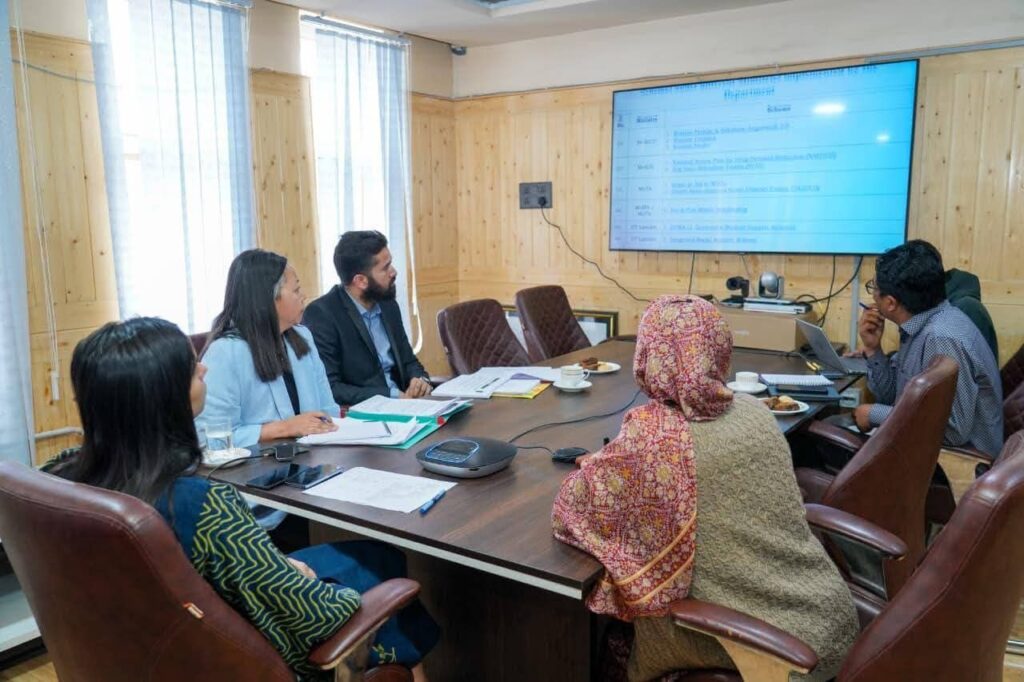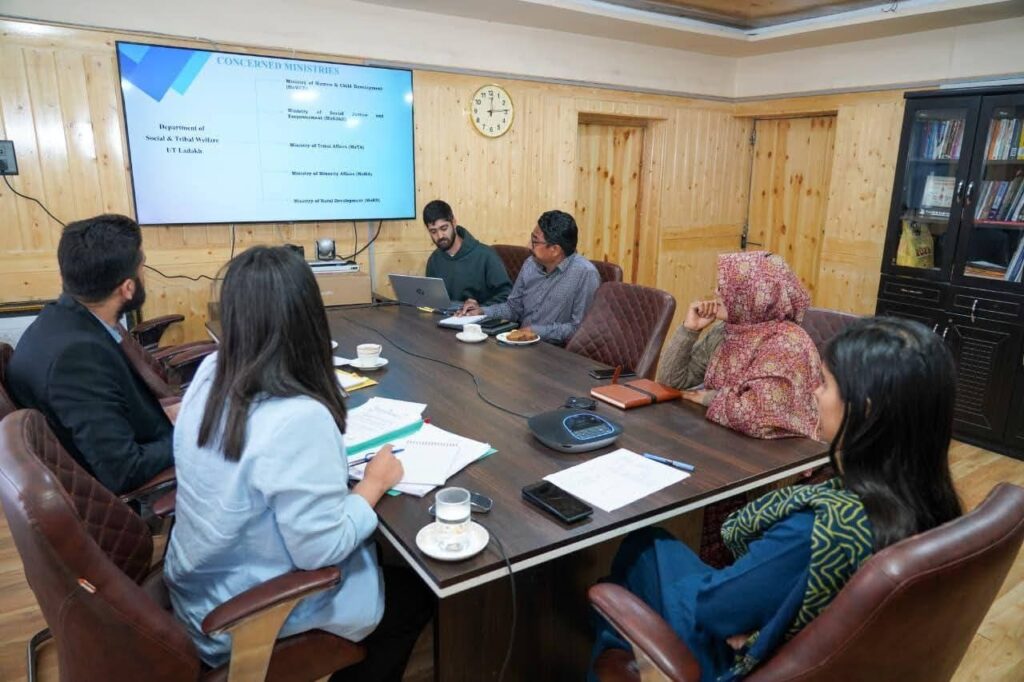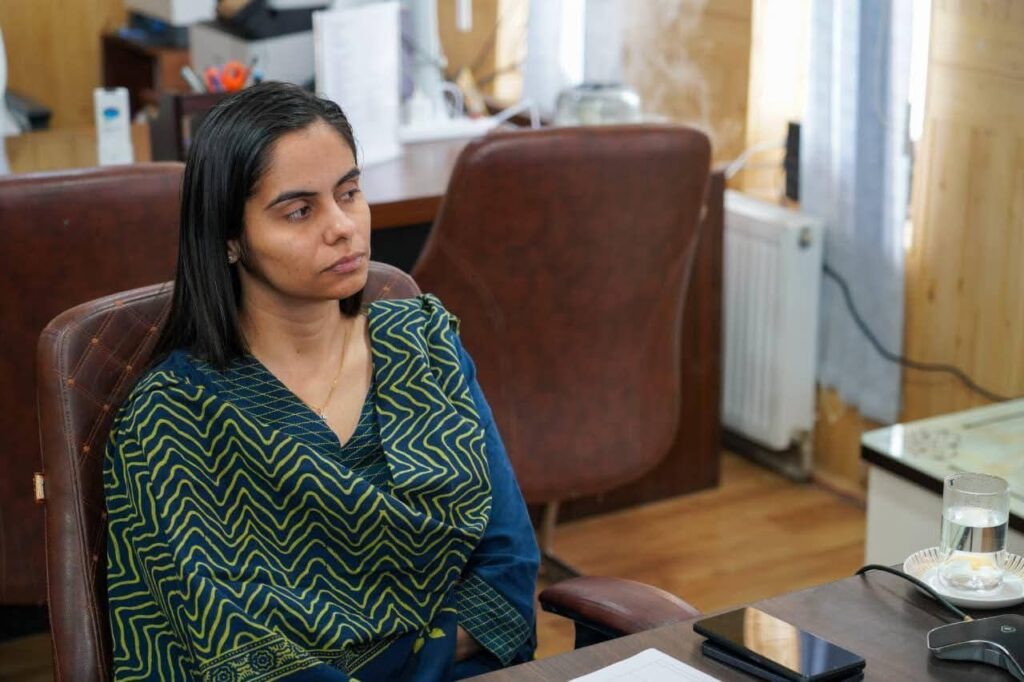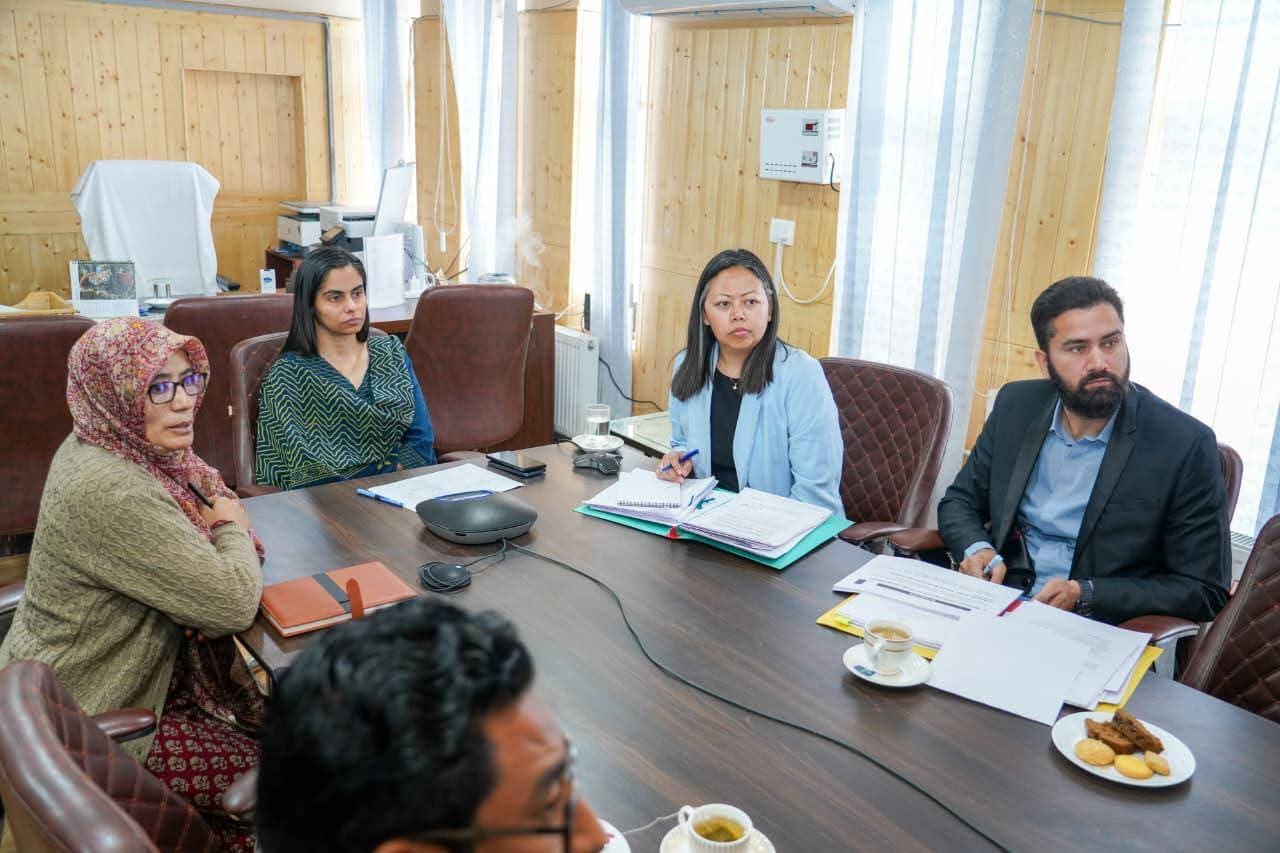
LEH, June 5: In a comprehensive review of welfare and development initiatives across Ladakh, Administrative Secretary, Social & Tribal Welfare Department, Nidhi Malik, on Thursday directed officials to strengthen monitoring mechanisms, accelerate project execution and ensure that government welfare schemes reach every eligible beneficiary, particularly those living in remote and underserved areas.
Chairing a high-level review meeting in Leh, Malik assessed the physical and financial progress of major centrally sponsored schemes and UT-funded programmes being implemented by the Social & Tribal Welfare Department.
During the meeting, Director Social & Tribal Welfare Department Zahida Bano presented a detailed overview of the department’s functioning, manpower position, administrative structure and status of various schemes being implemented under different Union Ministries.
The review covered flagship programmes including Mission Poshan 2.0, Saksham Anganwadi, Mission Vatsalya, Mission Shakti, National Action Plan for Drug Demand Reduction (NAPDDR), Atal Vayo Abhyuday Yojana, Integrated Social Security Scheme (ISSS), National Social Assistance Programme (NSAP), scholarship schemes and tribal welfare initiatives.
Officials informed the Administrative Secretary that more than 13,900 beneficiaries are receiving supplementary nutrition support through ICDS projects in Leh and Kargil, while 1,172 of the 1,173 sanctioned Anganwadi Centres are operational and serving nearly 18,168 beneficiaries, including children, pregnant women and lactating mothers.
Taking stock of Anganwadi infrastructure, Malik sought details regarding government-owned and rented facilities, infrastructure gaps and measures being undertaken to improve service delivery in difficult and remote locations.
The functioning of Child Care Institutions under Mission Vatsalya and women-centric services under Mission Shakti, including One Stop Centres, Women Helplines, PMMVY and PALNA centres, also came under review. Stressing greater outreach, she directed officials to ensure wider access to welfare services for women and vulnerable groups.
A detailed assessment was also conducted on tribal welfare programmes, including DAJGUA projects, Eklavya Model Residential Schools, Tribal Multipurpose Marketing Centres and scholarship schemes. The status of approved and proposed projects was reviewed with directions for timely implementation.
Highlighting the importance of social security, Malik reviewed old-age pensions, widow pensions, disability assistance and family benefit schemes, emphasizing timely release of benefits to eligible recipients.
The Administrative Secretary also examined the progress of works under the State Development Programme and called for better planning, efficient utilization of resources and timely completion of sanctioned projects.
She further reviewed the department’s presence in the newly created districts and sought updates on staffing, vacancies, infrastructure and service delivery systems. Calling for stronger institutional capacity, Malik urged officers to adopt innovative approaches and learn from successful models implemented in other States and Union Territories.
Reaffirming the Administration’s commitment to inclusive development, she directed officials to ensure that welfare schemes effectively benefit women, children, senior citizens, persons with disabilities, tribal communities and other vulnerable sections of society.
Following the review meeting, Malik visited the Old Age Home at Saboo Thang where she interacted with residents and inspected accommodation facilities, healthcare services, sanitation arrangements and other amenities.
Appreciating the efforts being made for the welfare of senior citizens, she directed officials to maintain high standards of care and continue improving the quality of life for elderly residents.
The meeting was attended by senior officers of the Social & Tribal Welfare Department, District Programme Officers from Leh and Kargil, programme managers and officials from various departmental wings. Officers from Kargil participated through virtual mode.