Leh, June 9: The Union Territory Administration of Ladakh has initiated steps to preserve the region’s prehistoric rock art heritage, with plans underway to establish a dedicated Petroglyph Park at Sindhu Ghat in Leh.
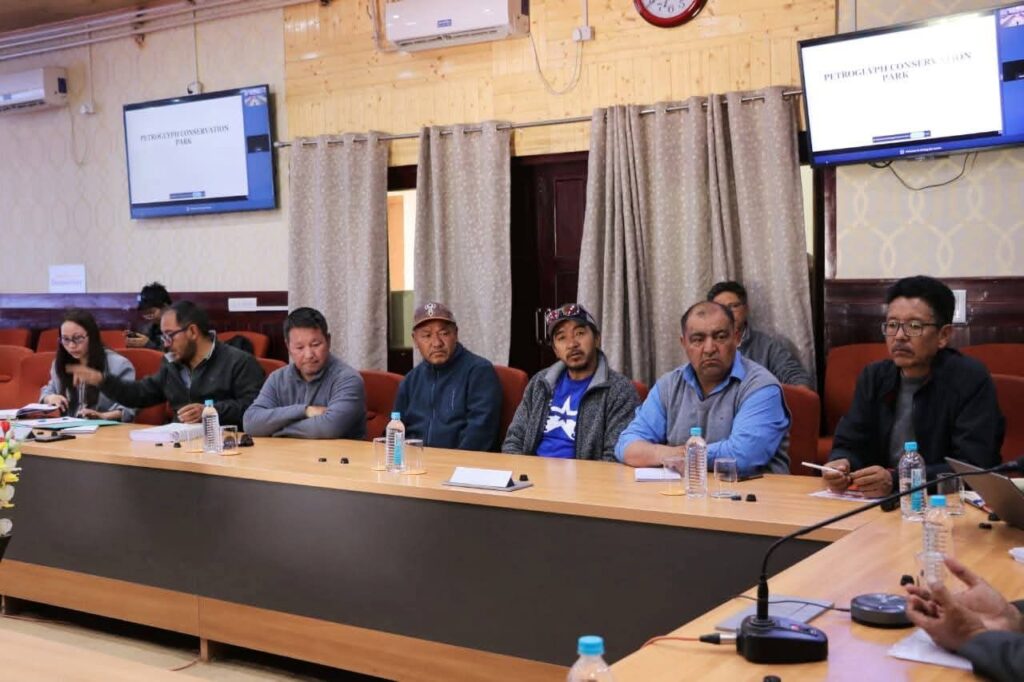
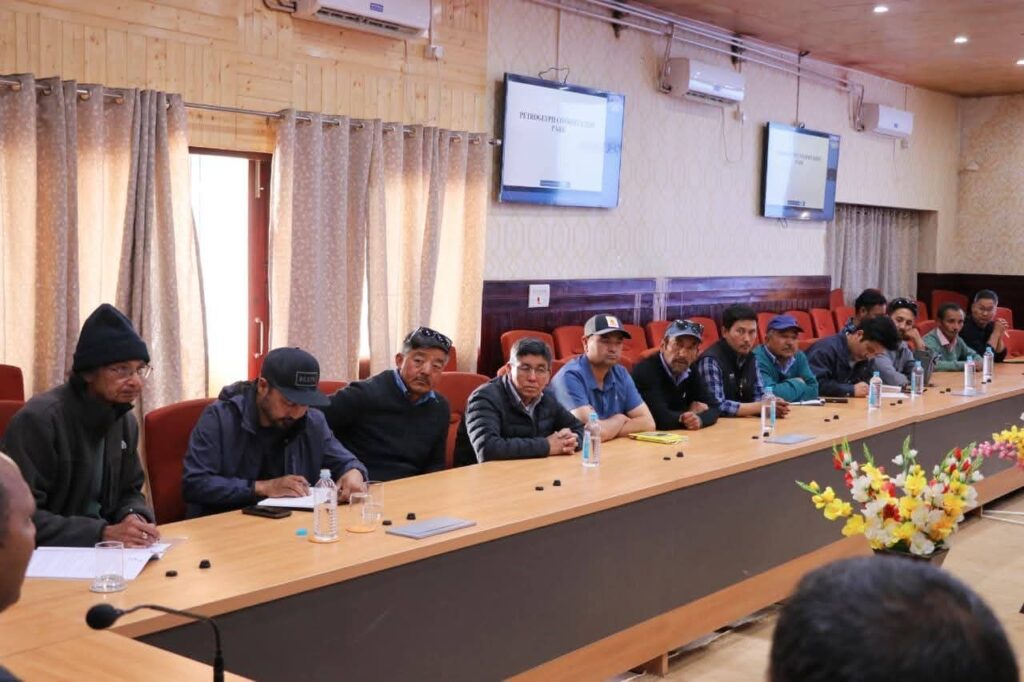
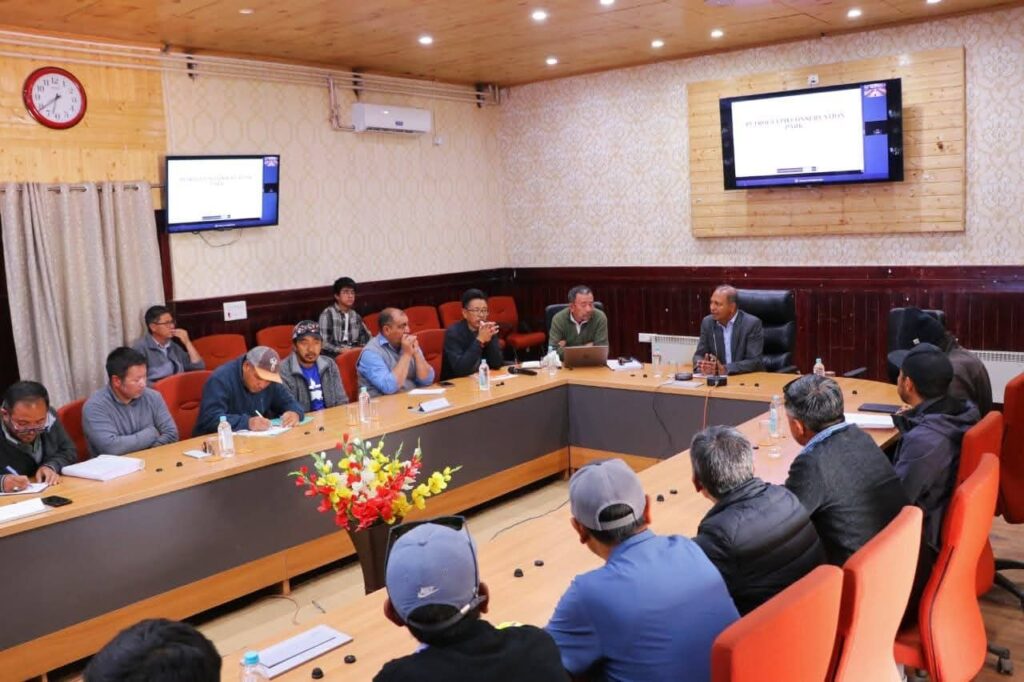
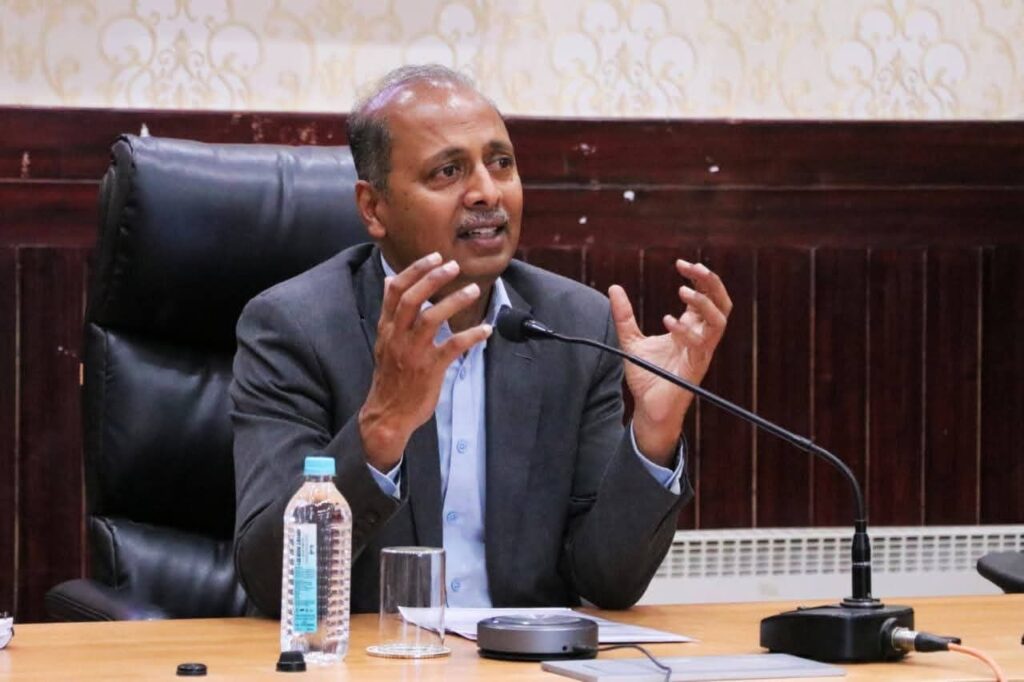
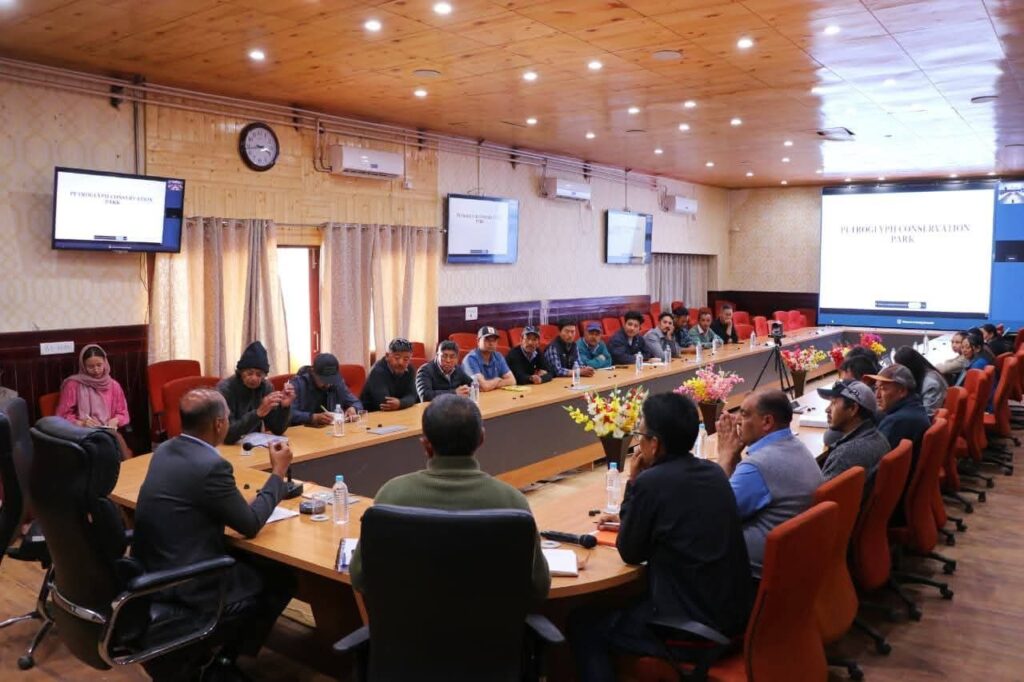
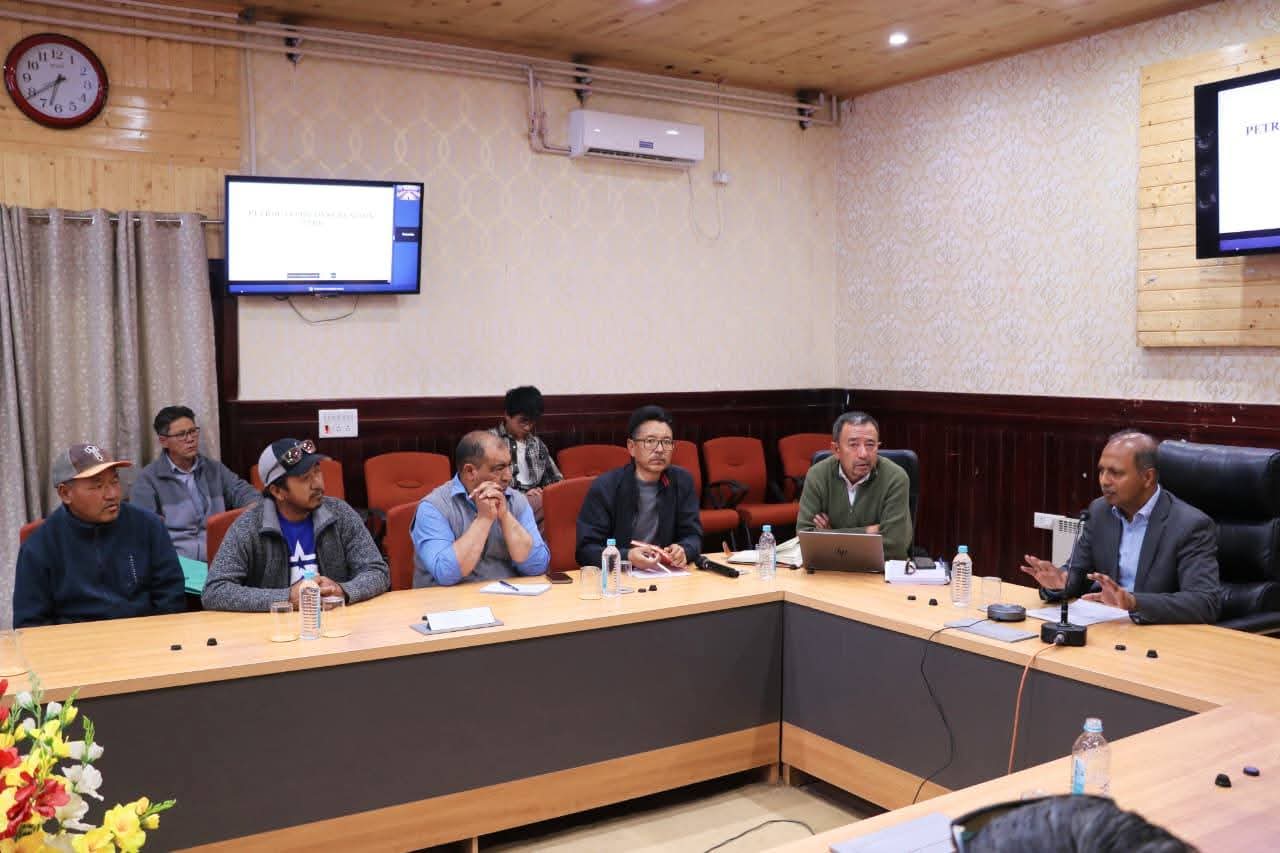
A high-level consultative meeting chaired by Administrative Secretary, Tourism and Culture, Sanjit Rodrigues, brought together Gobas, Nambardars, heritage experts, researchers and members of the Petroglyph Committee to discuss the scientific relocation of vulnerable petroglyph-bearing boulders from different parts of Ladakh.
The proposed park aims to safeguard endangered rock carvings threatened by natural erosion, developmental activities and human interference, while also creating a centre for education, research and cultural tourism.
Addressing the meeting, Rodrigues described petroglyphs as priceless cultural assets that reflect Ladakh’s history, traditions and identity. He clarified that the objective is not to remove heritage from villages but to protect vulnerable sites facing imminent threats.
“The initiative will move forward only through consultation and with the consent of local communities,” he assured, emphasizing that no unilateral decisions would be taken.
Highlighting the urgency of conservation, researcher and Associate Professor Dr. Tashi Ladawa said nearly 800 petroglyph sites have been identified across Ladakh, with several already lost to neglect, environmental degradation and human activities. He stressed the need for systematic documentation and timely preservation.
Founder of the Himalayan Cultural Heritage Foundation, Dr. Sonam Wangchuk, informed that an expert committee has already identified around 200 highly vulnerable petroglyph-bearing rocks requiring immediate attention. He said the proposed Petroglyph Park could become the first initiative of its kind in India and serve as a model for heritage conservation.
Village representatives, particularly from Stakmo, welcomed efforts to protect endangered sites but suggested that petroglyphs not facing immediate threats should be preserved in their original locations. They also proposed the creation of village-level heritage parks and interpretation centres to strengthen local stewardship and awareness.
Responding positively to the suggestions, Rodrigues assured full support for community-led conservation initiatives and encouraged villages to identify land and submit proposals for heritage projects.
Social Anthropologist Viraf Mehta highlighted the historical and cultural importance of the carvings, noting that they provide valuable insights into the lives, beliefs and movements of ancient communities.
Participants unanimously stressed the need for collaborative efforts involving local communities, researchers, experts and the Administration to protect Ladakh’s unique rock art legacy. Gobas and Nambardars of the concerned villages expressed their willingness to cooperate in the relocation of identified vulnerable petroglyph-bearing boulders to the proposed park for long-term preservation.