

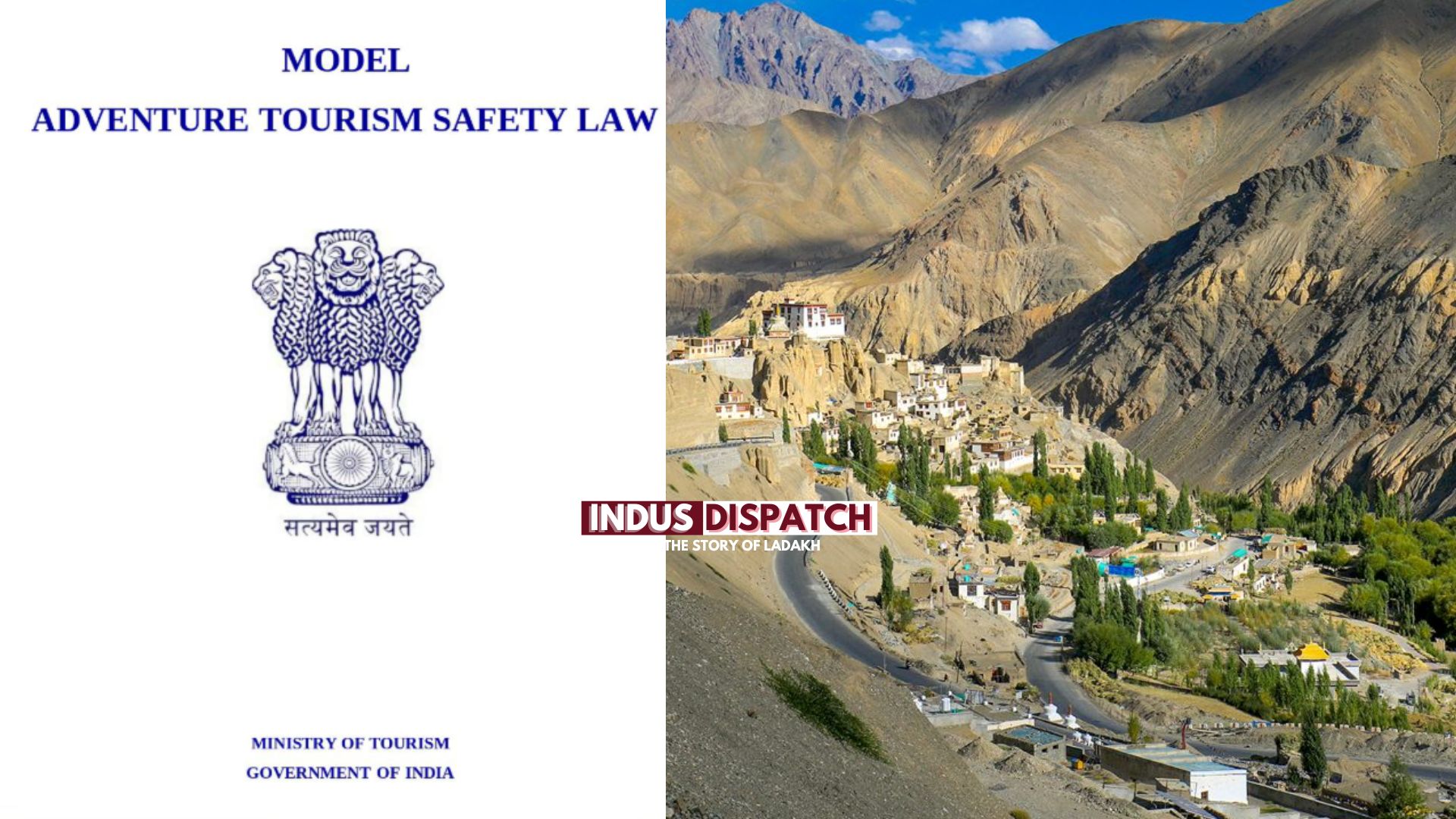
Leh: In a significant move aimed at enhancing safety and sustainability in the adventure tourism sector, the Department of Tourism and Culture, UT Secretariat Ladakh, has released the draft of the Model Adventure Tourism Safety Regulation Act and invited public suggestions and feedback.
This proposed legislation is designed to set comprehensive safety standards for adventure activities while preserving Ladakh’s fragile ecosystem and promoting responsible tourism practices.
The proposed Act, which covers a wide spectrum of land- and water-based outdoor experiences, seeks to formalize regulations for operators and guides while distinguishing between high-risk adventure activities and low-risk recreational ones.
Air-based adventures such as paragliding and ballooning will follow the National Air Sports Guidelines, 2023, already notified by the Ministry of Civil Aviation. Activities like amusement park rides, virtual reality simulations, and indoor climbing will remain outside the scope of this legislation.
The draft law also provides a clear definition of who qualifies as an adventure guide, instructor, or facilitator, emphasizing the need for appropriate training, certifications, and emergency preparedness. It introduces key terms such as “Adventure Activity Operator,” “Adventure Tourism Site,” and “Safety Audit Standards” while detailing malpractice scenarios, ranging from unregistered operators to the use of substandard equipment.
Adventure tourism, while a powerful contributor to Ladakh’s economy and a major draw for thrill-seekers, poses unique challenges due to the region’s extreme terrain and climate. The draft legislation acknowledges this reality and aims to ensure that both tourists and locals benefit from a more regulated, safe, and eco-conscious framework.
Educational institutions, sports clubs, and associations have been given conditional exemptions, with safeguards to prevent misuse. The law also distinguishes between recreational cycling and high-adventure biking, between social picnics and guided wilderness treks, helping ensure that true adventure activities are properly regulated without stifling general tourism.
The Department has urged stakeholders — including tour operators, adventure guides, environmental groups, and the general public — to share their feedback on the draft by July 28, 2025, before it is submitted to the Ministry for final consideration.
By encouraging participatory law-making, Ladakh’s tourism authorities are taking a progressive step towards creating a tourism ecosystem that is not only thrilling but also safe, inclusive, and environmentally conscious.
