

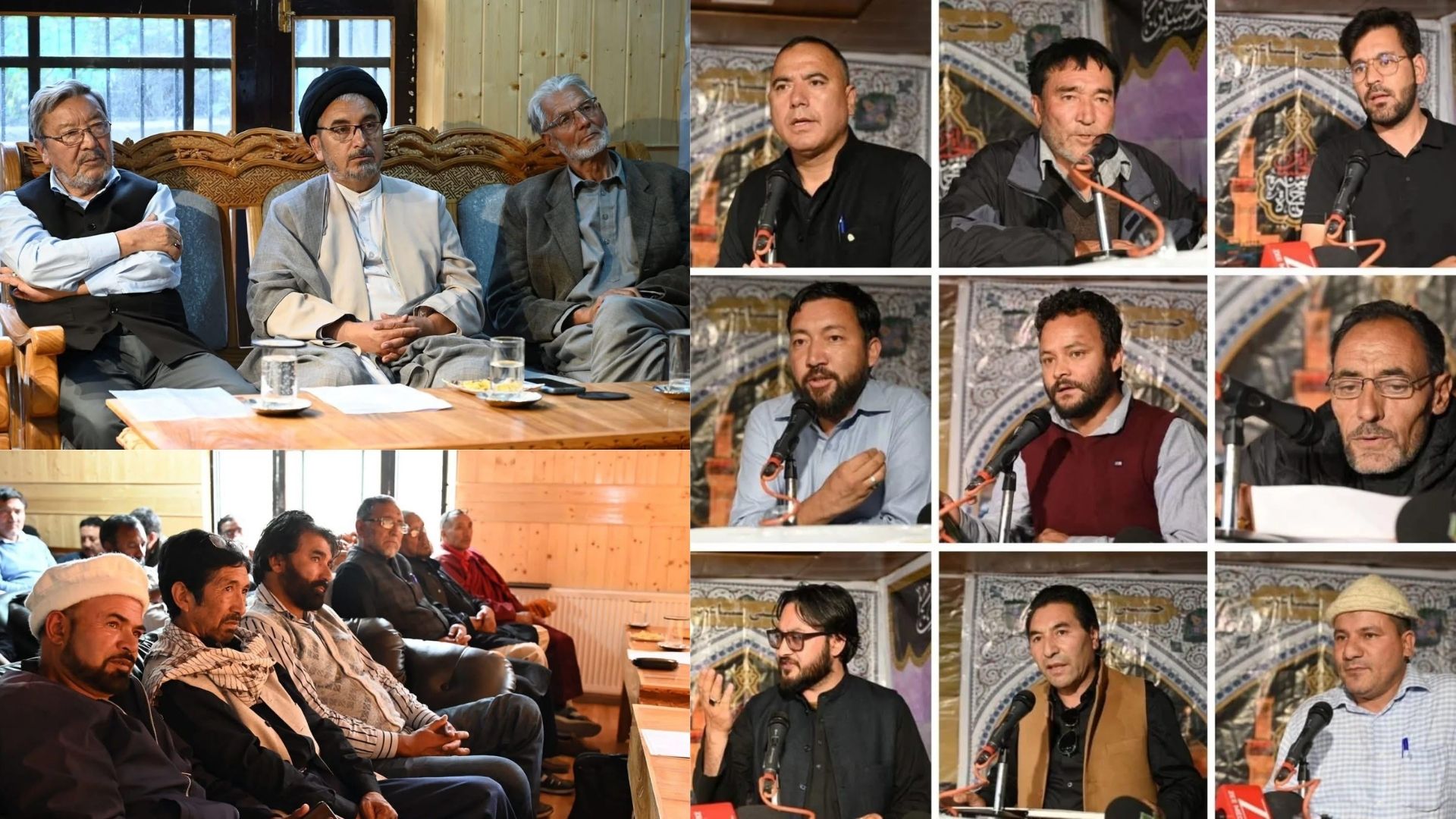
Kargil: The enduring message of sacrifice, truth, and resistance embodied by Hazrat Imam Hussain (AS) and his companions resonated deeply at a powerful district-level Multilingual Hussaini Mushaira organized by the Ladakh Academy of Art, Culture and Languages (LAACL), Kargil.
Held at the Academy Hall, the event brought together poets, scholars, and literature lovers to pay poetic tribute to the martyrs of Karbala through multiple languages and traditions.
The program was attended by Executive Councilor for Social Welfare, LAHDC Kargil, Aga Syed Mujtaba, who spoke passionately about the significance of the event. He highlighted the importance of connecting youth with such gatherings to keep cultural, ethical, and spiritual traditions alive in a fast-changing world.
“The sacrifice of Imam Hussain (AS) is a lasting message of courage and justice. It’s our responsibility to carry that forward through words, actions, and culture,” he said.
The session was presided over by Padma Shri recipient and Balti poet Akhone Asgar Ali Basharat. State Awardee Kacho Asfandyar Khan Faridoon was the guest of honour, while noted Shina-Dardi poet Ghulam Ahmad Khan Jawan also joined the presidium. In his remarks, Basharat reflected on Karbala as a mirror of moral clarity, saying, “In times of social and ethical unrest, Karbala reminds us that standing for truth always comes at a cost—but it is the path of righteousness.”
Aga Syed Mujtaba stressed that preserving language, traditional dress, and food habits is part of safeguarding a community’s identity. He urged poets and writers to use their voices to reflect the eternal values of Karbala—justice, resilience, and compassion. He also reaffirmed LAHDC Kargil’s full support for LAACL in its cultural preservation initiatives.
Speaking at the event, Kacho Asfandyar Khan Faridoon suggested expanding the format of Mushairas to include open themes and wider public involvement. “Such gatherings give young poets the confidence and space they need to grow. It’s more than poetry—it’s community empowerment,” he said.
Over 32 poets from various linguistic backgrounds—including Ladakhi, Balti, Purgi, Urdu, Shina-Dardi, and Brokskat—took the stage to share their moving verses. Their poetry reflected themes of resistance, love, devotion, and unwavering faith, inspired by the legacy of Karbala.
Deputy Secretary of LAACL Kargil, Nazir Hussain, opened the event by outlining its purpose: to commemorate Karbala’s message through literary expression and to mentor young poets in exploring spiritual and cultural depth through their writing.
“We are committed to nurturing our cultural roots and ensuring that our literary heritage remains alive for future generations,” he said.
Renowned poet and writer Shujaat Ali Shujaat anchored the session with poetic flair, ensuring a smooth and reflective atmosphere throughout. The event concluded with a vote of thanks delivered by Tsewang Rigzin, Cultural Expert at LAACL Kargil.
Among the participating poets were Kachoo Isfandiyar Khan Faridoon, Akhone Asgar Ali Basharat, Ghulam Ahmad Khan Jawan, Syed Hadi Shah Aga, Gen Nawang Paljor, Akhone Safdar Ali Safdar, Akhone Ali Subour, Mohd Raza Amjad Badgami, Basheer Ahmad Wafa, Mohd Hussain Renuma, Mohd Shafi Sagar, Ghulam Qadir Zaki, Nasiruddin Khaffee, Mohd Yasin Ansari, Ghulam Murtaza Advocate, Ashraf Ali Sagar, Mohd Ali Ashur, Tsewang Rigzin, Mohd Ali Khumar, Sibte-Hassan Kaleem, Mohd Hussain Fayaz, Feroz Rabbani, Taqi Khan Nayab, Mohd Ali Baba, Fida Hussain Waziri, Arif Hussain Ladakhi, Nissar Hussain Trespon, Dr. Mohd Illyas Kargili, Mohd Baqir Rafeeq, Ali Asgar Rinchan, Nawang Sharap, and Kacho Ahmad Khan Najaat.
The event saw participation from students, government officials, cultural practitioners, and literature enthusiasts from across the district, all united in paying tribute to the universal values upheld in Karbala.
A condolence meeting was also held at the Academy Hall in memory of the late Haji Ali Bhutto Nousheen, a renowned poet, writer, and educationist, who tragically lost his life in a road accident on the Kargil–Drass road the previous evening. His contributions to literature and education were remembered with deep respect and heartfelt prayers.
The Mushaira served not only as a cultural gathering but as a call to preserve collective memory and moral responsibility through the enduring power of words.
