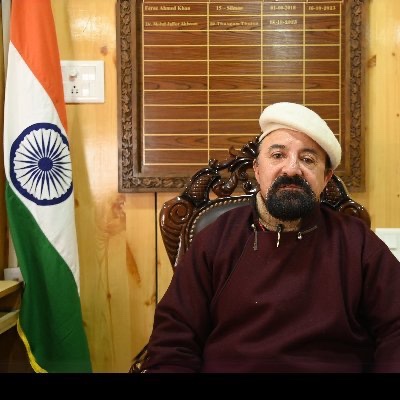
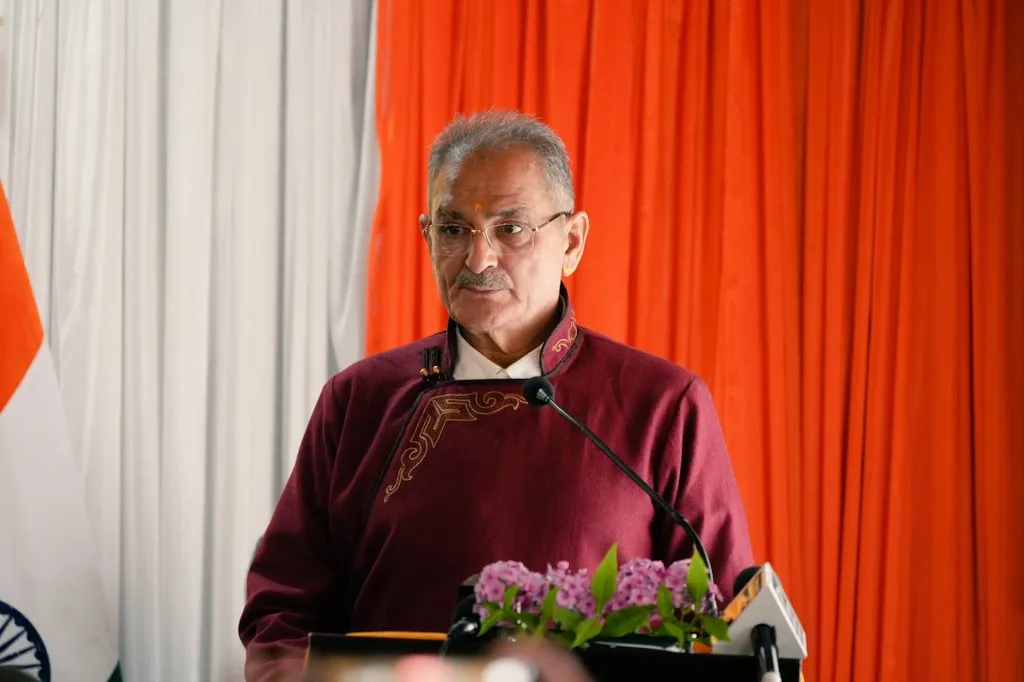
Leh: In a moment steeped in symbolism and hope, Kavinder Gupta was officially sworn in today as the Lieutenant Governor (LG) of the Union Territory of Ladakh, marking the beginning of a new political chapter for the region.
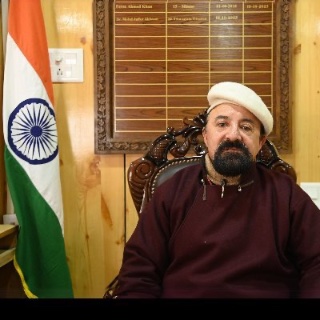
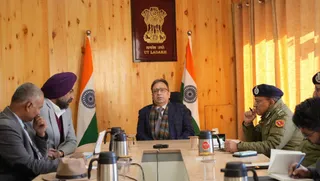
Wearing the traditional Ladakhi attire, Gupta stood with humility and pride as he took the oath of office, administered by Justice Tashi Rabstan Pali in a solemn ceremony held in Leh. The occasion was attended by senior officials, political leaders, and members of civil society from across the UT.
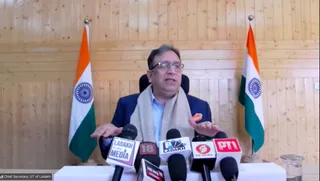
“I’m Here to Serve, Not to Rule” In his first message after taking oath, Gupta set a powerful and unifying tone:
“Religion, caste, or party lines cannot divide us. We will rise together as one Ladakh.”
He thanked President Droupadi Murmu and Prime Minister Narendra Modi for the trust placed in him, and emphasized his intention to lead with accessibility, accountability, and action.
“I want to assure the people of Ladakh — I am here to walk with you, listen to you, and serve you. Not to rule from above,” he said.
In a rare moment of candor, Gupta acknowledged the long-standing feelings of discrimination among communities in Ladakh and pledged to build a more equitable future.
“Ladakh has faced unfair treatment in the past. That must change. My role is to listen, learn, and act in the interest of every citizen — be they Buddhist, Muslim, or from any other community.”
He also addressed sensitive demands around statehood, Sixth Schedule protections, and constitutional safeguards, assuring that all concerns will be taken up meaningfully with the Centre.
Gupta laid special emphasis on improving conditions in remote regions like Zanskar, Nubra, and Drass, pointing out the persisting gaps in connectivity, education, healthcare, and digital infrastructure.
Reaffirming his commitment to development, he recalled attending the foundation laying of the Zojila Tunnel with PM Modi in 2018, and said its timely completion will now be one of his top priorities.
Gupta also championed the idea of stronger local self-governance, suggesting that Ladakh too should move towards empowered panchayats and decentralized decision-making, similar to the DDC model in Jammu & Kashmir.
“Ladakh’s people deserve to have governance reach their doorsteps. It’s time for a system that listens at the grassroots,” he added.
Gupta concluded his address with a vision of unity and global ambition: “Ladakh has the potential to be a global name—not just for its beauty, but for its dignity, sustainability, and people-centric development.”
With hopes riding high across the region, this appointment—marked by tradition, humility, and resolve—signals a critical new phase in Ladakh’s administrative and emotional journey as a Union Territory.