

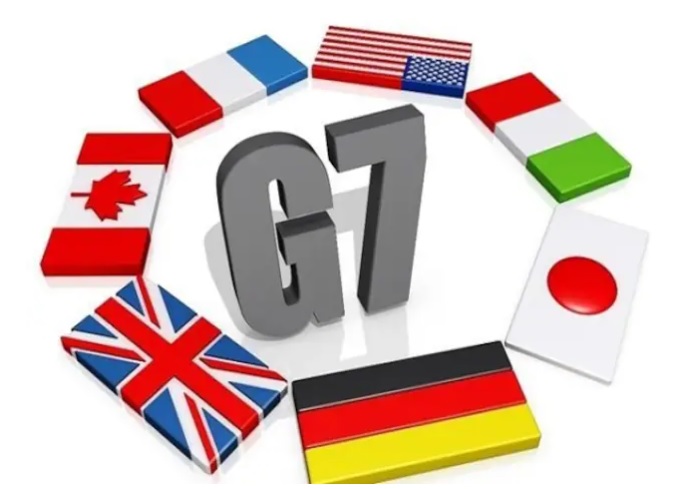
Prime Minister Narendra Modi attended the two-day G-7 meeting from 26-28 June in picturesque Schloss Elmau in the Bavarian region of Germany. The summit was held under the slogan, “Progress towards an equitable world”. It deliberated five priority areas set by the current German presidency of the Group. But what is noteworthy is declaration of its determination to counter China as well as Russia, the latter in the wake of the war in Ukraine. India’s participation in the meeting as an observer perhaps helps in promoting its foreign and security interests. Indeed, a matter of speculation and debate.
The G-7 comprises seven powerful countries, all of which are in the top ten economies of the world, and three of them permanent members of the UNSC. The European Union consisting of 27 countries is a permanent invitee, although four of its constituents are already members of G-7. It also includes several countries as observers from time to time. Germany took over the presidency, which rotates annually among the members, since 1 January 2022.
On Russia, the G-7 members vowed to crush Russia’s income from oil sales that is financing the war. They declared to support Ukraine “as long as it takes” as Russia’s aggression continues. They would explore all possible and far-reaching avenues to curb Kremlin’s manoeuvres to sell oil and gas in face of the sanctions. In one of their communiqués, they said, “we remain steadfast in our commitment to our unprecedented coordination on sanctions for as long as necessary and acting in unison at every stage”. Just before the conclusion of the meeting, the leaders unanimously condemned the ‘abominable’ Russian attack on a shopping mall in Ukraine calling it a war crime and promising to hold President Vladimir Putin to account.
The Ukraine war dominated the mood in the meeting of G-7 countries. They invited Ukrainian President Volodymyr Zelenskyy to update them on the situation. That was a clear reiteration of G-7 and NATO’s position on the war. It should be noted that NATO has become more belligerent towards Russia. NATO Secretary General Jens Stoltenberg has made it clear that Russia was an immediate threat to NATO security. He has announced a whopping increase of its military strength from 40,000 to 300,000 forces.
NATO has further declared that it will protect every inch of its territory and will move much closure to Russian borders. G-7 overlaps with NATO alliance. All these declarations of intent and action were made vis-à-vis Zelenskyy’s statement in the video message that the West is fatigued by the cost of a war that is causing energy prices to soar and hikes on essential goods across the world.
As the NATO’s summit follows the G-7 meet, the contours of conversation on strategy in regard to Ukraine war were outlined in Elmau, Germany. Evidently, NATO is hardening its stand on Russia as well as China. It is not surprising. The war in Ukraine is unlikely to end in the near future. China’s threat looms large. The G-7 final communiqué sends a tough message to China as well. It exerts Beijing to persuade Russia to withdraw from Ukraine. More important, it sounds grave concern on China’s human rights record in Tibet and Xinjiang. It calls on Beijing to respect universal human rights and fundamental freedoms.
In substantive terms, G-7 discussed initiatives and intent for a sustainable planet wherein an inclusive, open and cooperative ‘climate club’ will be established. Second, it focussed on economic stability and transformation. The German Presidency believes that ‘an ecologically and socially just transformation can go hand in hand with economic prosperity’. The third in the German G-7 agenda is to build healthy lives. In this, Germany aims to expand the G-7’s pioneering role in pandemic prevention and control while improving the international health architecture.
The fourth priority is investment in a better future. This will aim at making concrete progress in achieving global developmental goals. Fifth and final agenda is a commitment to become stronger together. The G-7 is united by the shared values of democracy, the rule of law and human rights. It will seek to strengthen the role of its members in unity as bridge-builders for peace and security. This blueprint prepared by Germany constituted the crux of discussion in the summit.
In particular, on the economic front, the G-7 has committed to invest 600 billion USD by 2027 in many countries, including India with the motto, “in critical infrastructure that improves lives and delivers real gains for all of our people”. This commitment follows the initiative called Partnership for global Infrastructure and Investment (PGII) announced by the US President Joe Biden. Apparently, PGII aims to act as an alternative to China’s Built and Road Initiative (BRI), which imposes heavy debt on economies of countries like Sri Lanka and Pakistan.
India was signatory to two statements issued by the G-7. One is, “Resilient Democracies” statement. This talks of democracies as partners in promoting a rule-based international order while supporting establishment and consolidation of democracies worldwide. The second statement is, “Joining Forces to Accelerate Clean and Just Transition towards Climate Neutrality”. On preparation of this statement, Modi made a powerful intervention on climate injustice. He said that India is doing everything on its part without being responsible for the problem of the climate change. At the same time, he made a forceful plea to the western countries to invest heavily in India’s renewable market.
Admittedly, G-7 summit provides good opportunity to interact with members and observers in and around the meetings. Modi’s meetings on the side lines with President Joe Biden, French President Emmanuel Macro, Canadian Prime Minister Justin Trudeau was widely reported in the media. The warmth and bonhomie shown by Biden has caught the cameras’ reporting to India. Equally notable were the meetings with leadership from Indonesia, South Africa and Argentina, in the run-up to the G-20 meeting under President of India to be held in Kashmir in 2023.
So far so good. The moot point, however, is the changing equations between big powers and all other countries with them. The strategic partnerships and equations have become more important in relation to the ongoing war in Ukraine. New Delhi still seems to be at crossroads. It has not candidly and emphatically expressed its stand, either for Russia or for Ukraine.
India’s foreign policy has held that there must be an immediate cessation of hostilities in Ukraine, and dialogue and diplomacy are the way forward. New Delhi should be taking visible steps in promoting the principle of diplomacy as against a bloody and destructive war. The situation is in Ukraine is anybody’s guess. The West may tire Russia out, whereas Russia has vowed not to stop until Ukraine surrenders.
Under the prevailing circumstances, New Delhi has a great opportunity to show its diplomatic mettle to find a face-saving solution for Russia to end this crisis. It can continue its trade, economic and strategic relations with the West. At the same time, it should, through its participation in important plurilateral forums like G-7, bring about a détente between Russia and the US. Both should be made to see China as the villain of the piece and a bigger threat to the world order. To be sure, Modi with his growing international stature could do this unique feat for India. —INFA
