Close Menu
Indus Dispatch
  • Home
  • Top Stories
  • Editorial
  • Ladakh Stories
  • Essential Ladakh
What's Hot

L-G VK Saxena inaugurates Automated Driving Testing Centre at Kurbathang in Kargil

July 26, 2026

Akhoon Backs Sustainable Poultry Farming, Calls for Greater Support to Livestock Sector

July 26, 2026

CS Engages Kargil Entrepreneurs, Reviews Tourism Hub Proposal

July 26, 2026
Facebook X (Twitter) Instagram
Indus Dispatch
Sunday, July 26
Facebook X (Twitter) Instagram YouTube
  • Home
  • Top Stories

    L-G VK Saxena inaugurates Automated Driving Testing Centre at Kurbathang in Kargil

    July 26, 2026

    CS Engages Kargil Entrepreneurs, Reviews Tourism Hub Proposal

    July 26, 2026

    Drug-Free Ladakh Campaign to Roll Out Across UT; Chief Secretary Calls for United Action

    July 26, 2026

    Ladakh Pushes for Global Pashmina Brand as Chief Secretary Unveils Major Reforms

    July 26, 2026

    Indus Dispatch Contributor Bharat Nanda’s Book Beyond the Himalayas Unveiled by Himachal Pradesh Governor

    July 25, 2026
  • Editorial

    Ladakh’s Democratic Transformation: A Hill Council for Every District

    July 13, 2026

    Kucha: India’s Civilisational Bridge Across the Taklamakan

    June 20, 2026

    Agni Desa and India’s Old Road to Central Asia

    June 12, 2026

    No Illegal Road Checks

    April 23, 2026

    Stone Memory, Future Duty

    April 22, 2026
  • Ladakh Stories

    Akhoon Backs Sustainable Poultry Farming, Calls for Greater Support to Livestock Sector

    July 26, 2026

    Teachers Equipped with Innovative Teaching Methods at DIET Leh Workshop

    July 26, 2026

    100-Day TB Campaign Reaches Nubra Village, 79 Screened with Portable X-Ray

    July 26, 2026


    CCF Iftikhar Hussain Reviews Subsidy Guidelines for LAHDC Kargil Schemes

    July 24, 2026

    Kundra Inaugurates Global Conference on Election Body Independence in Leh

    July 24, 2026
  • Essential Ladakh

    Alchi Monastery: A Treasure of Ancient Art in Ladakh

    April 4, 2026

    Lamayuru Monastery: Exploring the Moonland of Ladakh

    April 4, 2026

    Diskit Monastery: Spiritual Majesty Amidst Nubra’s Sand Dunes

    April 4, 2026

    Hemis Monastery: The Grand Heart of Ladakhi Culture

    April 4, 2026

    Thiksey Monastery: Ladakh’s Mini Potala with Spiritual Grandeur

    April 4, 2026
Indus Dispatch
Home»Latest News»Himalayan glacial lakes saw 10.81% area expansion from 2011 to 2024: Report
Latest News

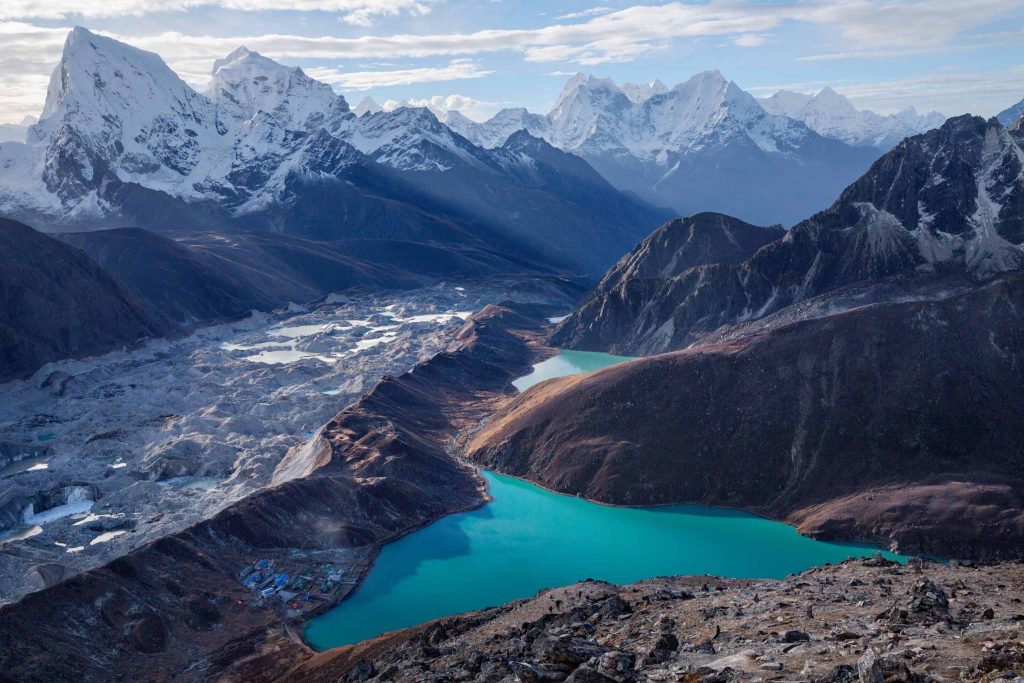
Himalayan glacial lakes saw 10.81% area expansion from 2011 to 2024: Report

The Dispatch StaffBy The Dispatch StaffNovember 3, 2024No Comments4 Mins Read
Facebook Twitter Pinterest LinkedIn Tumblr Email
Himalayan glacial lakes saw 10.81% area expansion from 2011 to 2024: Report
Share
Facebook Twitter LinkedIn Pinterest Email

New Delhi: Glacial lakes and other water bodies across the Himalayan region saw a 10.81 per cent increase in area from 2011 to 2024 due to climate change, signalling a heightened risk of glacial lake outburst floods (GLOFs), according to a government report.

The Central Water Commission’s (CWC) report, which was accessed by PTI, states that with a 33.7 per cent expansion of the surface area, the lakes in India experienced an even more substantial rise.

“The total inventory area of glacial lakes within India was 1,962 hectares during the year 2011 which has increased to 2,623 hectares during the year 2024 (September). There is a 33.7 per cent increase in area,” the report said.

It also identified 67 lakes in India that witnessed an over 40 per cent increase in surface area, placing them in the high-risk category for potential GLOFs.

Ladakh, Himachal Pradesh, Uttarakhand, Sikkim and Arunachal Pradesh showed the most notable expansions, signalling a heightened risk of GLOFs and the need for intensified monitoring and disaster preparedness.

Glacial lakes and other water bodies across the Himalayan region saw an overall area increase of 10.81 per cent from 5,33,401 hectares in 2011 to 5,91,108 hectares in 2024 due to climate change, the report said.

The rapid expansion of these lakes is attributed to accelerated melting of glaciers due to rising temperatures in the region, with potentially severe consequences for downstream communities, infrastructure and biodiversity, it said.

Physically, the shrinking of mountain glaciers and expansion of glacial lakes are amongst the most recognisable and dynamic impacts of climate warming in this environment, it said.

“Therefore, under such a changing environment, a close watch on the relative change in water spread area of even smaller lakes has become very crucial in this region,” the report said.

The sudden and often catastrophic floods occur when glacial lakes breach their natural moraine dams, releasing large volumes of water downstream.

The CWC stressed that the increased water spread of these lakes demands rigorous monitoring and urgent risk management strategies.

To overcome challenges in tracking these remote lakes, a senior official said, the CWC has leveraged advanced satellite technology, particularly the Sentinel-1 Synthetic Aperture Radar (SAR) and Sentinel-2 multispectral imagery that enable precise and all-weather monitoring.

“The high-resolution capabilities of these satellites allow CWC to detect changes in lake size with 10-metre accuracy, even in challenging conditions such as cloud cover. This monitoring technology is critical in providing timely updates on the state of these high-risk lakes, thereby enabling early interventions when necessary,” the official said.

The CWC report also underscored the transboundary risks posed by expanding glacial lakes in neighbouring countries, including Bhutan, Nepal and China.

Given the interconnected nature of river basins across the Himalayan watershed, collaboration with these countries is crucial to managing the potential impacts of GLOFs, it underlined.

The report called for joint monitoring efforts and data sharing to build a more comprehensive risk assessment and mitigation strategy.

It highlighted the urgent need for international and regional cooperation in developing early warning systems, enhancing disaster management plans, and promoting community awareness initiatives to safeguard vulnerable populations.

The implications of area expansion of glacial lakes extend beyond flood risks and can impact water availability in the region’s major river systems, including the Ganga, Brahmaputra and Indus.

Using data from 2011 and drawing comparisons with five and 10-year averages, the CWC’s report identified patterns of glacial lake expansion that allow authorities to pinpoint high-risk areas.

The official cited above said with its commitment to reducing monitoring intervals and improving data precision, the CWC aims to establish a robust system for early detection and response to the evolving challenges posed by the Himalayan glacial lakes.

Himalayan glacial lakes saw 10.81% area expansion from 2011 to 2024: Report
Share. Facebook Twitter Pinterest LinkedIn Tumblr Email
The Dispatch Staff
  • Website
  • Facebook
  • X (Twitter)

The Dispatch is a diversified news and knowledge media startup in India. Reach us at [email protected] or WhatsApp +91 9103331503

Related Posts

Ladakh’s Democratic Transformation: A Hill Council for Every District

July 13, 2026

Leaders Condole Demise of Inspector Mehraj Khalid Giri, Recall His Dedicated Service

June 23, 2026

Gosthana and Aksai Chin: The Forgotten Names of a High Frontier

June 23, 2026
Leave A Reply Cancel Reply

Top Posts

Chief Secretary confirms May 22 MHA talks with KDA, LAB to proceed as scheduled

May 20, 20262,409 Views

Anand Jain posted as DGP Ladakh

June 22, 20261,170 Views

Ex-LBA president writes to HM Shah, flags imbalance in Ladakh dialogue representation

November 10, 20251,063 Views

Thupstan Chhewang steps down as Leh Apex Body chairman; members accept resignation

May 4, 20261,027 Views
Stay In Touch
  • Facebook
  • Twitter
  • Instagram
  • YouTube
Facebook X (Twitter) Instagram YouTube
© 2026 Indus Dispatch. All Rights Reserved. | Powered by Ideogram Technology Solutions [P] Ltd..

Type above and press Enter to search. Press Esc to cancel.