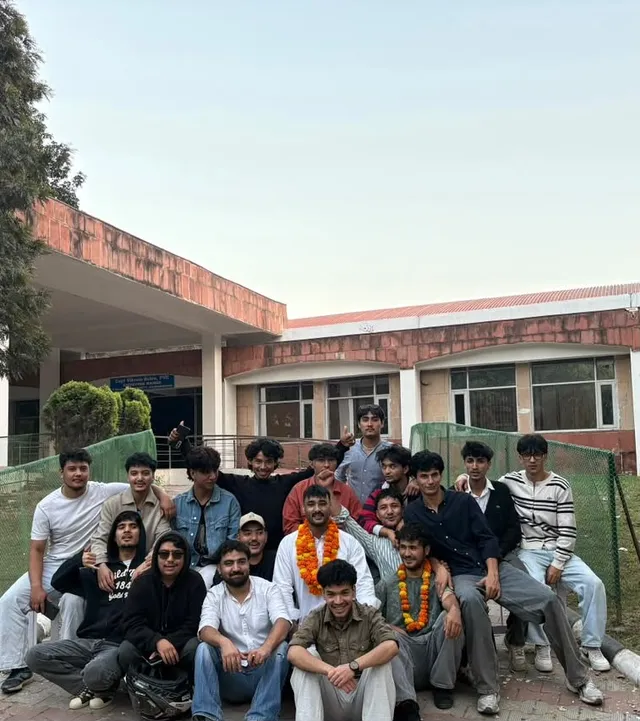
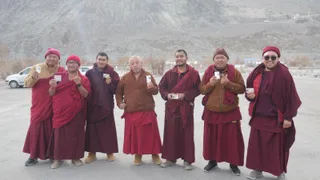
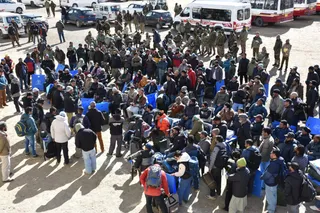
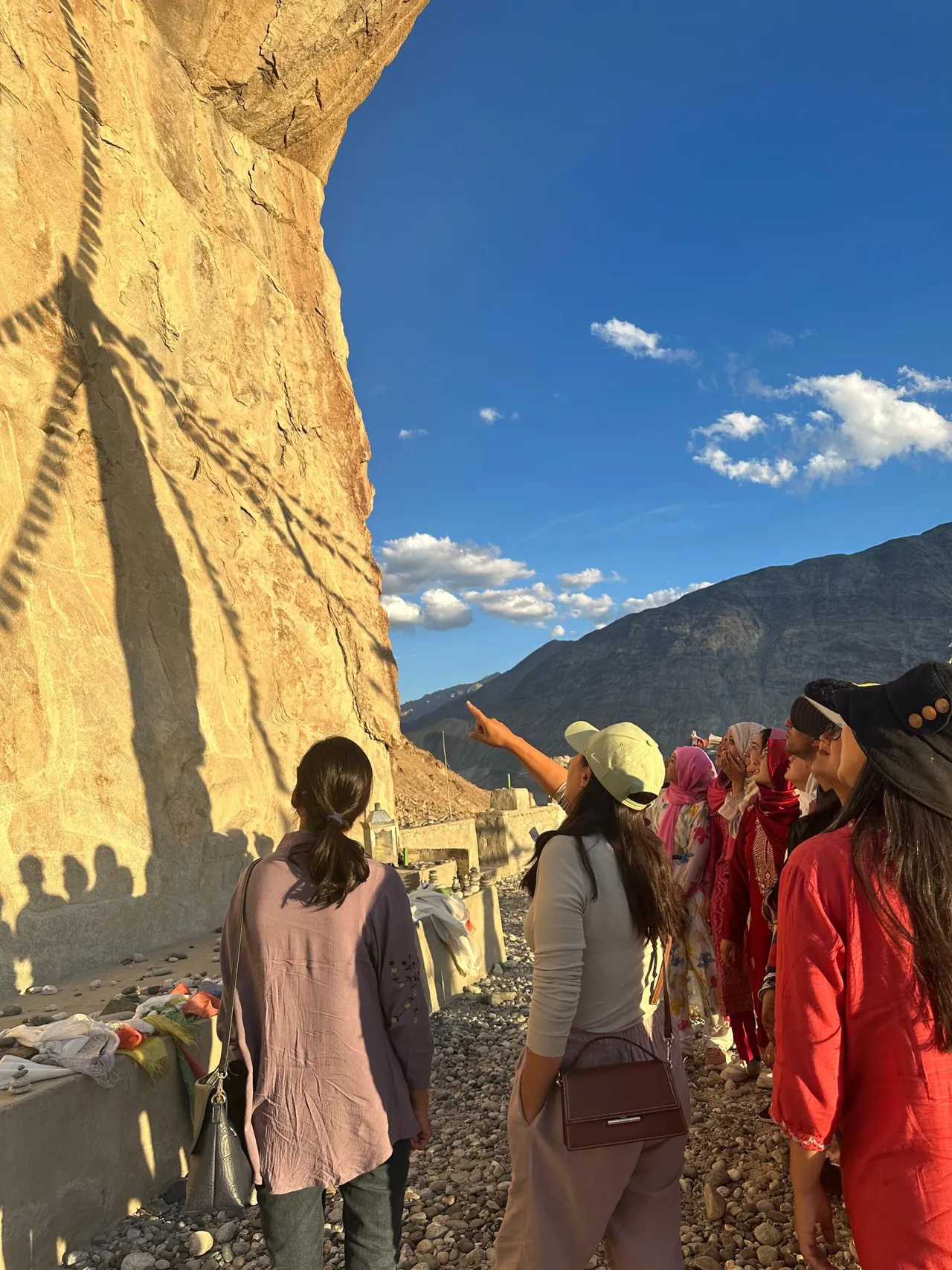
NUBRA: Under the chairmanship of Principal Dr Tsewang Motup, Department of History, Government Degree College, Nubra, conducted a one day field visit to pre-historic petroglyphs sites at Murgi Tokpo, and heritage sites such as Ensa Monastery and Tirith Buddhist Rock Carving on 24th of July, 2024.
The first visit was the petroglyphs sites at Murgi, where Dr. Padma Lhamo, Assistant Professor of History Department gave a brief presentation about different pre historic sites of ladakh and spoke about the significance of Murgi Tokpo in reconstructing the pre-historic culture of Ladakh.
The site comprises of three distinct types of motifs such as zoomorphic (Ibex, blue sheep, Yak, Bactrian camel etc), anthropomorphic (hunting scenes, riders etc) and non-figurative motifs (mask, group of dots, swastika sign etc).
Some of the characters of these petroglyphs found nowhere in the Indian Pre Historic Sites such as the mask (Mascoid), Ibex huntings, and Yak with rounded shape tail proved the fact that it shared close link between Ladakh and central Asia (from Uzbekistan to Siberia via Kazakhstan and Mongolia).
Second visit was the Ensa Monastery, where students were appraised about the rich religious and cultural history of Ensa. The students witnessed the recently discovered wall mural which according to recent study can be dated back to early medieval period i., late 8th and early 9th century, thus, likely tracing it earlier then Alchi heritage site.
The third visit was the Hargam Masjid, which in past served as the place of worship to all the Muslim pilgrims and traders of central Asia. At last, the students and faculties made a visit to the Buddhist rock carving at Tirith.
The rock carving consists of four figures; the deity in the centre represents Maitreya Buddha identifiable by the Chorten in his crown, the rosary and the water pot. On its right is the Manjushiri holding the sword, and the book; while on its left is the Buddha and bodhisattva. The four figures display similar stylistic traits such as round face, longed eyes, broad shoulder and oblonged fingers and foot.
The visit was a day long trip which helps students as well as escort faculties to learn the significance of archaeological sources in reconstructing the cultural, religious and social activities of the past and students also learned about the importance of trans-Karakorum trade passed via Saichen valley till 1950’s.