

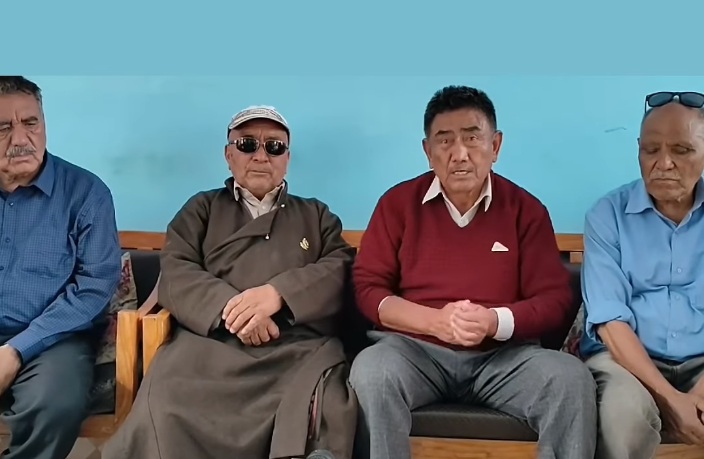
Leh: Former Presidents of the Ladakh Buddhist Association (LBA) from Nubra, Sham, and Aryan Valley have strongly opposed the demand for statehood for Ladakh, citing concerns over land rights, administrative control, and the preservation of Ladakh’s unique cultural diversity.
Addressing a press conference, the leaders urged newly appointed Lieutenant Governor to expedite the formation of new districts in the Union Territory.
They emphasized that any new composition of the Apex Body of Leh (ABL) should ensure fair representation from all regions of Ladakh.
“The existing composition is no longer understandable or relevant,” they said, advocating for a 15–20-member ABL to deliberate internally, with 2–3 members designated to negotiate with the Centre.
Rejecting the demand for statehood, the former LBA presidents argued that the current LAHDC system offers more autonomy—particularly over land matters—than what would be available under the Sixth Schedule or a full-fledged state.
“Under the Sixth Schedule, land is under the control of the Governor. But in the current Council system, land decisions are with the Council, giving locals more control,” they explained.
They further stated that the LAHDC model was developed with careful consideration by former Ladakhi leaders like Thupstan Chhewang, Rigzin Jora, and P Namgyal, and that it reflects the spirit of the Sixth Schedule.
“There is no shortcoming in the Hill Council framework; it is already powerful,” they maintained.
Highlighting the socio-cultural differences between Kargil and Leh, they said statehood could further complicate the already fragile balance between the two regions.
“Leh and Kargil have never been completely harmonious due to cultural and religious differences,” one of the ex-presidents said.
“If Ladakh were to become a state, there’s no guarantee that people from Leh would feel safe or welcome in Kargil, and vice versa.”
Responding to a journalist’s question on why Ladakhis shouldn’t frame their own laws under statehood or the Sixth Schedule, Sham region’s ex-president pointed to deep-rooted societal divides, especially discriminatory practices that still exist on the ground.
“In some areas, Buddhist citizens struggle to find even rented accommodation. How can we claim readiness for statehood if basic harmony is still lacking?”
The leaders reiterating their faith in the current Council structure, calling for its further empowerment rather than restructuring Ladakh’s political status.
