

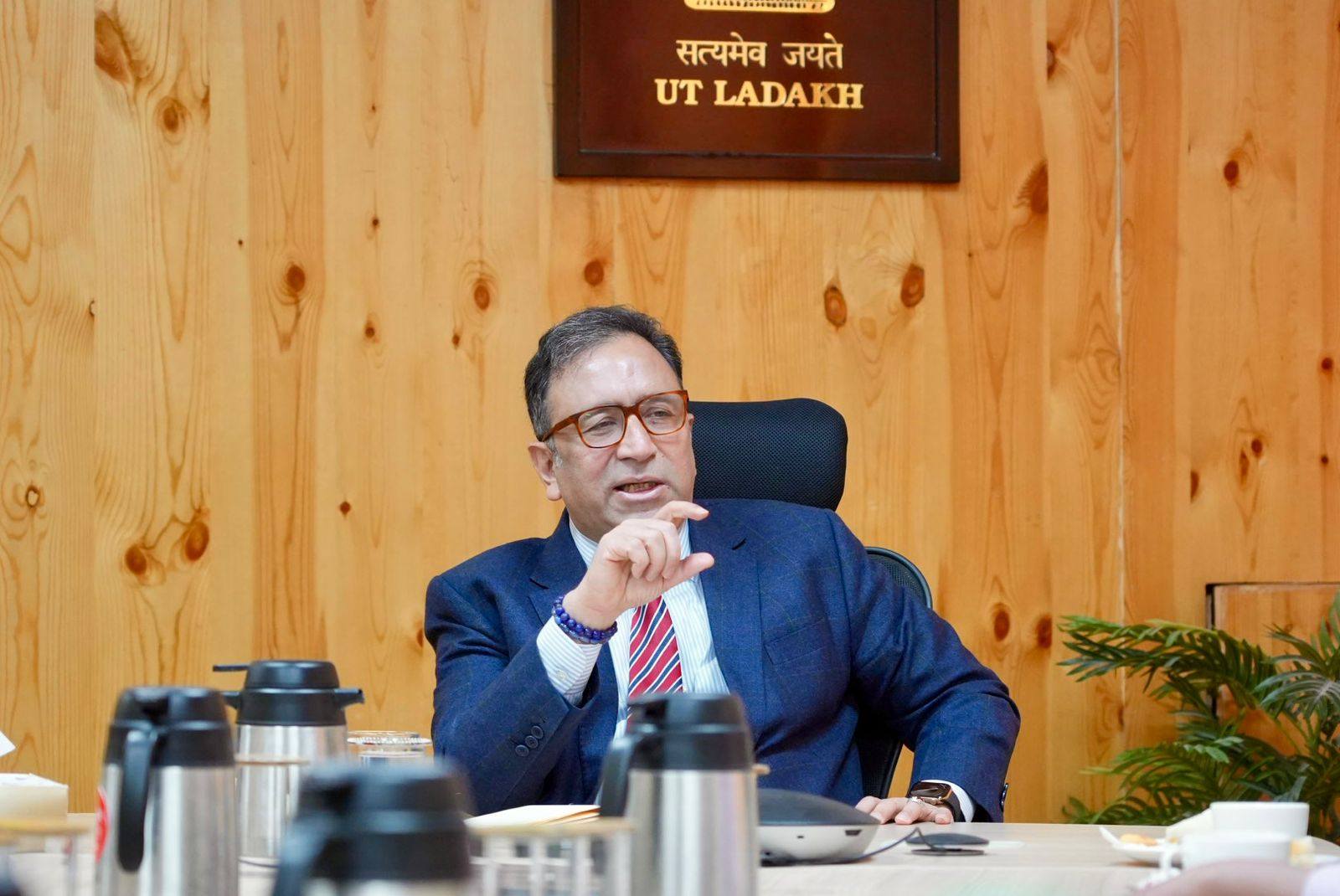
Leh: Drug addiction cases in Ladakh have shown a concerning rise, with 101 new cases reported over the past year and 237 follow-up cases currently under treatment, officials were informed during a high-level review meeting chaired by Chief Secretary Ashish Kundra.
The meeting reviewed the status of drug addiction, rehabilitation measures, awareness initiatives, and enforcement actions across the Union Territory, with a focus on strengthening coordination between health institutions, police, education department, social welfare agencies, and civil society organisations.
Consultant psychiatrist Padma Angmo informed the meeting that opioid-related cases are increasing in the region. She noted that while awareness programmes are beginning to show positive impact, stigma continues to prevent many patients from seeking timely and continuous treatment. She also highlighted that a significant number of patients do not return for regular follow-ups after initial counselling and treatment.
Angmo further expressed concern over the rising incidence of substance abuse among women and recommended the creation of dedicated female outreach and counselling teams to improve access to support services. She also stated that Hepatitis-C related complications among patients are being treated with free medicines and diagnostic support, but continuity of care remains a challenge.
Reviewing the situation, Chief Secretary Ashish Kundra directed departments to move beyond data reporting and focus on concrete, outcome-driven interventions. He asked the police to intensify action against drug peddlers and questioned the continued rise in cases despite ongoing enforcement efforts.
He stressed that treatment accessibility and rehabilitation systems need urgent strengthening, and instructed that de-addiction centres be brought under a structured and medically supervised framework. He also reviewed occupancy and functioning of District De-addiction and Counselling Centres in Leh and Kargil, and discussed expansion of bed capacity and rehabilitation infrastructure.
Kundra directed the Social Welfare Department to prepare a comprehensive integrated action plan within one week, along with a standard operating procedure for coordinated intervention across departments. He also ordered the establishment of a dedicated helpline for counselling and rehabilitation support, and suggested deploying trained teams for home visits to ensure early intervention and community-based counselling.
He further instructed the Education Department to intensify awareness campaigns through schools, colleges, and parent-teacher meetings, along with targeted social media and poster campaigns focusing on prevention, symptoms, and treatment facilities.
Reviewing enforcement and night patrolling measures, he called for a follow-up meeting within a week involving Ladakh Autonomous Hill Development Councils, religious organisations, NGOs, and other stakeholders. He emphasised a three-pronged strategy—awareness and dissemination, prevention and police action, and treatment and rehabilitation.
Secretary Social Welfare informed that additional facilities are being arranged at Mahabodhi Hospital to strengthen rehabilitation capacity.
The meeting also discussed the proposal for mobile homecare teams to support patients at the community level, which was endorsed.
It was agreed that a comprehensive action plan will be prepared for review at the level of Lieutenant Governor within ten days, given concerns over rising drug abuse and the stigma preventing people from seeking help.
