

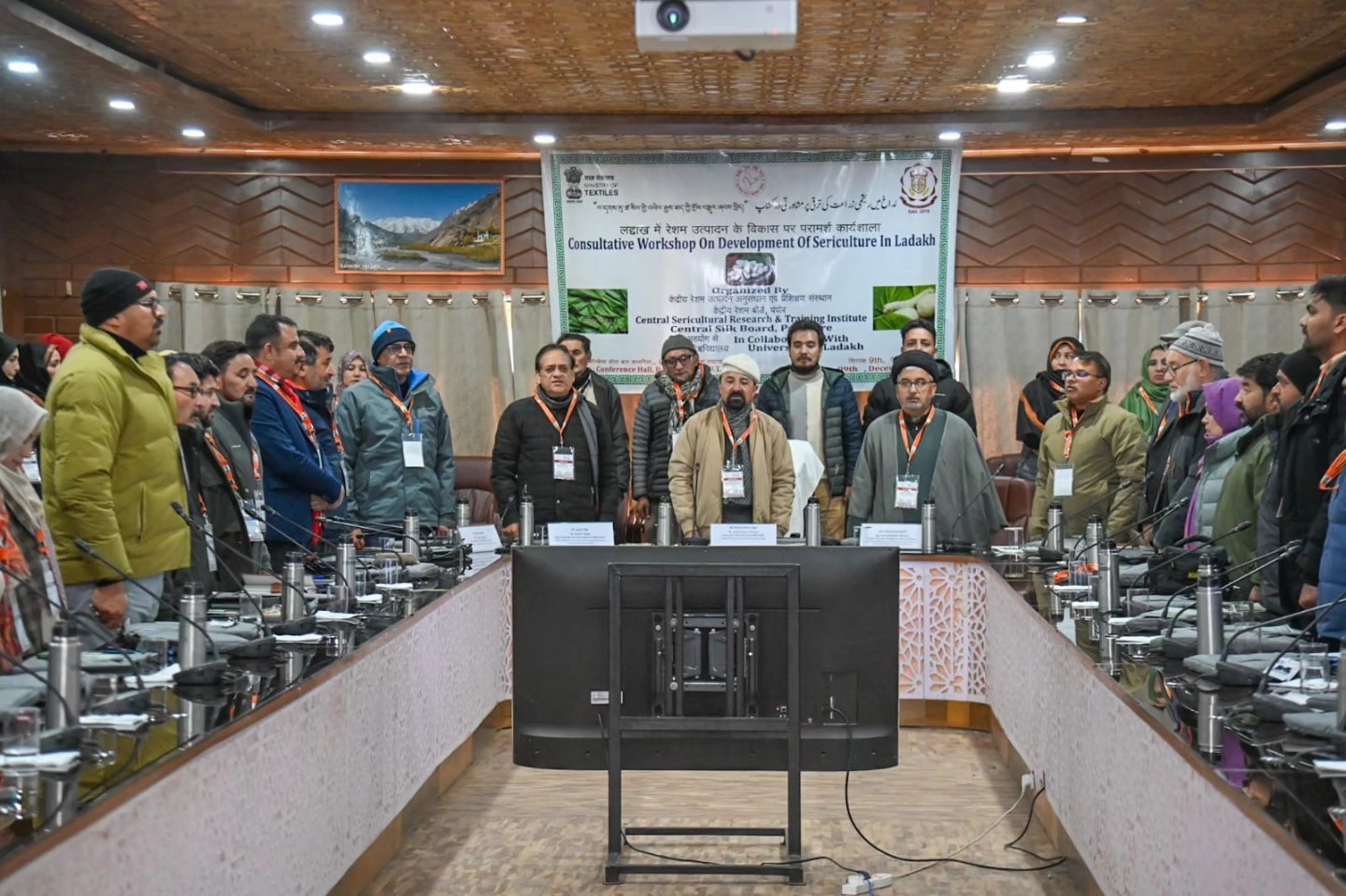
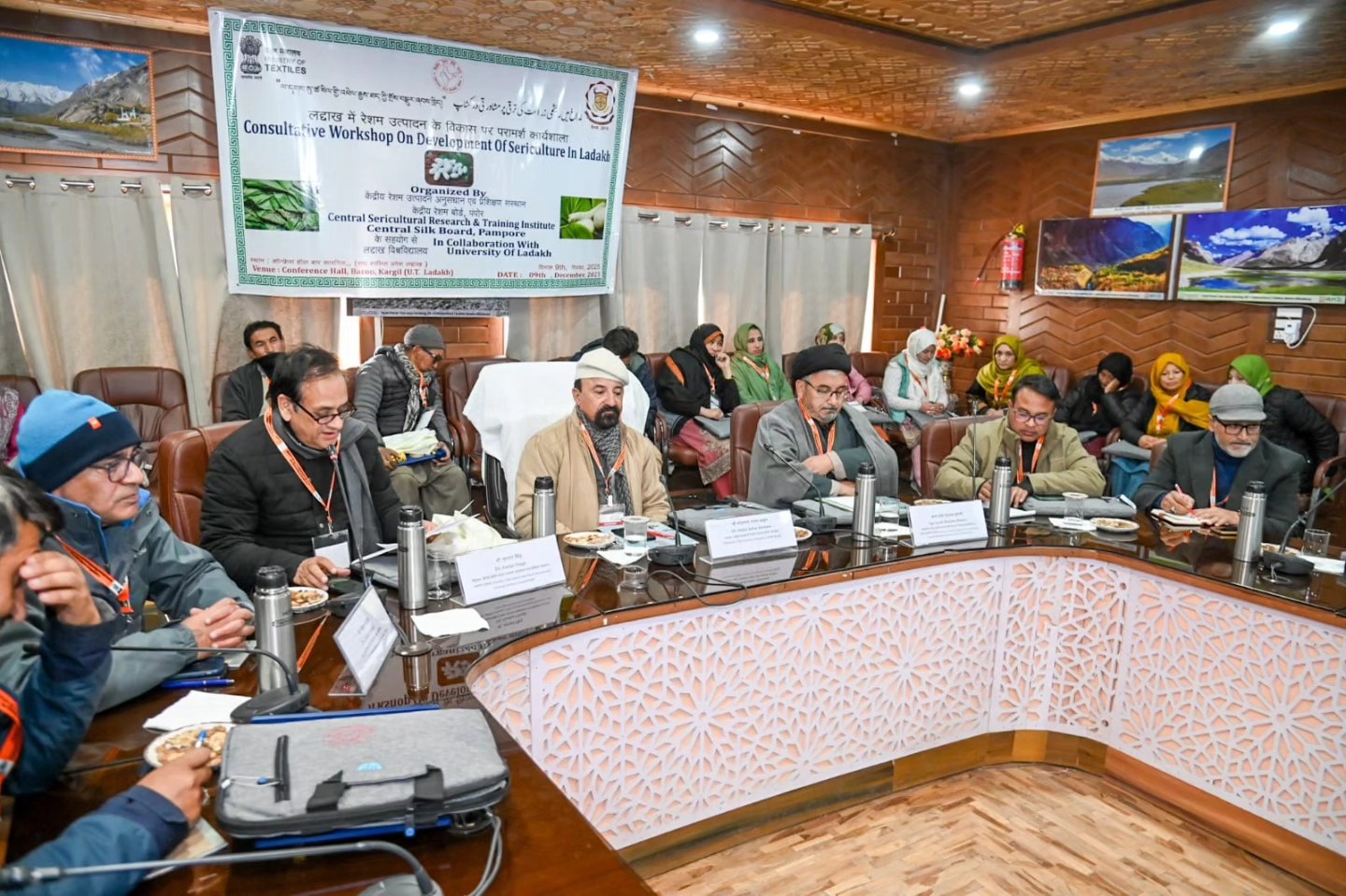
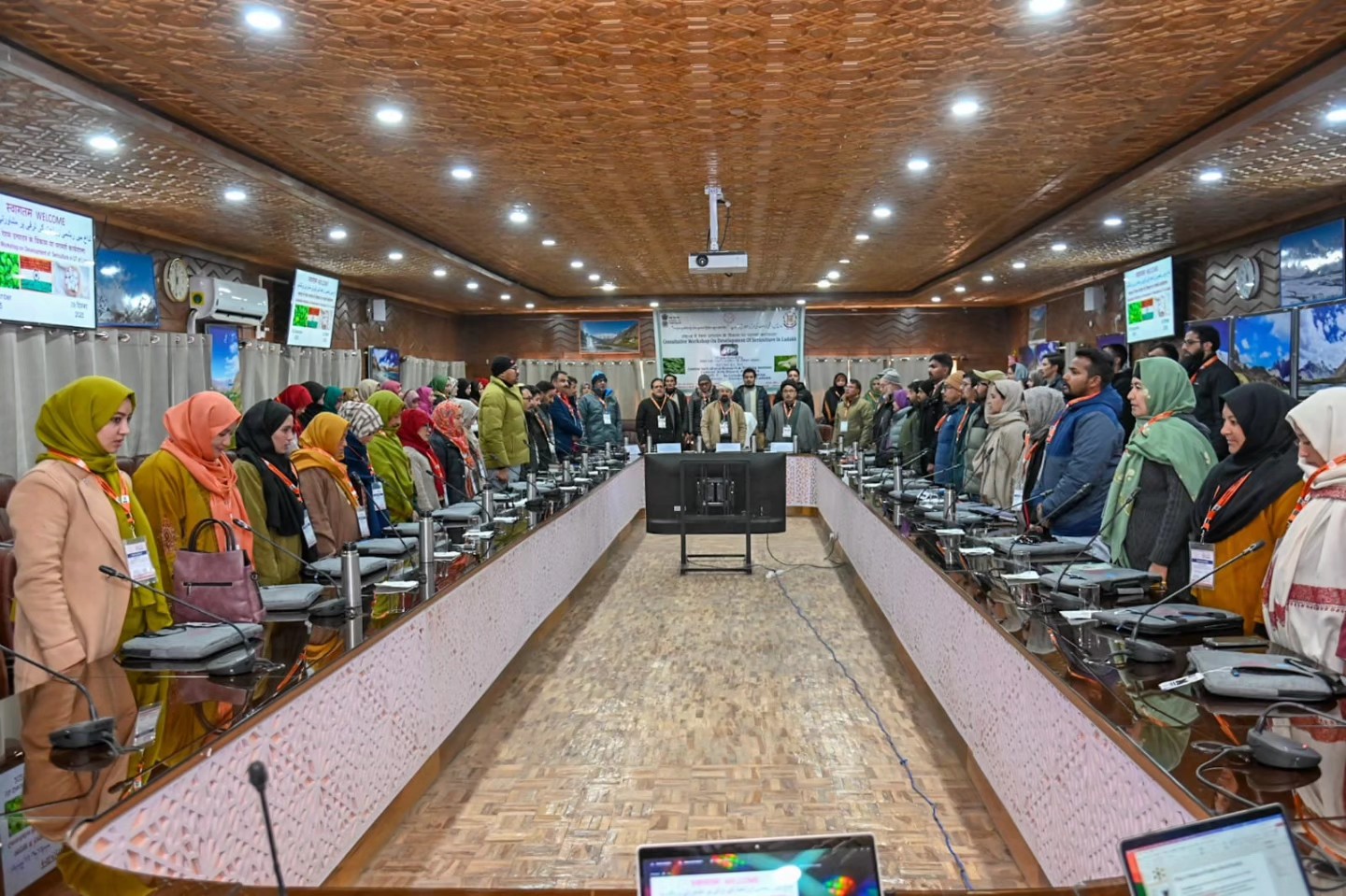
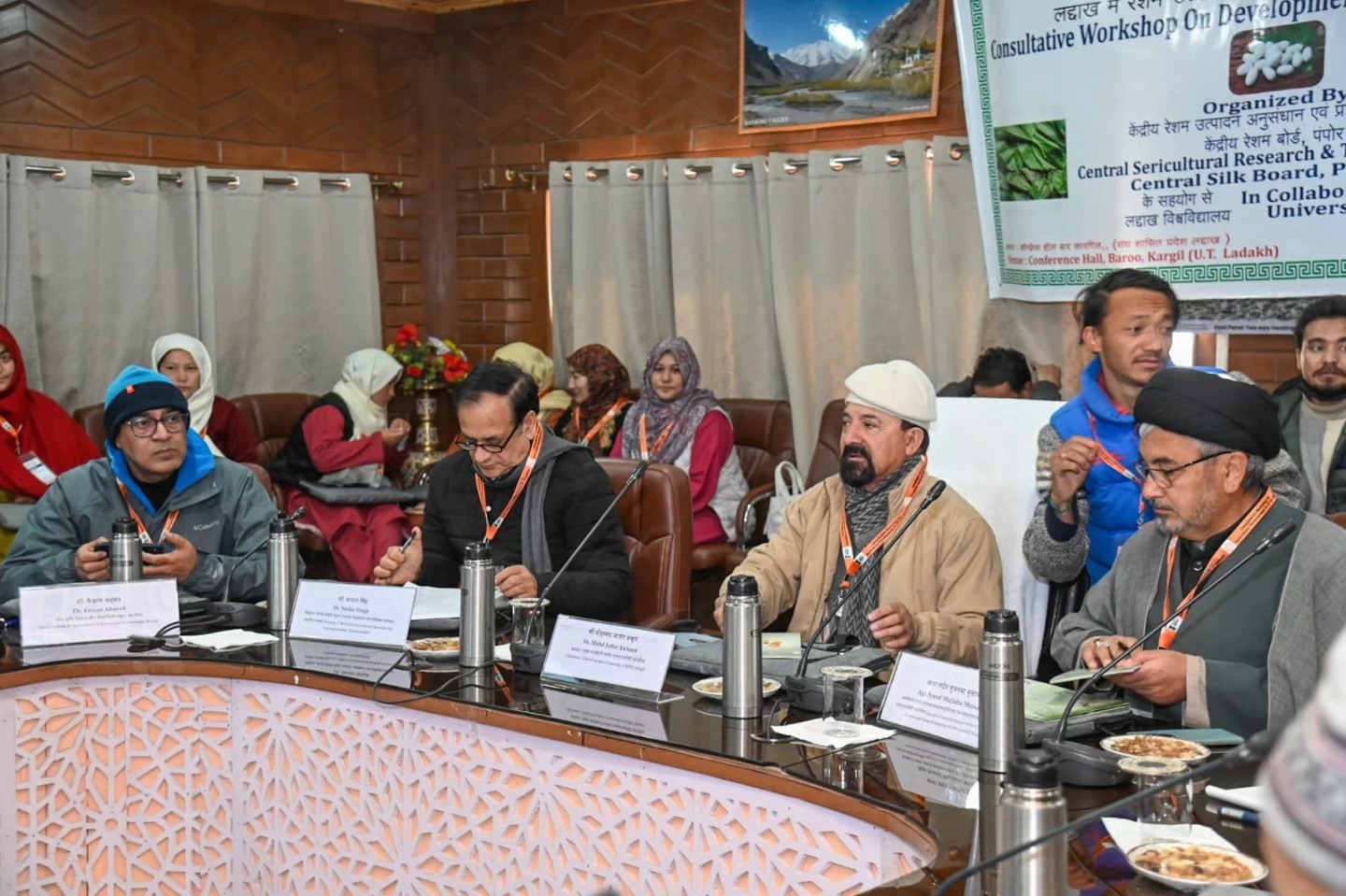
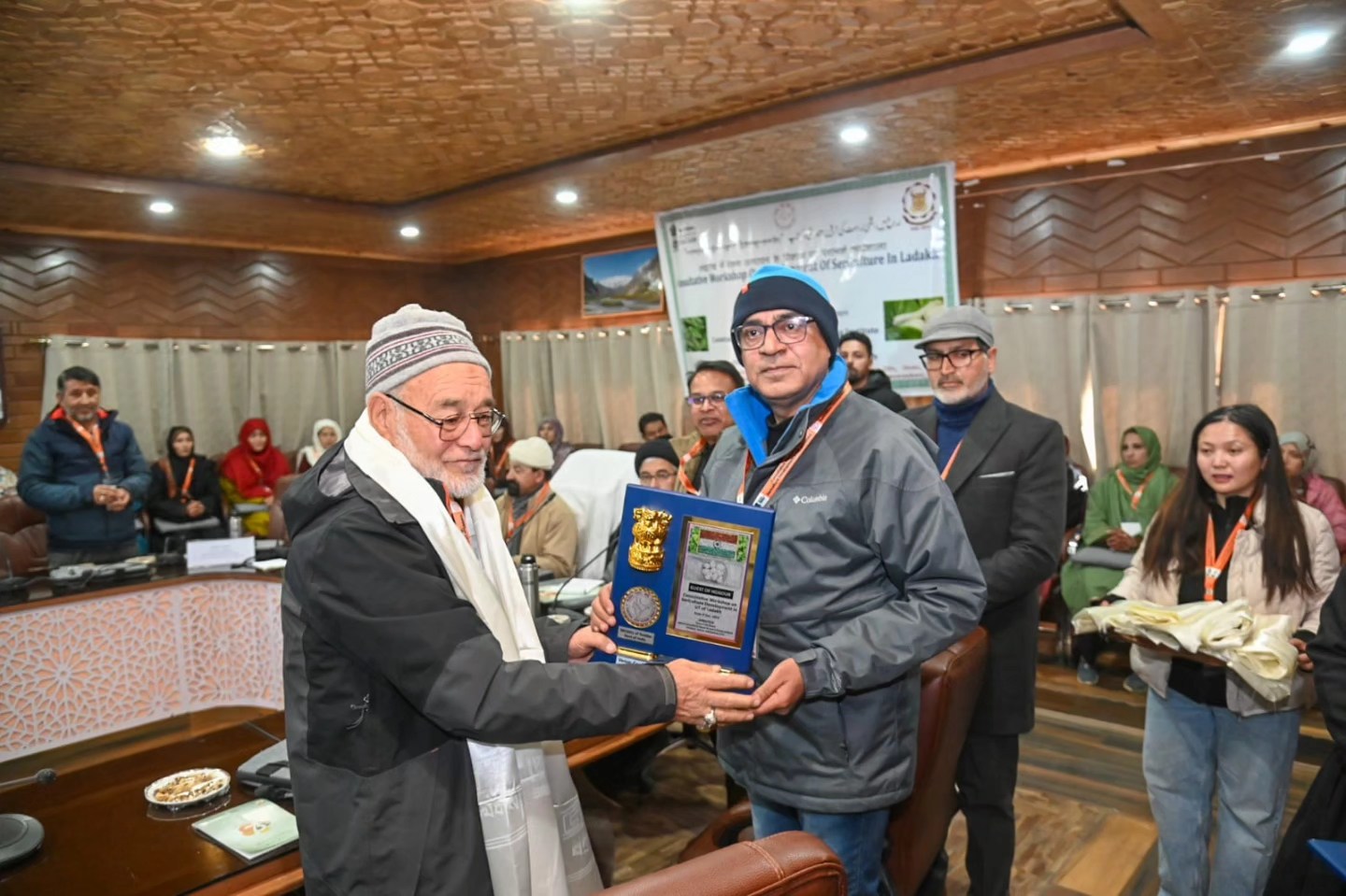
Kargil, Dec 9: The Central Sericultural Research & Training Institute (CSR&TI) of the Central Silk Board, Ministry of Textiles, in collaboration with the University of Ladakh, organised a Consultative Workshop on Sericulture Development in Ladakh today at the Conference Hall, Baroo, Kargil.
Around 100 stakeholders, including heads and representatives of major line departments, participated in the workshop aimed at advancing sericulture as a promising livelihood sector in Ladakh.
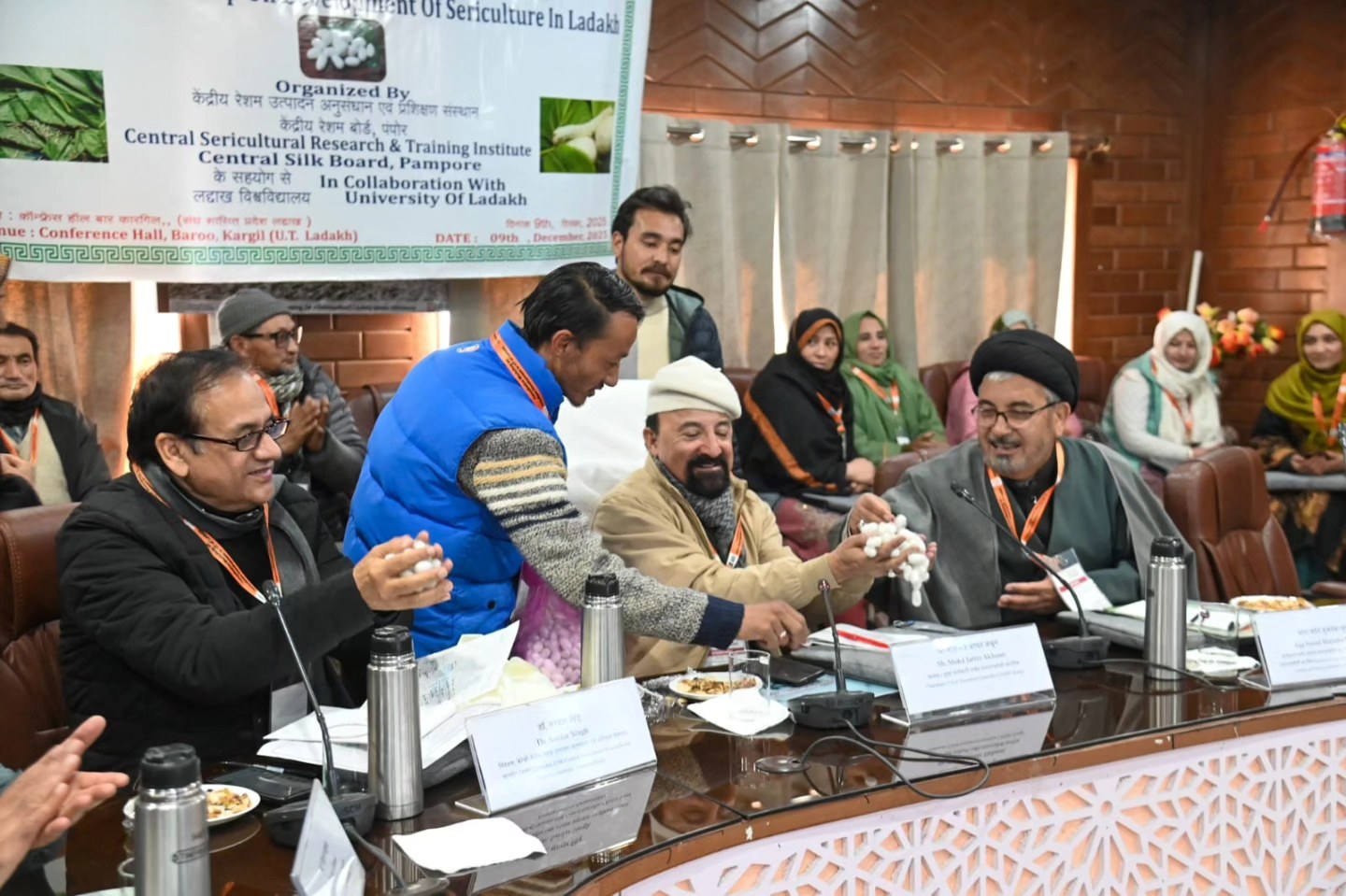
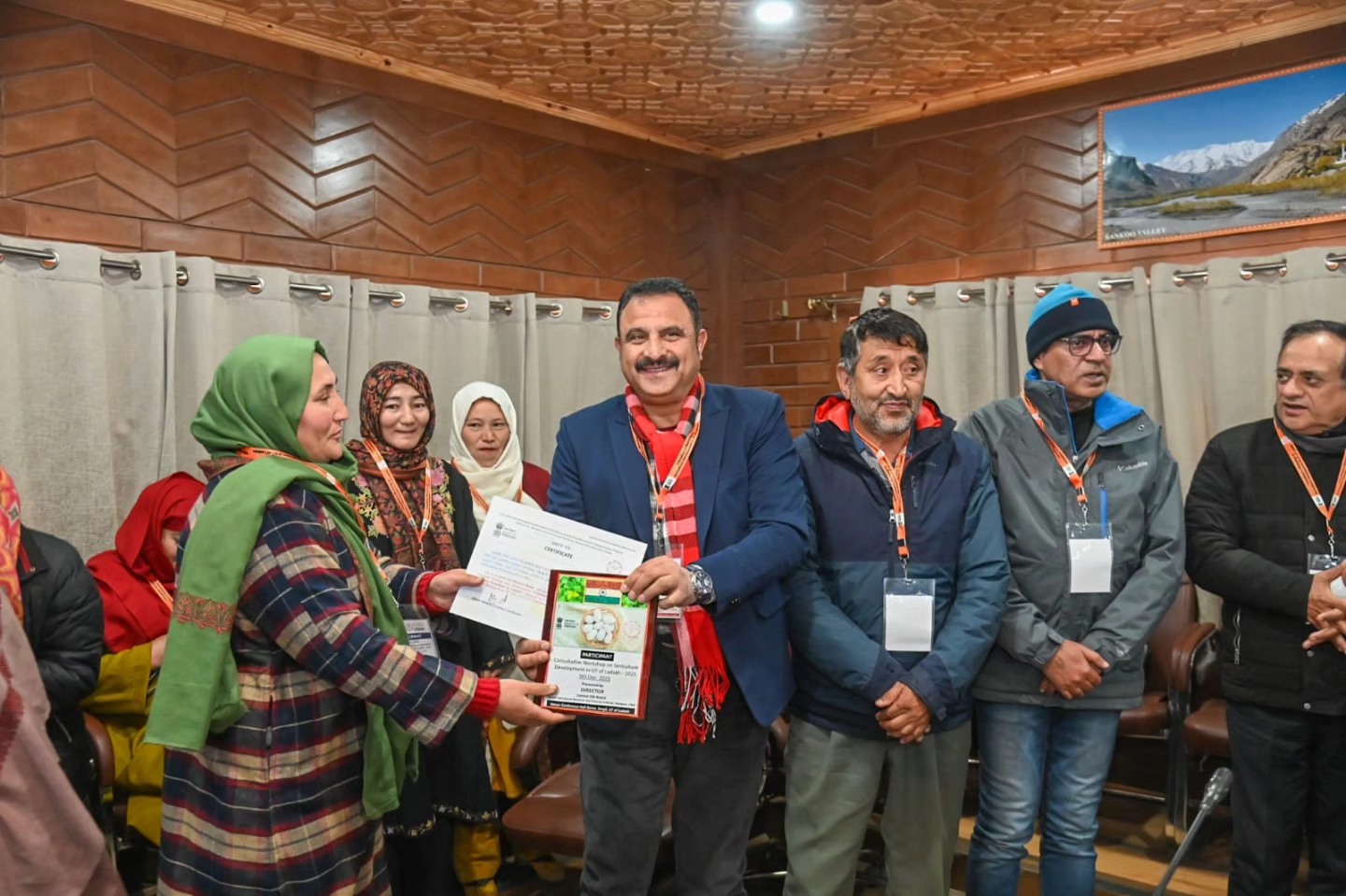
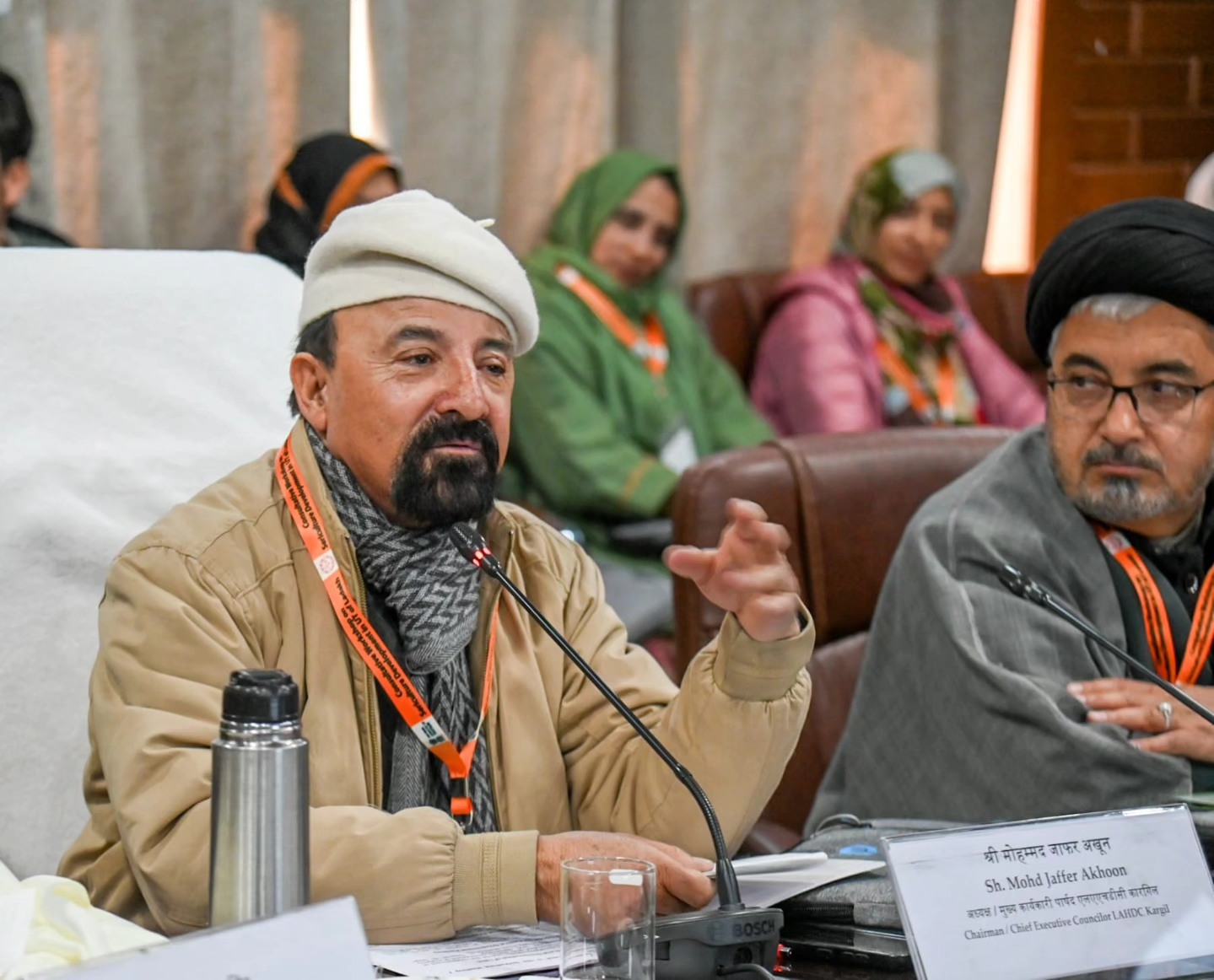
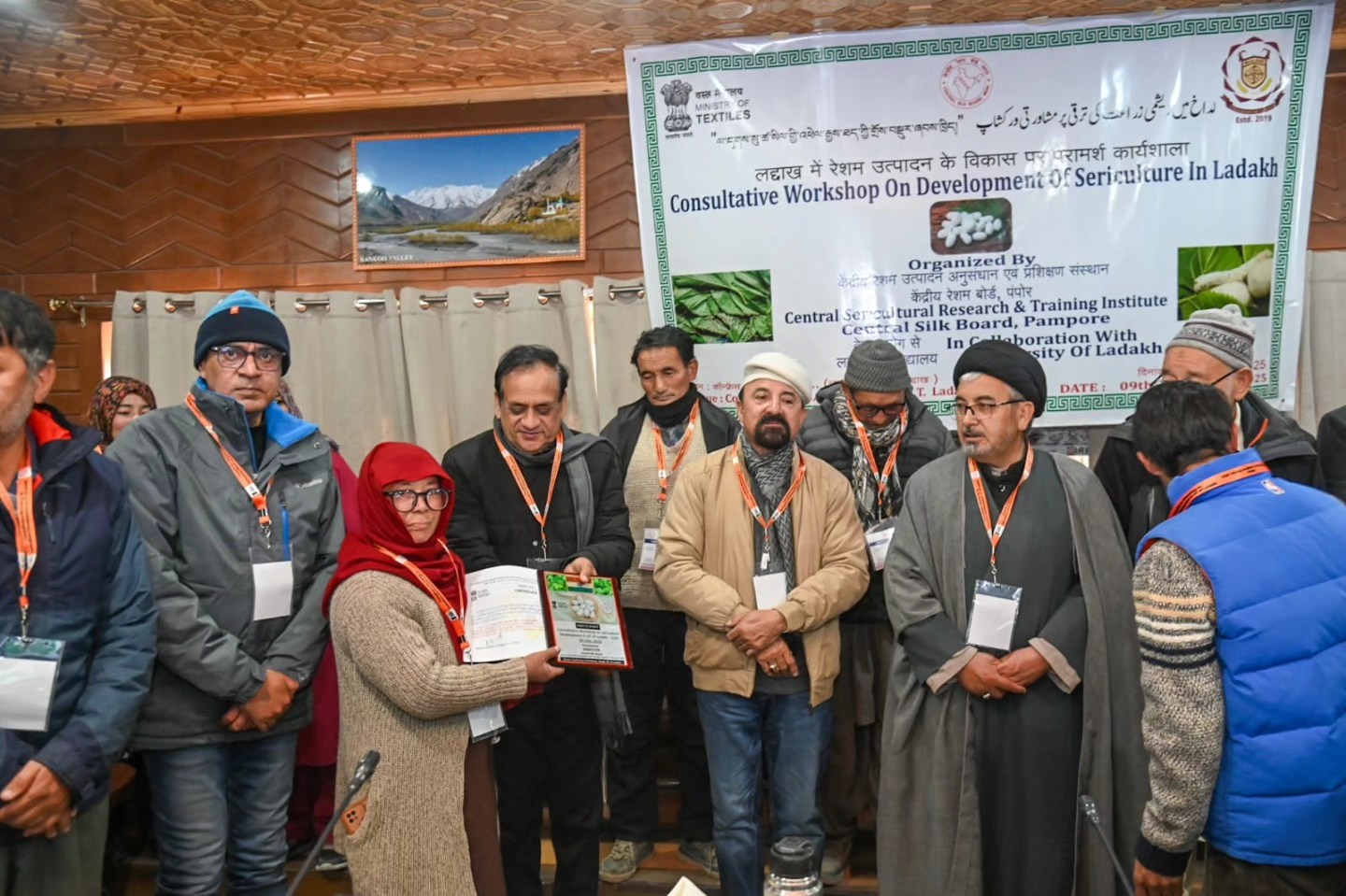
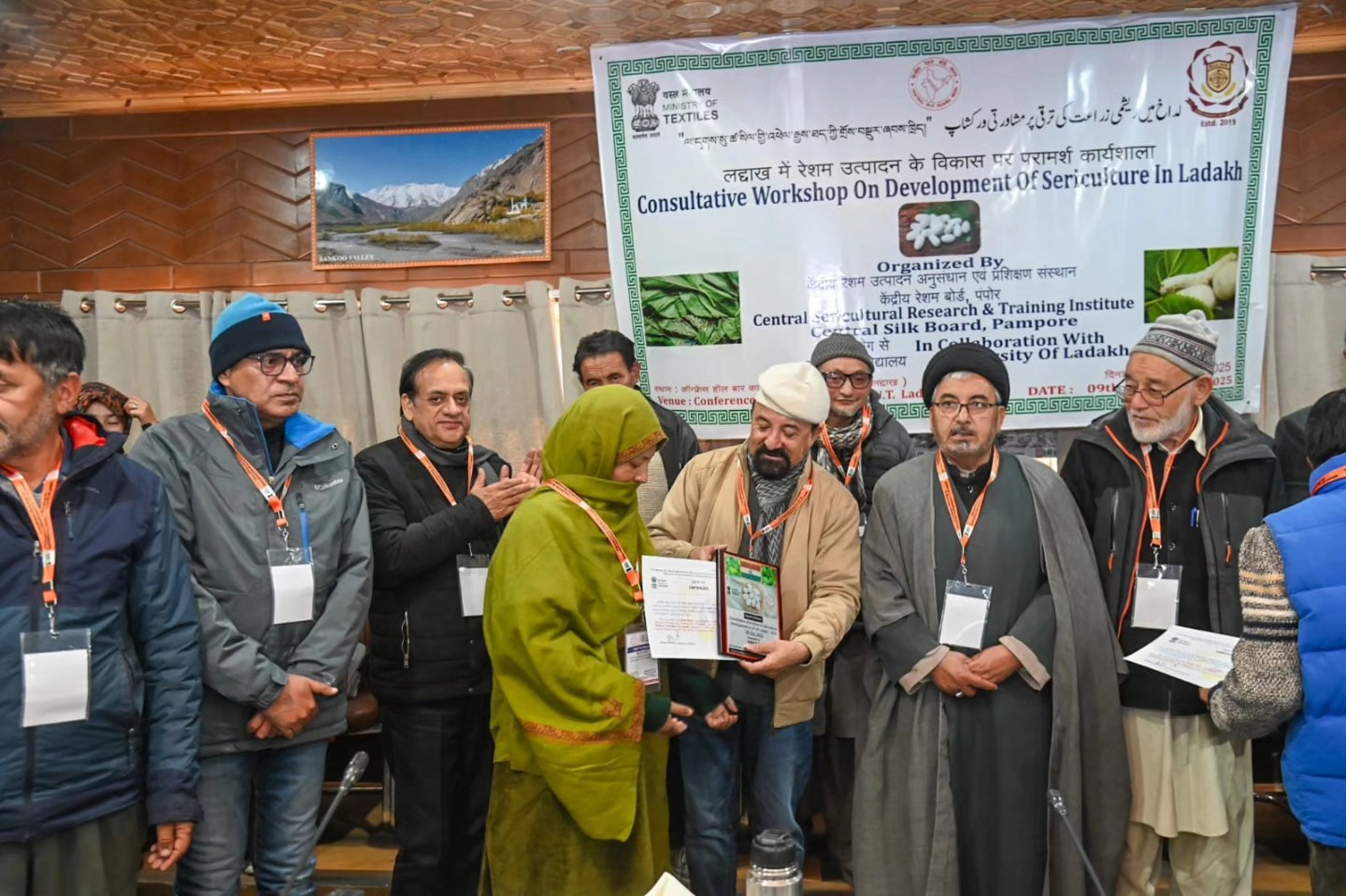
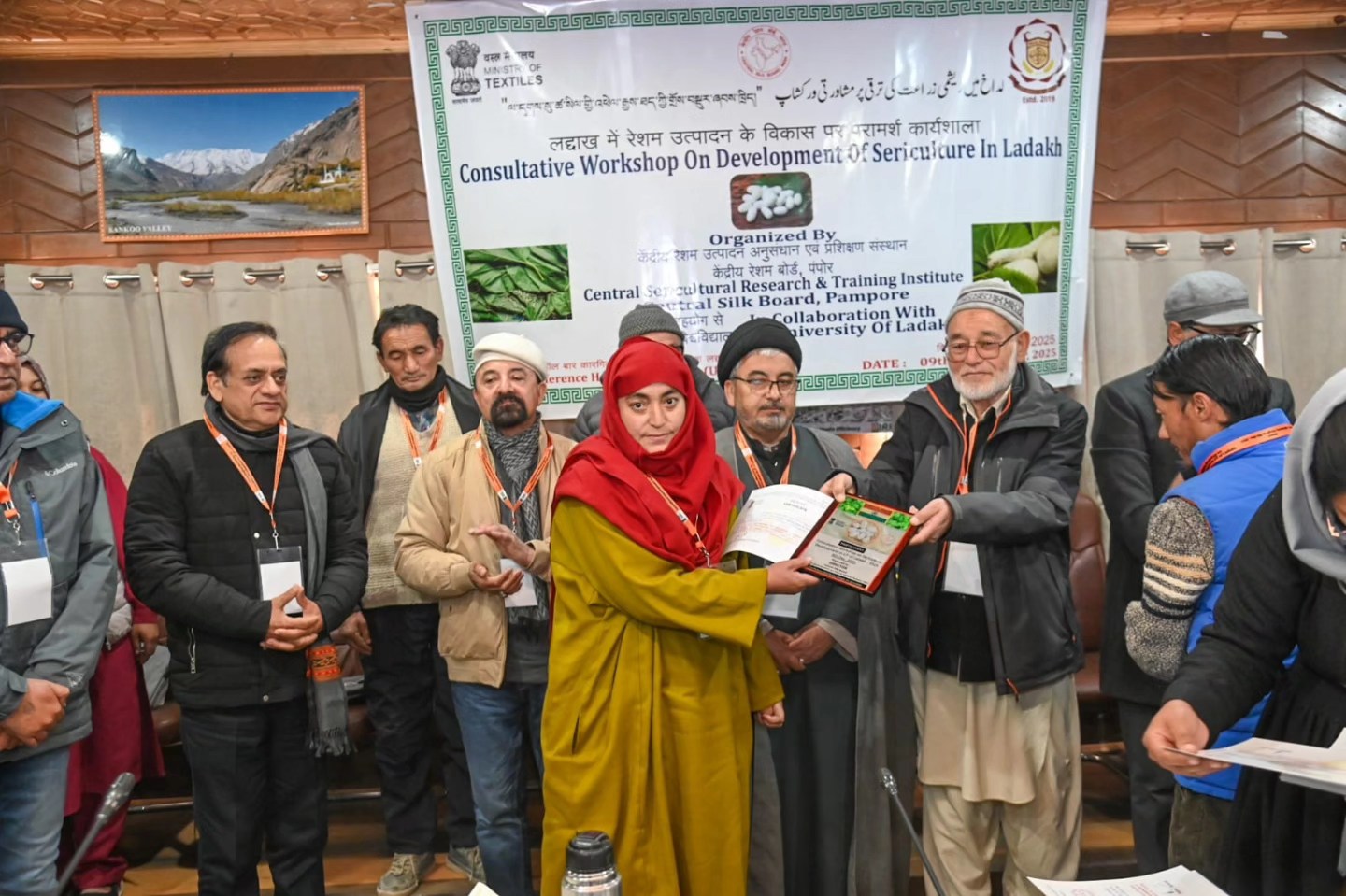
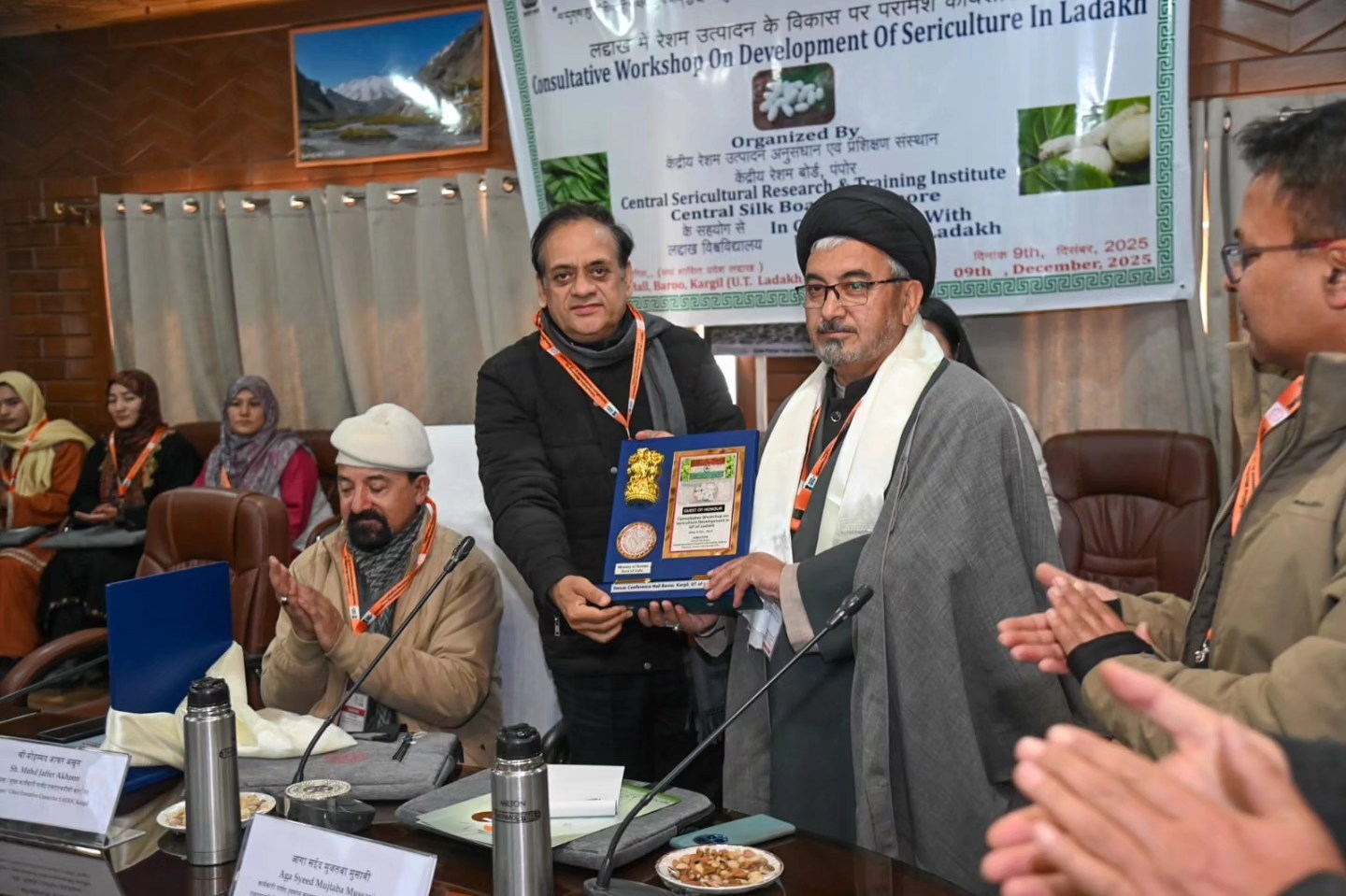
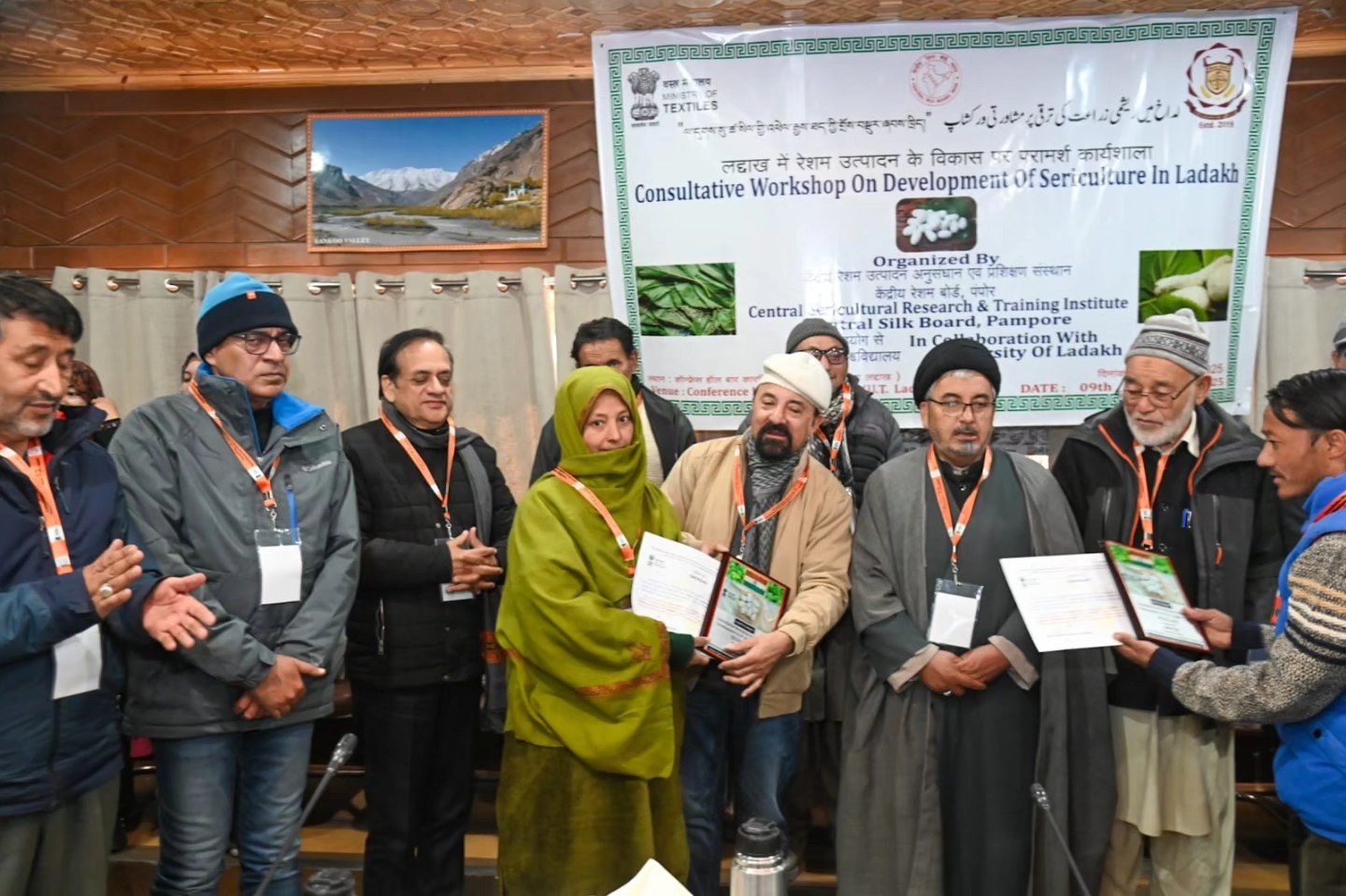
The event was chaired by Shri Mohd. Jaffer Akhoon, Chairman/CEC, LAHDC Kargil, who appreciated the Central Silk Board’s efforts in introducing sericulture to the region. While distributing certificates to trainees of the 45-day Intensive Bivoltine Training-cum-Demonstration Programme, he expressed confidence that sericulture would soon become a sustainable income source for people in Kargil.
He also thanked senior officials of the Ministry of Textiles for carrying forward commitments made during the Ekta Event held in Leh earlier this year and assured that steps are underway to establish a dedicated sericulture wing under LAHDC.
Executive Councilor Aga Syeed Mujtaba Mussavi reiterated support for popularising sericulture in the district and assured full cooperation to CSB for ongoing and future initiatives.
Addressing the gathering, Dr. Sardar Singh, Director CSR&TI Pampore, highlighted the Central Silk Board’s long-term commitment to promoting sericulture in Ladakh. He noted that CSB has been conducting training programmes in Kargil since 2016 and that local climatic conditions are well suited for silkworm rearing. Discussions included the agro-based sericulture model, scope for seri-tourism, and integrated farming systems.
A key highlight of the workshop was the participation of trained farmers who showcased cocoons harvested during their training, demonstrating growing readiness to adopt sericulture commercially. Farmers appealed for sustained support from CSB and the UT Administration.
Scientist-D Shri Gulzar Ahmad Khan informed that more than 6,000 wild mulberry plants already exist in and around Kargil. He announced plans to plant 5,000 additional mulberry saplings in farmers’ fields in the upcoming season to enhance the mulberry resource base.
NRLM cluster coordinators said sericulture would soon be integrated as a key livelihood activity. Officials from KVK Kargil, University of Ladakh, and all line departments pledged full cooperation for large-scale expansion of the sector.
The workshop concluded with recommendations and a roadmap for commercial-scale sericulture, marking a significant step toward strengthening livelihoods and rural economic development in Ladakh.
