

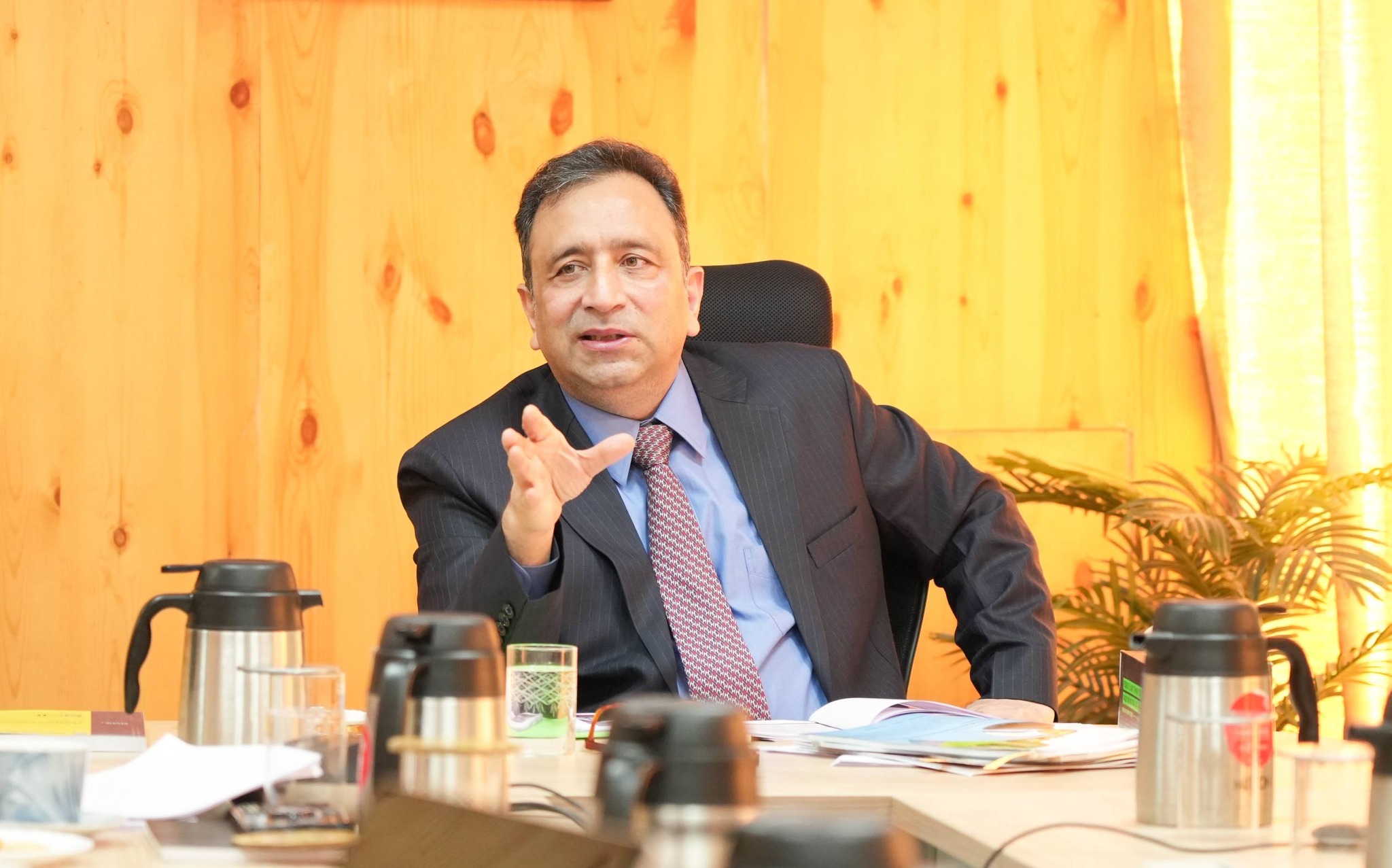
Leh: Chief Secretary of Ladakh Ashish Kundra on Thursday chaired a comprehensive review of the Union Territory’s education and skill development sectors, calling for stronger entrepreneurship models, future-ready skills and stricter monitoring of schools, particularly in remote areas.
The review meeting covered School Education, Higher Education, Technical Education and Skill Development Departments, with a focus on assessing progress, identifying gaps and setting a clear roadmap to strengthen Ladakh’s education and skill ecosystem.
The School Education Department presented an overview of the current status of schools, teachers and student enrolment across Ladakh. The review included government school enrolment trends, budget utilisation under schemes such as Samagra Shiksha, PM SHRI and PM POSHAN, and the functioning of residential schools and hostels. The administration also noted improved academic performance following the transition from JKBOSE to the CBSE curriculum, which has enhanced student competitiveness and learning outcomes.
Discussions on higher education focused on the implementation of PM-USHA, academic collaborations through MoUs with IITs, and the role of Sindhu Central University in expanding higher education opportunities in the region. Several structural and academic challenges requiring policy attention were also flagged.
The Technical Education and Skill Development Department highlighted ongoing short-term training programmes and initiatives aimed at boosting youth employability and entrepreneurship, including the “Enterprising Ladakh” initiative. Progress under the MoU with the Entrepreneurship Development Institute of India was reviewed, with nearly 150 startups reported to be at various stages of development.
Emphasising economic self-reliance, the Chief Secretary directed departments to develop end-to-end entrepreneurship models tailored to Ladakh’s strengths. He called for the pashmina sector to be taken up in mission mode with a complete value-chain approach, ensuring active participation of local entrepreneurs. He also stressed the need for Startup India registrations and proposed organising a large-scale startup conclave in the UT.
Highlighting the importance of future-ready skills, Kundra underscored the need to introduce advanced courses, including training in artificial intelligence, by engaging external experts. He also called for specialised skill programmes relevant to Ladakh’s geography and economy, such as high-altitude skill development and hotel management.
To strengthen institutional memory, the Chief Secretary directed that all educational and developmental initiatives be systematically documented and visualised. He also suggested organising district-wise teachers’ conferences with structured presentations to improve classroom practices and learning outcomes.
Stressing accountability, Kundra instructed that Tehsildars, SDMs and other officers must regularly inspect remote schools, with such inspections forming part of their Annual Confidential Reports, to ensure sustained improvement in school education across Ladakh.
