

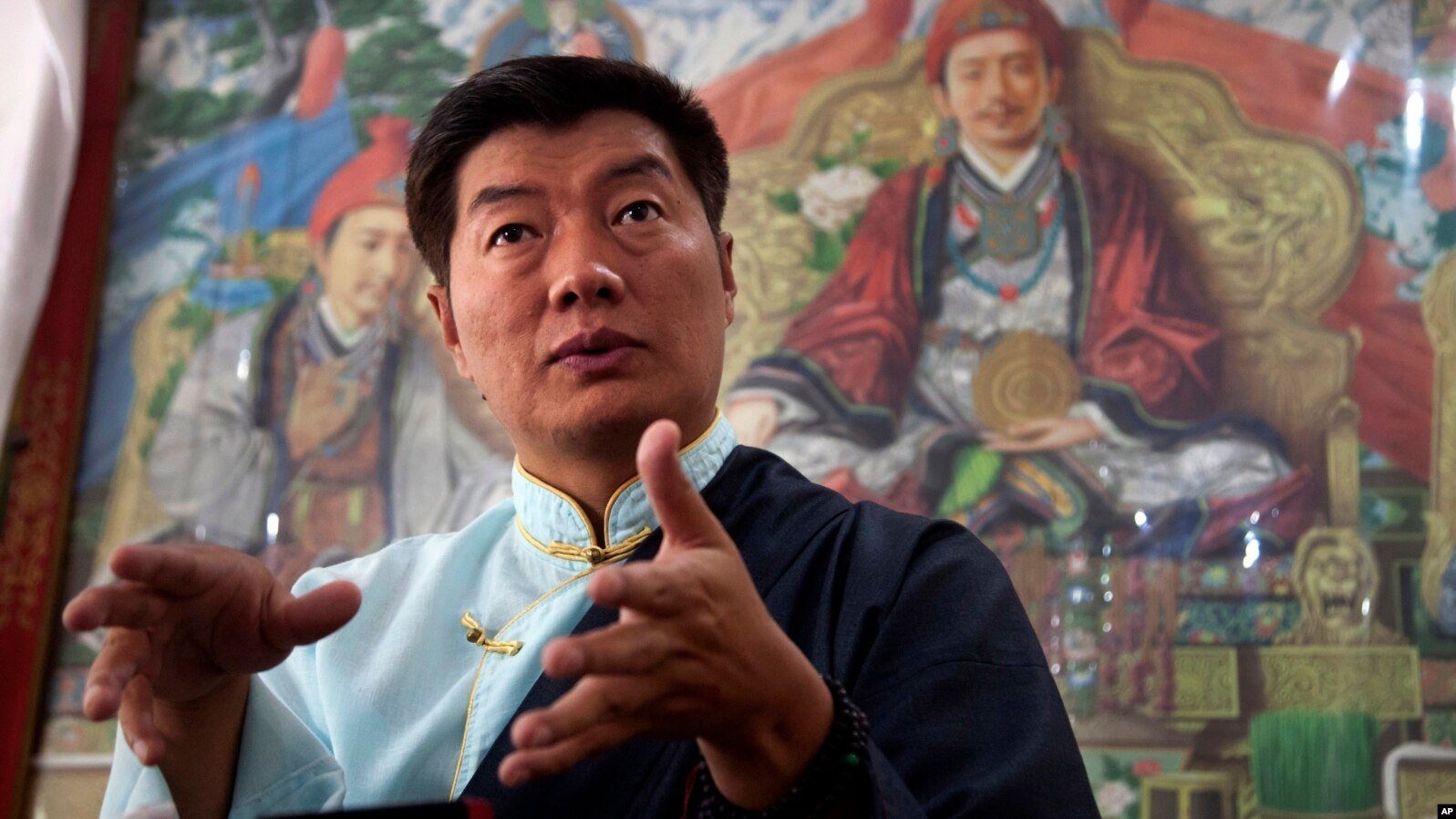
Leh: Former Tibetan Prime Minister-in-exile Lobsang Sangay has cautioned that Ladakh remains at the core of China’s expansionist “five-finger strategy,” under which Tibet is considered the palm and its neighbouring regions — Ladakh, Nepal, Bhutan, Sikkim, and Arunachal Pradesh — the fingers.
In an interview with ANI, Sangay said Chinese President Xi Jinping has repeatedly pushed the strategy that seeks to extend control beyond Tibet.
“Tibet is the palm. You control it firmly, and you go after five fingers — Ladakh, Nepal, Bhutan, Sikkim and Arunachal Pradesh. This is China’s expansionist policy,” Sangay remarked.
He credited the Indian Army for firmly resisting incursions along the Line of Actual Control (LAC). “Clearly, they are in Doklam, in Galwan, in Sikkim, in Bhutan, and in Arunachal. Every week, they try to get the upper hand,” Sangay said.
Highlighting Tibet’s resource wealth, Sangay noted that Beijing’s interest lies in minerals, uranium, lithium, copper and gold.
“Seventy-five per cent of China’s lithium reserves are in Tibet. There are 136 different minerals worth trillions of dollars being exploited. But the beneficiaries are Chinese migrants, not Tibetans,” he said, alleging that even small business licences are prioritised for Chinese settlers.
Sangay stressed that Tibetans continue to demand a “middle path” — seeking genuine autonomy within China rather than independence. But he admitted prospects remain bleak: “The last 30 years show dialogue with Beijing is very difficult. They are not in the mood to talk, only to take.”
The remarks carry significance for Ladakh, which has witnessed repeated border tensions with China, from Galwan clashes in 2020 to ongoing standoffs along the LAC. The “five-finger strategy” has long been viewed in strategic circles as a framework under which Beijing eyes influence over the Himalayan frontier.
