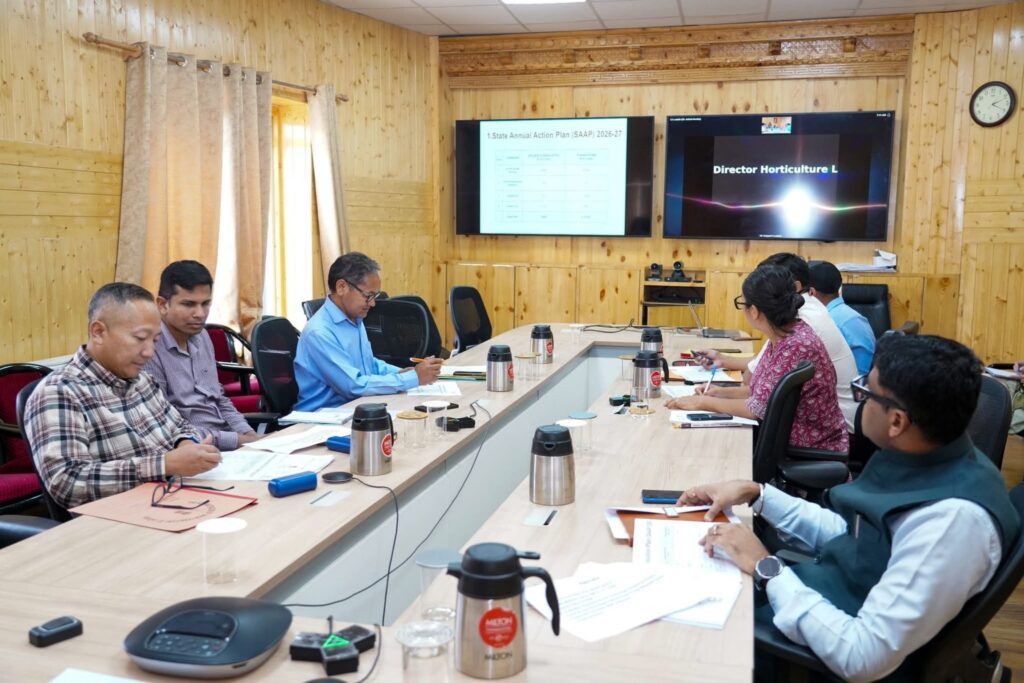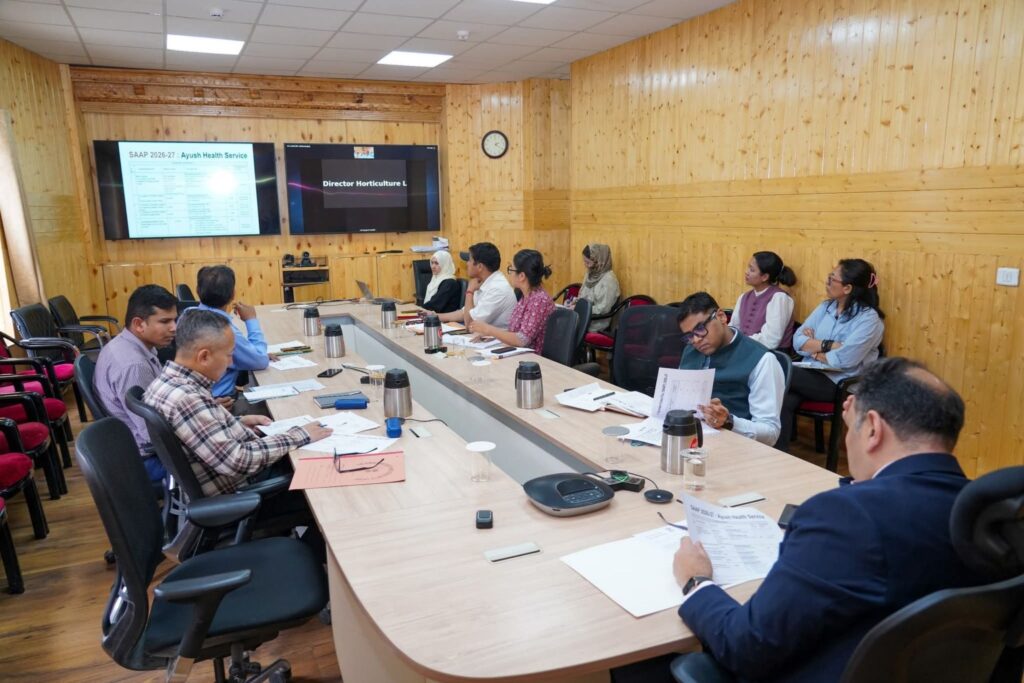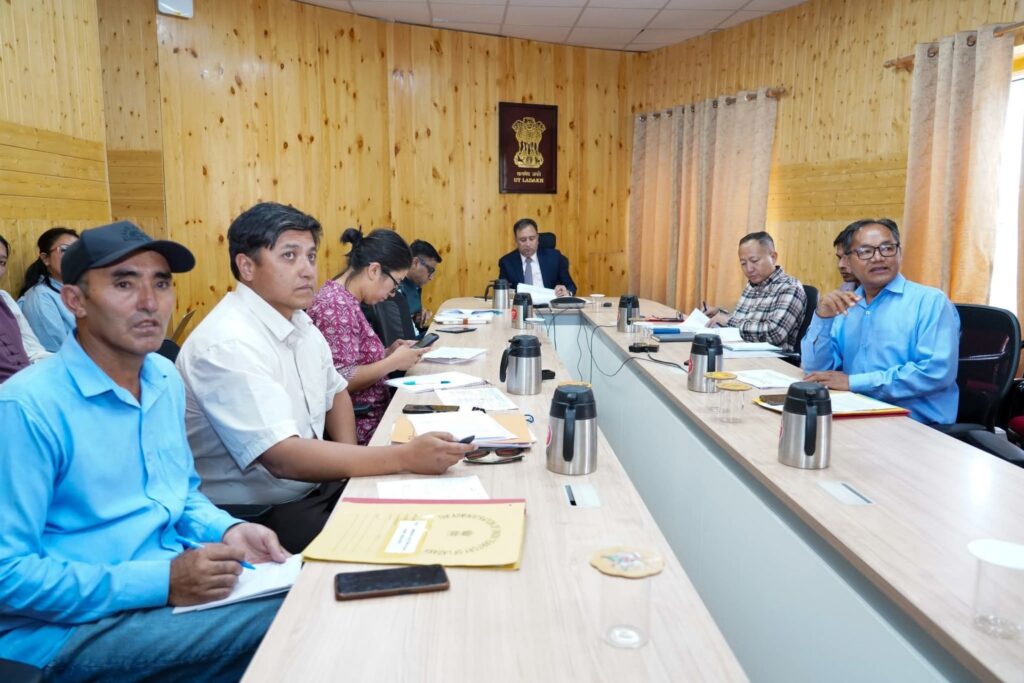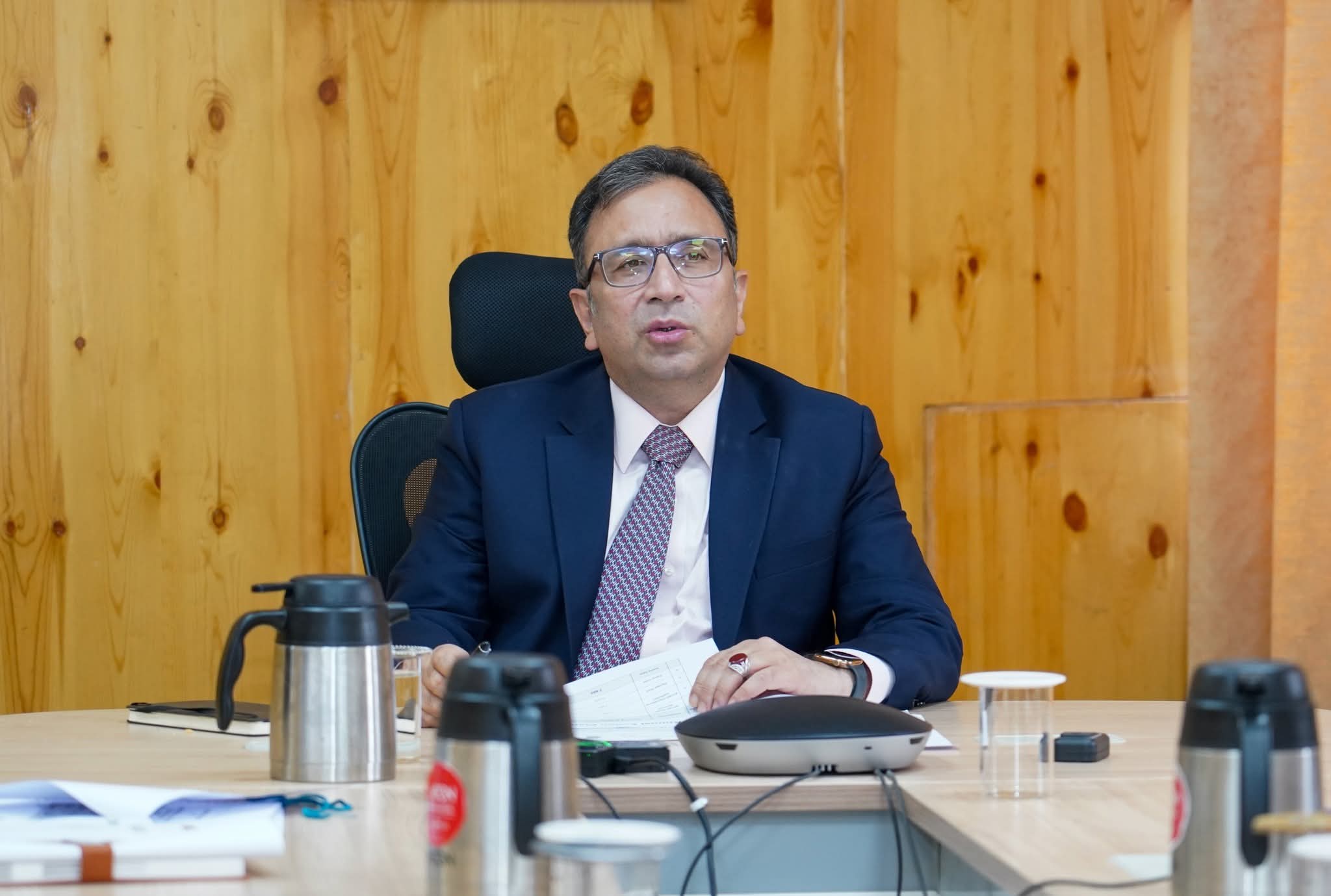
Leh, July 29, 2026: Chief Secretary, UT Ladakh, Ashish Kundra, chaired the 3rd Governing Council Meeting of the State AYUSH Society under the National AYUSH Mission (NAM) to review the implementation of AYUSH initiatives in the Union Territory and discuss the State Annual Action Plan (SAAP) for the financial year 2026–27.
The meeting was attended by Secretary, Planning Department; Secretary, Health and Medical Education Department; Joint Director, Finance; Director Health Services, Dr. Thinles; and senior officers from the concerned departments.
At the outset, Director Health Services, Dr. Thinles, presented a detailed overview of the agenda, including the State Annual Action Plan (SAAP) 2026–27, strengthening of AYUSH health services, establishment of the State Medical Council (ISM) for UT Ladakh, leave policy for National AYUSH Mission employees, construction of a 10-bedded Integrated AYUSH–Sowa Rigpa Hospital at Phyang, establishment of an International Sowa Rigpa Hydrotherapy and Yoga Wellness Centre, constitution of an appraisal committee for NAM employees and the financial status of the State AYUSH Society.
Reviewing the proposals, the Chief Secretary emphasised the need to strengthen AYUSH services across Ladakh by expanding access to healthcare facilities, particularly in remote and underserved areas. He reviewed the existing co-located AYUSH facilities functioning at Primary Health Centres, Community Health Centres and District Hospitals and sought details regarding manpower deployment, infrastructure and service delivery.
The Chief Secretary directed the Health Department to undertake a comprehensive assessment of the existing AYUSH infrastructure and identify gaps in the availability of Sowa Rigpa practitioners, medicines and healthcare services across both Leh and Kargil districts. He also reviewed the procurement mechanism for AYUSH medicines and instructed the department to ensure an uninterrupted supply of quality medicines through an efficient procurement system.
While reviewing proposals for new AYUSH facilities, he stressed the need to extend services beyond urban centres so that nomadic populations, remote villages, newly created administrative units and elderly citizens can also benefit from traditional healthcare systems. He directed the department to prepare a need-based plan for expanding AYUSH services in underserved areas.
The Chief Secretary also reviewed the proposal for strengthening AYUSH Mobile Medical Units and public health programmes under the National AYUSH Mission. He sought details regarding the availability of manpower, staffing requirements and operational strategy for the proposed mobile units and emphasised that outreach services should be strengthened to improve healthcare access in remote regions.
Emphasising the growing importance of Sowa Rigpa, the Chief Secretary directed the department to develop a comprehensive framework for promoting the traditional system of medicine in Ladakh. He suggested that specialised treatment facilities, particularly in areas such as neurological disorders, chronic pain management, rehabilitation and palliative care, could be developed to position Ladakh as a centre for traditional and wellness-based healthcare.
He also advised the department to explore the potential of developing Sowa Rigpa and wellness tourism by creating world-class treatment and wellness facilities, including hydrotherapy and yoga-based centres. He directed the concerned officers to prepare detailed project reports for such initiatives and examine opportunities under the available funding components of the National AYUSH Mission.
The Chief Secretary stressed the importance of promoting preventive healthcare and healthy lifestyles through greater integration of yoga and AYUSH-based wellness programmes in schools and communities. He suggested strengthening collaboration with reputed institutions and organisations working in the fields of traditional medicine, yoga and holistic healthcare to promote awareness and behavioural change.
He further directed the department to prepare comprehensive patient data and outcome-based assessments of AYUSH interventions to support evidence-based planning and improve service delivery.
The meeting also reviewed the emergency ambulance services operating in the Union Territory. The Chief Secretary sought details regarding the functioning of the existing ambulance network, response time, staffing, vehicle utilisation and public satisfaction. He directed the Health Department to strengthen emergency medical response, particularly in remote and difficult terrain, and ensure efficient deployment of ambulance services through improved coordination and technology-enabled monitoring.
The Chief Secretary emphasised that the National AYUSH Mission presents an important opportunity to strengthen traditional healthcare systems while complementing modern medical services. He directed all concerned departments to ensure timely implementation of approved projects and adopt a coordinated approach for expanding accessible, affordable and quality AYUSH services across the Union Territory.
The meeting concluded with directions for the Health Department to incorporate the observations made during the review while finalising the State Annual Action Plan for 2026–27 and to ensure effective implementation of the National AYUSH Mission in Ladakh.