

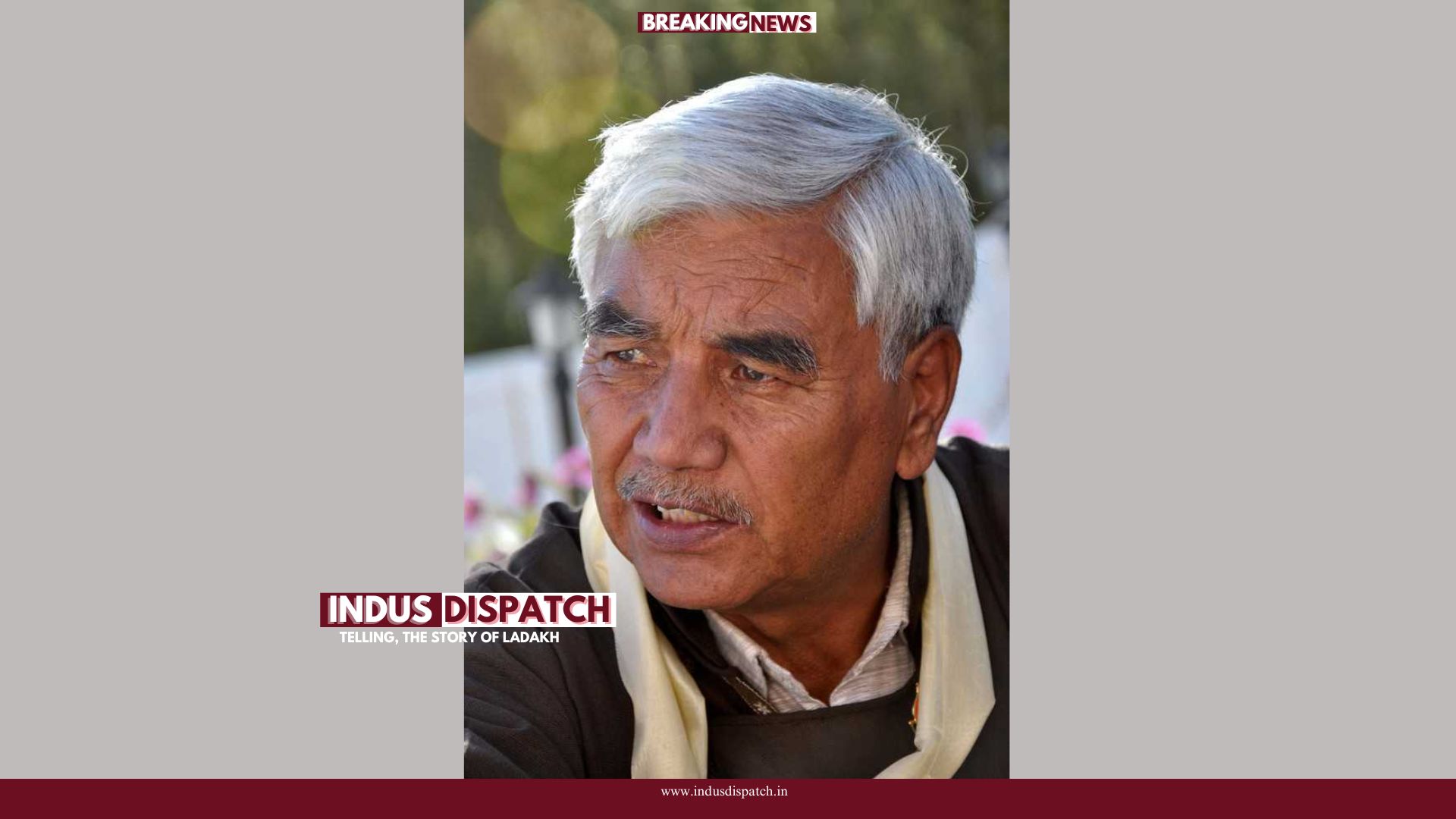
Leh: Describing Thupstan Chhewang’s stepping down from chair of Ladakh Apex Body as a potential vacuum in the regional leadership, Professor Rekha Chowdhary, a widely respected political scientist, has said that the veteran leader must return to the amalgam to given the Union Territory much required leadership at this crucial time.
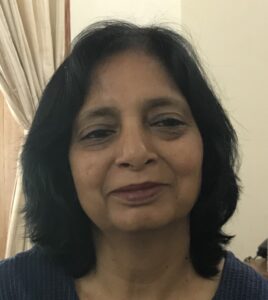
In an opinion piece published in today’s Greater Kashmir, Prof Chowdhary underlined the unique importance of the stature and experience of Thupstan Chhewang. She said that it was under Chhewang’s leadership that Leh and Kargil were able to put behind their decades of local animosity to forge a consensus on the issues that mattered to whole of Ladakh region.
The political scientist credited the unique unity of leadership under Chhewang’s watch that Ladakh was able to secure breakthrough with the Centre in the issue of jobs, land rights, culture and environment.
She said to steer the discussions forward for securing more guarantees, the Leh and Kargil region need to operate as one unit this can happen under the continued leadership, vision and guidance of Chhewang.
She noted that the formation of the High Powered Committee (HPC) by the Ministry of Home Affairs was largely a result of sustained pressure jointly exerted by the Ladakh Apex Body and the Kargil Democratic Alliance (KDA).
This pressure, she pointed out, was only possible because leaders like Chhewang were able to bridge divides and steer Ladakhi identity politics away from the historical Buddhist-Muslim binary.
“Under Chhewang’s leadership,” she wrote, “the two regions—Leh and Kargil—could overcome decades of suspicion and conflicting aspirations. That unity gave them strength and legitimacy, and it also gave the Centre a clear signal that Ladakh speaks with one voice.”
She said, “If Thupstan Chhewang chooses to stay away at this crucial juncture, it may not just weaken the Apex Body but also risk undoing years of hard-earned unity between Leh and Kargil.”
She added that while the inclusion of figures like climate activist Sonam Wangchuk in the HPC adds fresh energy, it “cannot substitute the depth of political experience, historical perspective, and wide acceptability that Chhewang brings to the table.”
Prof. Chowdhary elaborated that negotiating with the central government on critical matters such as Sixth Schedule protection, domicile rules, land rights, and legislative powers requires not only policy understanding but deep insight into the sensitivities of the region, trust across communities, and long-term strategic thinking.
“We are at a juncture where the decisions made—or not made—can shape the trajectory of Ladakh’s future for generations. This is not the time for fatigue or disillusionment. It is a time to lead,” she asserted.
Prof. Chowdhary further warned that a fracture in Leh’s leadership at this time may give the Centre a reason to sideline Ladakh’s demands, or worse, re-engage the two regions separately—thereby reviving the old fault lines.
She urged civil society, religious leaders, student unions, and community elders to come together and appeal to Chhewang to reconsider his resignation.
“It is the responsibility of all stakeholders to preserve the fragile unity that has been achieved after decades of dissonance,” she emphasized.
While acknowledging that the Apex Body faces internal challenges, Prof. Chowdhary insisted that any transition in leadership must be carefully planned and should not be done in a way that threatens the credibility or continuity of the collective movement.
She concluded by saying: “Thupstan Chhewang is not just a political leader; he is the moral and strategic compass of Ladakh’s post-UT reorganisation politics. His absence at this critical moment would not just be a loss for the Apex Body, but for the entire movement seeking justice, dignity, and democratic rights for Ladakh. His leadership at this hour is not optional—it is essential.”
