

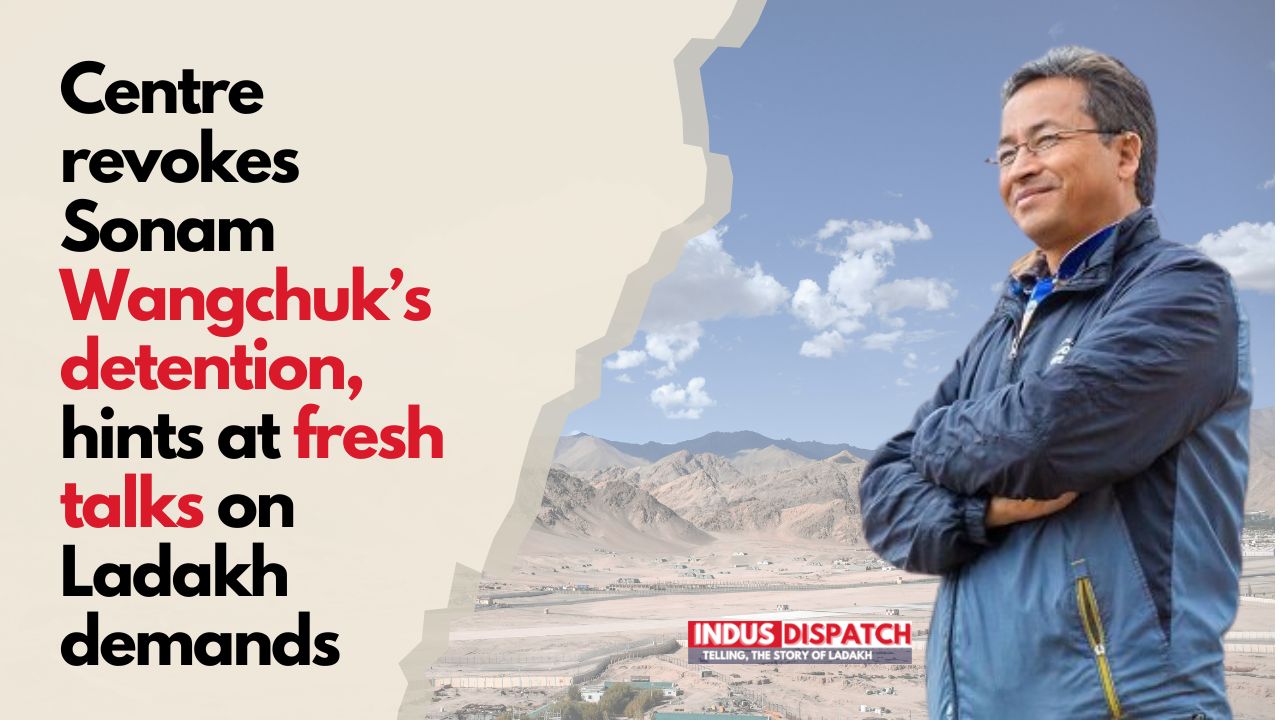
Leh : The Union government on Saturday revoked the preventive detention of climate activist and education reformer Sonam Wangchuk under the National Security Act with immediate effect, nearly six months after he was taken into custody following violent protests in Leh over Ladakh’s political demands.
According to an official statement issued by the Ministry of Home Affairs, the decision was taken after reviewing the circumstances of the case and considering that Wangchuk had already completed nearly half of the maximum permissible period of detention under the stringent preventive law.
The Centre said the revocation of the detention order was part of its broader efforts to create a conducive environment for dialogue with stakeholders in Ladakh and address the concerns and aspirations of the region’s people.
Wangchuk was detained on September 26, 2025, two days after violent protests demanding statehood for Ladakh and its inclusion under the Sixth Schedule of the Constitution of India turned violent in Leh.
Authorities alleged that the protests escalated into clashes between demonstrators and security forces, leading to widespread unrest in the town.
The situation had prompted the district administration to impose curfew and additional security restrictions in parts of Leh to restore order.
Following the unrest, the District Magistrate of Leh invoked the National Security Act against Wangchuk, citing concerns that his continued presence could disturb public order.
After his detention, he was initially kept under custody in Ladakh and later shifted to a prison in Jodhpur in the neighbouring state of Rajasthan.
The detention of the prominent activist had sparked widespread debate across the country, with several civil society groups, environmental activists and political leaders raising concerns over the use of the preventive detention law against a figure known for his work on climate change and sustainable development in Ladakh.
A petition challenging the legality of the detention was also filed in the Supreme Court of India by his family, seeking his immediate release and questioning the grounds on which the preventive law had been invoked.
During the course of the legal proceedings, the Centre defended the detention, stating that the decision had been taken by the local administration in the interest of maintaining public order following the violence that erupted during the protests.
However, the case remained under judicial scrutiny while the government continued parallel engagement with community leaders and representatives of civil society groups in Ladakh.
In its latest statement, the Centre said it has been actively holding discussions with various stakeholders from the region to find a mutually acceptable solution to the long-standing political and constitutional demands raised by the people of Ladakh.
The government expressed hope that the revocation of Wangchuk’s detention would help reduce tensions and facilitate constructive dialogue in the region.
The protests that preceded Wangchuk’s detention were part of a larger movement led by civil society groups including the Leh Apex Body and the Kargil Democratic Alliance.
These groups have been campaigning for constitutional safeguards for Ladakh following the region’s reorganisation into a Union Territory in 2019 after the abrogation of Article 370 of the Constitution of India. The protesters have been demanding statehood for Ladakh, inclusion under the Sixth Schedule to safeguard tribal rights and land ownership, the creation of a separate public service commission, and greater political representation.
Wangchuk, widely known for his innovative work in sustainable education and climate adaptation in the Himalayan region, has emerged as one of the most prominent voices advocating environmental protection and constitutional safeguards for Ladakh.
His detention had intensified political debate over the Centre’s handling of the Ladakh agitation, with supporters describing him as a peaceful activist while authorities maintained that the preventive measure was necessary to maintain law and order.
With the government now revoking his detention, political observers believe the move could mark a significant step towards easing tensions in Ladakh and reopening channels of dialogue between the Centre and regional stakeholders on the future governance and constitutional status of the strategically important Himalayan region.
