

Calls Changthang pride of Ladakh
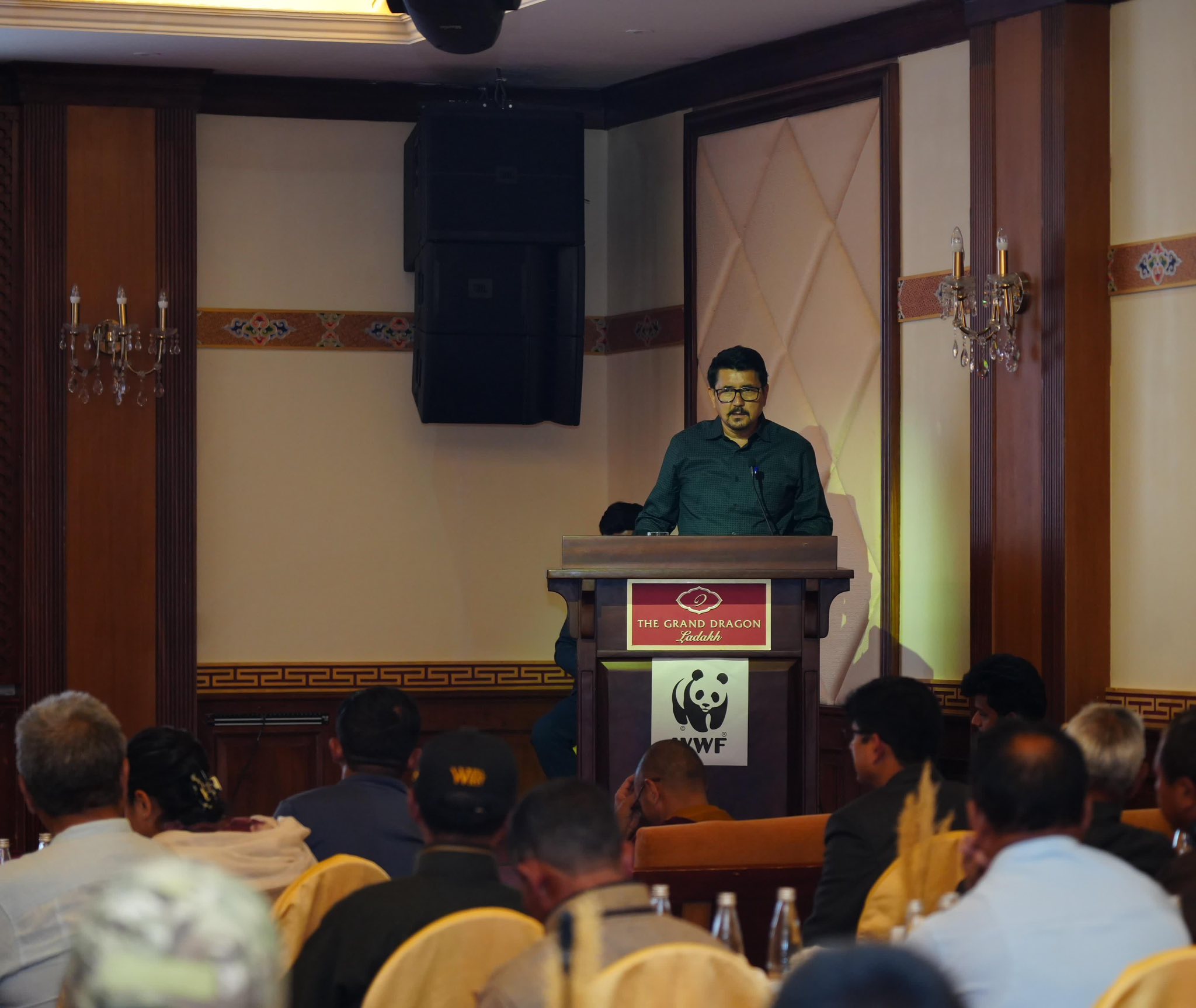
LEH: In a significant push toward inclusive, community-led development, Chairman, CEC, LAHDC Leh, Advocate Tashi Gyalson participated as the Chief Guest at a Multi-stakeholder event organised by WWF-India focused on the future of Changthang.
The CEC was joined by Executive Councillors Tashi Namgyal Yakzee; Councillors Karma Namdak, Ishey Spalzang and Stanzin Chosfail; nominated Sanga Councillor Ven. Konchok Tsepal; AD Tourism Padma Angmo; Dr. Rishi Kumar Sharma from WWF-India; LBA Vice President Kunzes Dolma; departmental heads Gobas members, researchers, and local stakeholders.
Opening remarks by Dr Rishi Kumar Sharma and Councillor Chushul Constituency Konchok Stanzin stressed the importance of integrating indigenous knowledge with modern developmental frameworks, and highlighted Changthang as a landscape that must be preserved not only for its ecology but for its people who have lived in harmony with nature for generations.
EC Tashi Namgyal Yakzee outlined the Council’s proactive initiatives such as the establishment of Pashmina de-hairing plants, securing the GI tag for Ladakhi Pashmina, providing livestock subsidies, and efforts in value addition and infrastructure development across the region.
In a powerful address, CEC Advocate Tashi Gyalson hailed Changthang as the pride of Ladakh and asserted that its people deserve to be at the heart of progress—not left behind as the world advances.
He emphasised that the development of Changthang is not just a regional imperative but a matter of national interest.
A thriving, self-reliant Changthang—anchored firmly at India’s border—strengthens both the strategic and social fabric of the nation.
He underscored that Changthang’s future must be built on the aspirations of its people, and called for development that is locally anchored, ecologically responsible, and strategically sound.
The CEC further outlined the Council’s key priorities for Changthang, including skill development to generate local livelihood opportunities, and a strong commitment to building a better social security structure.
He also reiterated the Council’s focus on rationalising wildlife zones in Changthang, Nubra, and Hemis in line with community aspirations; enhancing market access for indigenous products already showcased at platforms like Delhi Haat; and promoting Nomadic Festivals as vital cultural and economic drivers.
Describing Demchok as a symbol of rooted resilience, he stated that despite provocations from across the border, the people remained steadfast in their loyalty to India.
He highlighted the village as a successful example of reverse migration, made possible by improved infrastructure, livelihood schemes, and the growth of community-based tourism.
In conclusion, CEC emphasized that Changthang must no longer be viewed merely as a wildlife zone, but recognised as a region of immense strategic, cultural, and human significance.
Its development is not only essential for the well-being of its people but also crucial for national security and long-term stability along India’s borders.
The CEC also thanked WWF-India for their continued efforts and appreciated the organisation for undertaking such meaningful and impactful initiatives in the region.
Meanwhile, Changthang Rangeland Visioning Multi-Stakeholder Meeting was successfully held on 25th June 2025 at Hotel Grand Dragon, Leh.
The one-day consultation convened a powerful cross-section of community leaders, government officials, civil society organizations, and conservation experts to collectively shape the future of Ladakh’s high-altitude rangelands.
The meeting was graced by Chief Executive Councillor of LAHDC-Leh, Advocate Tashi Gyalson as the Chief Guest, and Executive Councillor Tashi Yakzee as the Guest of Honour.
Their leadership and insights added gravitas to the event and demonstrated LAHDC-Leh’s continued commitment to inclusive, sustainable development across Changthang.
A strong representation of Councillors from Changthang region — including elected leaders from Chushul, Nyoma, Korzok, and surrounding belts — actively participated in the day’s proceedings.
The meeting also witnessed the presence of senior officers from key departments of the UT Administration of Ladakh, including the Animal Husbandry, Sheep Husbandry, Wildlife, Rural Development, Tourism, and Culture Departments. In addition, prominent NGOs, civil society organizations, religious institutions, and media representatives attended and contributed to the discussions.
The consultation was organized by WWF-India’s Western Himalayas Conservation programme team under the Biodiversity. The WWF-India delegation included: Dr Sejal Worah – Programme Director, WWF-India, Vishesh Uppal – Director, Law, Governance and Policy, Dr Rishi Kumar Sharma – Lead, Himalayas, WWF-India.
The highlight of the event was the presentation of the Community Vision for Changthang — a roadmap co-created with local pastoralist communities during months of field engagement across the region.
The Vision reflects aspirations around biodiversity conservation, rangeland stewardship, cultural integrity, and sustainable livelihoods.
A key outcome of the meeting was the unanimous endorsement of the Visioning Exercise by all stakeholders.
More significantly, the gathering expressed strong collective support for the upcoming formation of the Rangeland Management Council — envisioned as a locally rooted, multi-stakeholder platform for participatory governance of Changthang’s rangelands.
This endorsement marks a milestone in Ladakh’s conservation and development landscape, offering a replicable model of how community voices, government policy, and ecological priorities can come together in harmony.
