

By Bharat Nanda
SKARDU/GILGIT – While the global attention is focussed on the Middle East turmoil where US and Israel are engaging with Iran, a systemic and intimate slaughter is being carried out in the shadowed valleys of Gilgit-Baltistan (GB). Over the last five days, the Pakistan Army’s Force Command Northern Areas (FCNA) has transformed this beautiful region into an isolation camp, silencing the voices of thousands who dared to stand in solidarity with their spiritual kin. Under the garb of regional instability, the Pakistan government and FCNA have launched a brutal campaign to stifle dissent and erase the political identity of the local Shia population.
Five Days of Terror : Targeted Killings
The spark was lit on February 28, following the escalation of the US-Iran war. For the Shia majority of Gilgit-Baltistan, the incident initiated a call for prayer and peaceful assembly to commemorate the demise of Ayatollah Khamenei – a Shia cleric revered across the world. However, what began as a solemn expression of religious and political solidarity was met with a massive crackdown by the Pakistani state.
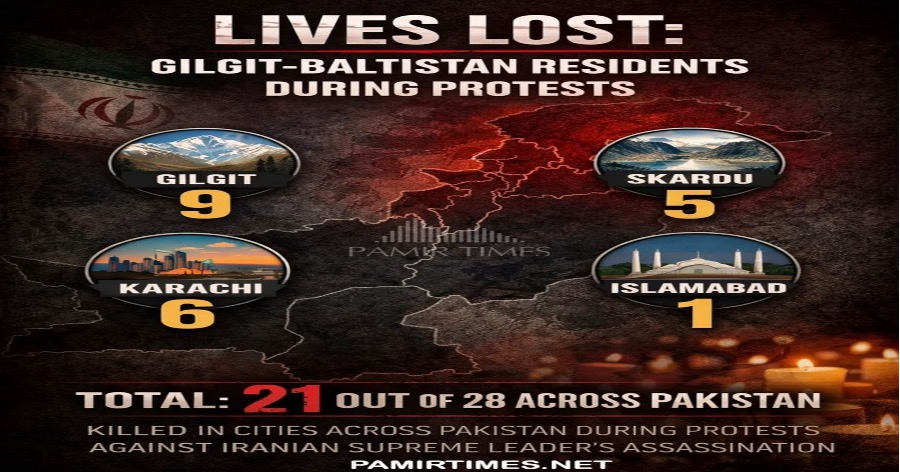
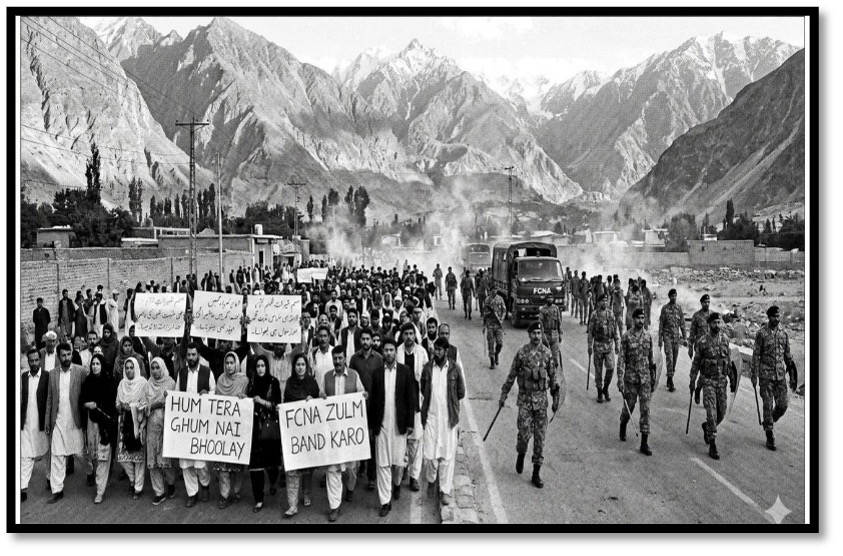
Since Monday, March 2, the death toll has climbed steadily. In Gilgit and Skardu alone, at least 13 peaceful protesters were gunned down by FCNA personnel. Witnesses describe a “shoot-to-kill” policy as the military invoked Article 245, effectively suspending all civil liberties.
The recent unrest has once again brought attention to the fragile sectarian dynamics of neglect of Pakistan towards Northern region as targeted killings were carried out in specific Shia populated regions and the people of Shia community. It shows how extreme measures were taken against a particular community. This crackdown once again highlighted the alienated, neglected and coercive approach of Pakistan towards the Shia community of GB with uttermost disregard for their fundamental rights and freedom.
A History of Systematic Atrocity
The current crackdown is yet another chapter in a decade long chapter of oppression. For years, the people of GB have faced
wherein systematic efforts to dilute the Shia majority has been carried out by settling outsiders in the region.
are common as hundreds of local leaders and youth activists have been disappeared never to be seen again. While the state loots the region’s minerals and water resources, the local population suffers to even avail the basic needs of food security, neglect of medical infra, education and job security resulting in acute economic strangulation. By utilizing the FCNA, the state maintains a firm military grip over civilian administration without granting the region constitutional rights
The Modern “Iron Curtain”
Since, the start of peaceful protest post start of US – Iran War, the Pakistan government has imposed a total cellular and internet blackout, cutting GB off from the outside world. An indefinite curfew in Gilgit, Skardu and Shigar has left families trapped without food or medical supplies. By labelling peaceful mourners and protesters as “terrorists” or “foreign agents,” the Pakistani military is attempting to provide a thin veil of legitimacy to a campaign of ethnic and sectarian cleansing. But the message from the people of Gilgit-Baltistan is clear: the boot of the FCNA may be heavy, but the spirit of the Karakoram will not be crushed.
The Road Ahead: A Region at the Precipice
The future of Gilgit-Baltistan now hangs in a precarious balance between total annexation and an increasing grassroots revolution. The strategic timing of this crackdown suggests a calculated move by the Pakistani military to crush local leadership while global media resources are overstretched by the US Iran War. If the current trajectory of extrajudicial suppression and demographic engineering continues, the historical identity of the Shia heartland may be pushed toward an irreversible breaking point. The youth of Gilgit, Skardu and Shigar—raised in the shadow of the Karakoram and the digital age are no longer content with being “subjects” of a military outpost. Whether the region emerges as a beacon of reclaimed autonomy or a scarred landscape of perpetual conflict will depend entirely on whether the international community chooses to look North, or continues to let the cries of the Balti people be swallowed by the silence of the mountains.
The author is Jammu & Kashmir based security expert and IT entrepreneur.
